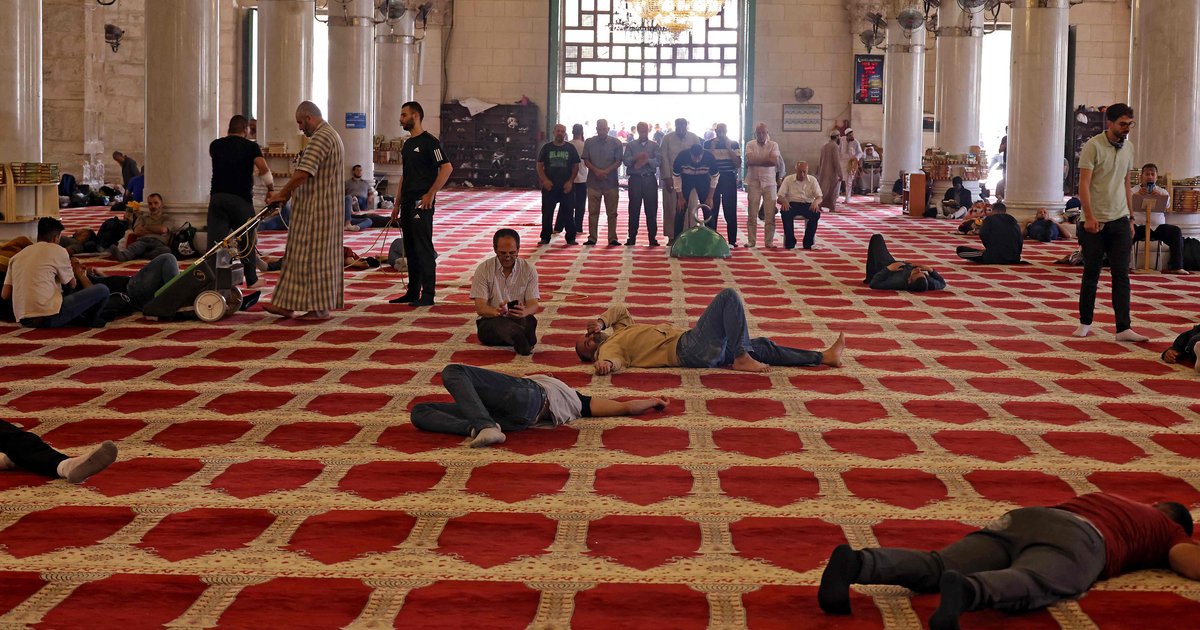
Israeli authorities have maintained the closure of Al-Aqsa Mosque for the 34th consecutive day, raising widespread concern among Palestinians and Arabs. This measure comes at a time when tensions are escalating in Jerusalem, where Palestinians are facing strict restrictions on access to one of the holiest Islamic sites.
The closure imposed on Al-Aqsa Mosque has provoked angry reactions from Palestinians, who view this action as a violation of their religious rights. Many observers have pointed out that this closure coincides with an escalation in Israeli assaults on Islamic sanctities, further intensifying tensions in the holy city.
Details of the Situation
Israeli measures around Al-Aqsa Mosque remain stringent, with worshippers being barred from entering the mosque since the beginning of the closure. Reports have indicated that occupation forces have intensified their presence around the mosque, leading to clashes with Palestinian youth attempting to access the site.
At the same time, human rights organizations have expressed concern about the impact of this closure on the right to worship, emphasizing that Al-Aqsa Mosque is a sacred place for Muslims and should be open to all. These organizations have called on the international community to intervene to stop these violations.
Background & Context
Historically, Al-Aqsa Mosque has witnessed numerous crises due to the Israeli-Palestinian conflict. The mosque is considered a symbol of Palestinian identity, and any actions related to it directly affect the political and social situation in the region.
The current closure comes amid rising tensions in the area, with recent months witnessing numerous violent incidents between Palestinians and occupation forces. These events reflect a state of instability in Jerusalem, which is regarded as the center of the Israeli-Palestinian conflict.
Impact & Consequences
The ongoing closure of Al-Aqsa Mosque could exacerbate conditions in Jerusalem, threatening to ignite new confrontations. Additionally, this measure may affect relations between Palestinians and Israelis, increasing polarization within society.
Moreover, the continuation of these policies could negatively impact peace efforts in the region, as Palestinians feel that their rights are increasingly being violated, making it difficult to achieve any progress toward a peaceful resolution.
Regional Significance
The events at Al-Aqsa Mosque hold particular significance for the Arab world, evoking feelings of solidarity with the Palestinians. Many Arab countries have expressed concern over the closure and called for the need to respect Palestinians' rights to worship.
The continuation of these events may affect relations between Arab countries and Israel, increasing pressure on Arab governments to intervene to protect Palestinian rights. Furthermore, these events could reignite discussions about the Palestinian issue in international forums.
In conclusion, Al-Aqsa Mosque remains a symbol of the Israeli-Palestinian conflict, and its ongoing closure reflects the rising tensions in the region. The current situation requires urgent action from the international community to ensure Palestinians' rights to worship and maintain peace in Jerusalem.