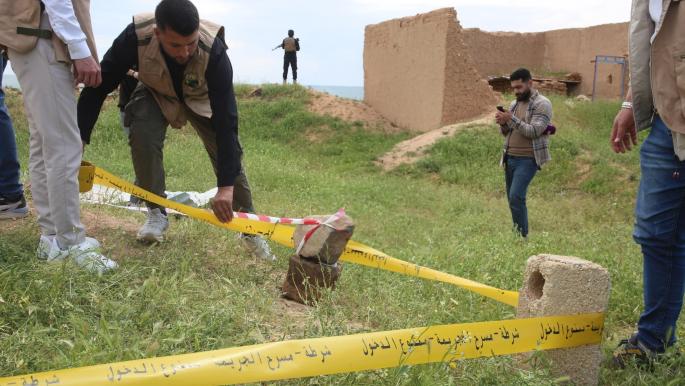
Efforts to search and excavate in the Al-Tadamon neighborhood of southern Damascus are ongoing, as a team of investigators and activists seeks to recover the remains of victims who were executed on-site in 2013. These efforts are part of investigations that documented the massacre, which claimed the lives of many civilians, highlighting the continued quest for justice.
The Al-Tadamon massacre is considered one of the bloodiest incidents during the Syrian conflict, where dozens of innocent people were executed in a brutal manner. Human rights organizations have documented this incident, emphasizing the necessity of holding those responsible for these crimes accountable.
Details of the Ongoing Search
The current search operations involve advanced techniques to locate the remains, with collaboration from local and international teams. Local authorities have announced their support for these efforts, aiming to provide some measure of justice to the families of victims who lost their loved ones in this massacre.
Search operations are taking place in specific areas of Al-Tadamon, where it is believed that many victims were buried in mass graves. Reports have indicated that these graves contain the remains of dozens of individuals, necessitating intensified efforts for their extraction.
Background & Context
The events of the Al-Tadamon massacre date back to 2013, a time when Syria was experiencing a surge in violence and armed conflict. This massacre was part of a series of violations committed during the conflict, leading to the loss of thousands of lives. The incident sparked widespread international reactions, with many countries calling for accountability for the perpetrators of these crimes.
The massacre symbolizes the suffering endured by the Syrian people, as families continue to search for truth and justice. These events have contributed to strengthening international efforts to hold accountable those responsible for violations in Syria.
Impact & Consequences
The repercussions of the Al-Tadamon massacre extend beyond Syria, raising human rights issues in other conflict areas. The ongoing search for the remains of victims reflects hope for achieving justice and underscores the importance of documenting violations to ensure they are not repeated in the future.
Moreover, these efforts may contribute to rebuilding trust between civil society and local authorities, potentially leading to improved humanitarian conditions in the region. Achieving justice for the victims could be a step towards national reconciliation in Syria.
Regional Significance
The Al-Tadamon massacre serves as an example of the challenges faced by Arab countries in the field of human rights. The ongoing violations in conflict areas highlight the urgent need to enhance protection and accountability mechanisms in the region.
These events demonstrate the importance of regional and international cooperation in addressing human rights issues, as Arab countries can learn from each other's experiences in confronting violations. Raising awareness of human rights can contribute to building more just and stable societies.
In conclusion, the Al-Tadamon massacre remains one of the dark chapters in the history of the Syrian conflict, but the ongoing efforts to recover the remains of the victims represent a glimmer of hope for achieving justice and reconciliation.