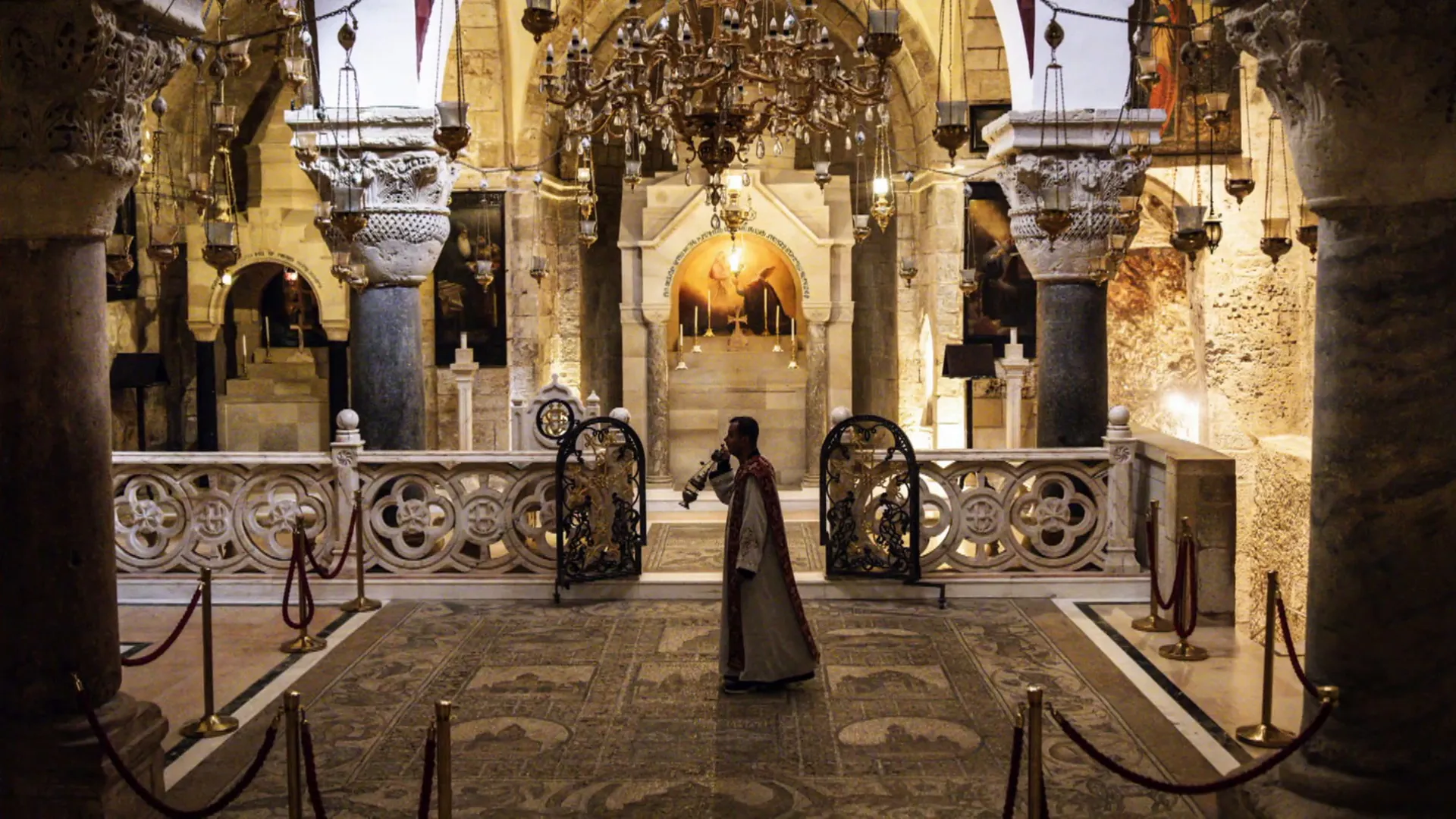
Israeli authorities are maintaining the closure of Al-Aqsa Mosque and the Church of the Holy Sepulchre in Jerusalem for the second consecutive month, leading to angry reactions from activists and social media users. The Israeli authorities have cited the tense security situation stemming from the war with Iran, coinciding with Christian celebrations around the world for Easter and Good Friday prayers.
Social media users have widely reacted to these restrictions, with many considering them intentional and premeditated, calling for a unified Arab and Islamic stance against these practices. Cameras captured limited scenes of the Old City's alleys, where the mass was restricted to the Latin Patriarch of Jerusalem, Cardinal Pierbattista Pizzaballa, and a few clergy members, without the participation of Jerusalem's Christians.
Details of the Incident
Twitter user Khaled expressed his frustration with the occupation's practices, pointing out that Israel seeks to impose a new reality on the church and Al-Aqsa Mosque, exploiting the current security situation. Meanwhile, activist Daniel expressed his deep sorrow, noting that Christians in Jerusalem have been unable to celebrate Easter as they have for many years.
Activist Samaa highlighted what she described as Israeli double standards, allowing settlers to move freely in their places of worship while preventing Muslims and Christians from accessing theirs. Activist Jivara called for immediate Arab action to confront these restrictions, emphasizing the need to resist any attempts to usurp places of worship from their rightful owners.
Background & Context
These events occur within a complex historical context, as Jerusalem has witnessed increasing tensions between Palestinians and Israelis over the years, particularly regarding holy sites. Recently, there has been an escalation in Israeli measures, including preventing worshippers from accessing Al-Aqsa Mosque and imposing restrictions on religious celebrations.
Just a week ago, Israeli authorities prevented the Latin Patriarch of Jerusalem from celebrating Palm Sunday, which sparked widespread international condemnation, including reactions from European leaders. Israeli Prime Minister Benjamin Netanyahu was forced to retract this decision after international pressure, but the restrictions have been reimposed.
Impact & Consequences
These events underscore the rising tensions in Jerusalem, threatening to increase friction between Palestinians and Israelis. The continued closure of holy sites may exacerbate security conditions and heighten international condemnation of Israeli policies.
These restrictions are not merely security measures; they reflect an Israeli policy aimed at altering the status quo in the holy city, which could have dire consequences for stability in the region.
Regional Significance
These events hold particular significance for Arabs and Muslims, as the holy sites in Jerusalem represent historical and religious symbols. The continuation of these practices may provoke strong reactions from Arab and Islamic countries, leading to diplomatic efforts to confront Israeli policies.
In conclusion, the situation in Jerusalem remains under scrutiny, with many looking forward to effective Arab and Islamic actions to protect Palestinians' rights to their holy sites and ensure freedom of worship for all.