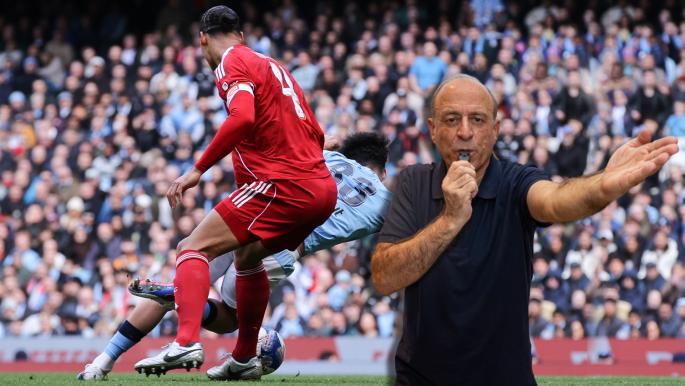
The FA Cup quarter-final match between Manchester City and Liverpool, held on Saturday afternoon, witnessed several controversial events, with some officiating decisions raising numerous questions among fans and analysts. The most notable of these decisions was the awarding of a penalty to Manchester City, which had a substantial impact on the match's result.
The penalty, awarded in the second half, came after a contentious challenge from a Liverpool defender on a City player, prompting the referee to make the call after reviewing the situation. This decision was not universally praised; some considered it unjustified, while others believed it was correct. Referee expert Sharif explained this situation, clarifying the criteria upon which the decision was made.
Details of the Incident
In the 67th minute, the referee awarded a penalty to Manchester City following a strong challenge from the defender on a City player. This decision sparked widespread debate on social media, with opinions divided between supporters and detractors. Sharif noted that the referee had a clear view of the incident and that the decision was in line with the laws of the game.
After the penalty was awarded, Manchester City managed to score the goal that put them ahead in the match. This goal had a significant psychological effect on the Liverpool players, who appeared to be affected by the decision, contributing to a decline in their performance in the following minutes.
Background & Context
The match between Manchester City and Liverpool is considered one of the most prominent fixtures in English football, featuring two of the strongest clubs in the league. Historically, these matches have seen many controversial moments, both in terms of officiating decisions and technical performance. In recent years, the use of VAR technology has become an essential part of the game, increasing the accuracy of decisions but also amplifying the controversy surrounding certain cases.
The debate over officiating decisions is not new in the world of football, as many matches across various competitions have seen similar situations. With the increasing reliance on technology, the question remains whether it can resolve disputes or if it will only exacerbate them.
Impact & Consequences
The impact of this match extends beyond the pitch, as officiating decisions can influence teams' trajectories in competitions. Following their victory, Manchester City continues to advance towards the later stages of the FA Cup, while Liverpool faces new challenges in the league. These results may affect the morale of players and their fans, making it essential to analyze every decision carefully.
Moreover, the controversy surrounding the penalty may open discussions about the need to improve officiating standards and apply the laws more transparently. The greater the transparency in decision-making, the more trust fans will have in the game.
Regional Significance
Football is one of the most popular sports in the Arab world, with millions of fans following matches and tournaments. Exciting events like this match capture the interest of Arab audiences, enhancing their passion for the game. Additionally, discussions surrounding officiating and decisions can influence how Arab fans understand the laws of the game.
Ultimately, football remains a mirror reflecting many social and cultural issues, making it crucial to closely follow and analyze sporting events.