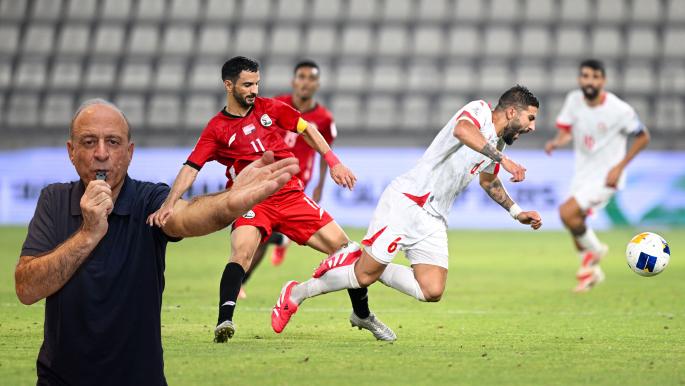
The match between Lebanon and Yemen, held during the final round of the qualifiers for the 2027 AFC Asian Cup, witnessed numerous refereeing incidents that sparked widespread debate among fans and analysts. Attention was particularly focused on the performance of referee Sharif, who played a significant role in managing the game.
Throughout the match, various refereeing situations arose, leading to questions about some of the decisions made by the referee, which resulted in a division of opinions among supporters and critics. Several players and coaches expressed their astonishment at certain calls, adding to the match's excitement from a refereeing perspective.
Details of the Match
In the early stages of the match, a penalty was awarded to the Lebanese team in the tenth minute, which ignited controversy over the validity of the decision. Additionally, a goal by the Yemeni team was disallowed for offside, a ruling many considered contentious. Referee Sharif attempted to clarify his justifications, indicating that the decisions were made in accordance with the applicable laws.
Controversial refereeing incidents continued in the second half, as the referee called several fouls that were not clear to the spectators. This led to protests from players, contributing to a tense atmosphere during the match. Despite this, the Lebanese team ultimately secured victory, but the debate surrounding the officiating was far from over.
Background & Context
This match is part of the qualifiers for the 2027 AFC Asian Cup, which has seen intense competition among Arab teams. The Lebanon vs Yemen match was one of significant importance in determining the fate of the teams in these qualifiers. Historically, matches between Lebanon and Yemen have been competitive, heightening the importance of refereeing performance.
It is worth noting that refereeing in Arab football faces numerous challenges, with varying opinions on the performance of officials. In recent years, there have been calls for improving refereeing standards and greater implementation of technology to ensure fairness in matches.
Impact & Consequences
Controversial refereeing decisions can significantly affect match outcomes, and consequently, the teams' journeys in the qualifiers. A win or loss in a single match can determine a team's fate in qualifying for major tournaments. Therefore, the performance of referees is a crucial factor in the success or failure of teams.
Moreover, the controversy surrounding officiating can impact the morale of players and fans, potentially leading to a decline in performance in future matches. Thus, it is important for sports federations to address these issues seriously.
Regional Significance
Football is one of the most popular sports in the Arab world, playing an important role in strengthening social and cultural ties among peoples. Therefore, any controversy regarding officiating can affect the overall sports scene and lead to differing opinions among fans.
Good refereeing enhances the credibility of tournaments and increases fan engagement, contributing to the development of football in the region. Hence, improving refereeing standards is essential to ensure the success of Arab tournaments.
In conclusion, the issue of refereeing in Arab football remains a sensitive topic that requires further discussion and development. As competitions continue, there is hope for improved officiating performance to ensure fairness in matches.