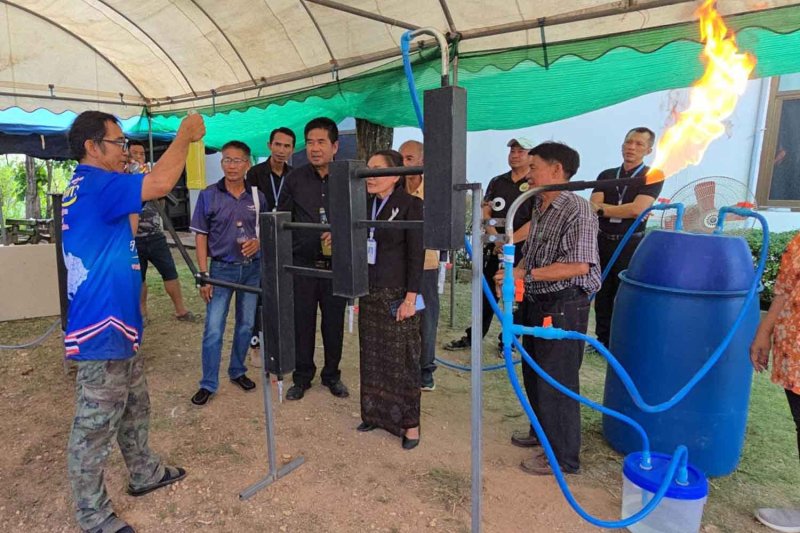
Local authorities in Khun Kaen have announced the launch of a pilot initiative aimed at converting plastic waste into fuel, as part of their efforts to help communities reduce fuel expenses amid rising gasoline prices. The initiative comes at a time when residents are struggling with increasing fuel costs, making the search for sustainable alternatives more urgent.
The local management organization in the Fon Peak area, led by CEO Oishai Polan, organized a workshop to educate residents about the process of converting plastic into fuel. Polan emphasized that the goal of this initiative is to reduce fuel costs and contribute to waste reduction in local communities.
Event Details
According to Desha Chansri, head of the Innovation Center for Plastic to Fuel Conversion, approximately 10 kilograms of plastic can produce between 4 to 8 liters of usable fuel, depending on the type of plastic used. Chansri explained that the conversion process relies on pyrolysis technology, which uses heat in an oxygen-free environment to break down plastic into fuel without producing harmful pollutants.
This technology melts the plastic under high pressure until it vaporizes, then condenses into fuel oil, including gasoline, diesel, and cooking gas. Chansri noted that villagers with basic mechanical skills can build a pressure vessel for less than 5000 baht, with local training provided. He confirmed that the process takes only five hours to produce 4-8 liters of fuel from 10 kilograms of plastic, which is significantly faster than natural decomposition.
Background & Context
The issue of plastic waste is one of the largest environmental challenges facing the world today, with increasing amounts of plastic being discarded daily. In many countries, including Thailand, plastic waste has become a significant burden on the environment. Therefore, the search for innovative solutions such as converting plastic into fuel is an important step towards achieving sustainable development.
Historically, there have been numerous attempts to convert waste into energy, but this initiative in Khun Kaen stands out as a local solution that aligns with community needs, potentially reducing costs and raising environmental awareness.
Impact & Consequences
This initiative is a positive step towards achieving environmental sustainability, as it can help reduce reliance on fossil fuels and lower carbon emissions. Additionally, converting plastic waste into fuel can create new job opportunities and boost the local economy.
If this initiative successfully attracts more villages to participate, it could lead to the establishment of centralized extraction centers, facilitating learning and training on plastic-to-fuel conversion techniques. This would enhance communities' ability to manage their waste effectively.
Regional Significance
Arab countries also face similar challenges regarding plastic waste and rising fuel prices. This initiative could serve as a model for Arab nations seeking innovative solutions to their environmental and economic problems. With increasing environmental awareness in the region, there may be opportunities to implement similar technologies for converting waste to energy, contributing to sustainable development.
In conclusion, the Khun Kaen initiative represents an important step towards achieving environmental and economic sustainability, and it could serve as an example for other regions of the world, including Arab countries facing similar issues.