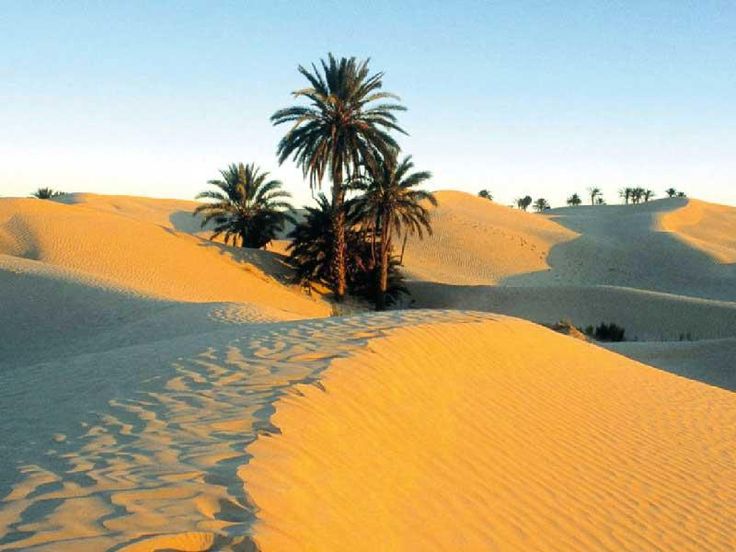
Research indicates that the Sahara Desert, the largest hot desert in the world, may witness climatic changes that could restore its lost greenery from thousands of years ago. In the Ennedi Plateau in northeastern Chad, rock carvings reveal a thriving wildlife that existed in this area around 6,000 years ago, raising questions about the possibility of returning to those environmental conditions.
Today, the Sahara Desert is considered one of the driest places on Earth, with temperatures reaching 40 degrees Celsius, and sand temperatures exceeding 60 degrees Celsius. However, at the heart of this arid landscape, there was a period known as the "Green Sahara," where the region was filled with lakes and wildlife.
Event Details
In the Ennedi Plateau, rock engravings show evidence of rich life, where the area was teeming with lakes and animals. Yves Gauthier, former research director at the French National Centre for Scientific Research, states that "the Sahara was not always arid," noting that the region once contained vast savannas filled with pastures and herds of animals. Drawings of large animals such as giraffes and elephants have been found, indicating a water-rich environment.
These engravings also depict extinct animals like the Bobalus, a type of wild cattle, highlighting the biodiversity that existed during that time. The engravings document pastoral lifestyles in the desert between 7000 and 3000 BC, coinciding with the rise of pastoralism in North Africa.
Background & Context
The Sahara Desert originated around 7 million years ago, when the retreat of the ancient Tethys Sea led to significant changes in regional water cycles. The area has experienced repeated climatic fluctuations between wet and dry periods, contributing to its current environment. In the mid-19th century, German explorer Heinrich Barth discovered rock carvings showing animals that still live in sub-Saharan Africa today, indicating that this region was once rich in life.
During the current geological era, known as the Quaternary, the Sahara has undergone multiple climatic changes, with wet periods leading to the flourishing of wildlife. The most recent of these periods, known as the "Green Sahara," is believed to have lasted between 11,000 and 5,500 years ago, when Lake Chad was approximately 20 times larger than its current size.
Impact & Consequences
As temperatures continue to rise, scientists predict that Lake Chad may completely disappear within a decade or two. Gauthier points out that the current climate could lead to the southern part of Chad becoming entirely desert. Satellite images have revealed traces of ancient rivers that once flowed towards the Mediterranean Sea, suggesting that life may return to this area.
However, climatic transformations could be catastrophic, as the region has experienced devastating floods in recent years, resulting in many lives lost and millions displaced. Scientists indicate that any future changes may lead to increased rainfall in some areas, but this could come with new challenges.
Regional Significance
The Sahara Desert is a significant part of the Arab environment, and any changes in its climate will affect neighboring countries. Increased rainfall could improve agricultural conditions in some areas, but conversely, flooding could cause widespread destruction. Understanding these climatic dynamics is crucial for future planning.
In conclusion, questions remain about the possibility of life returning to the Sahara Desert. While research suggests the potential for climatic changes, the greatest challenge lies in how to adapt to these changes and their impact on local communities.