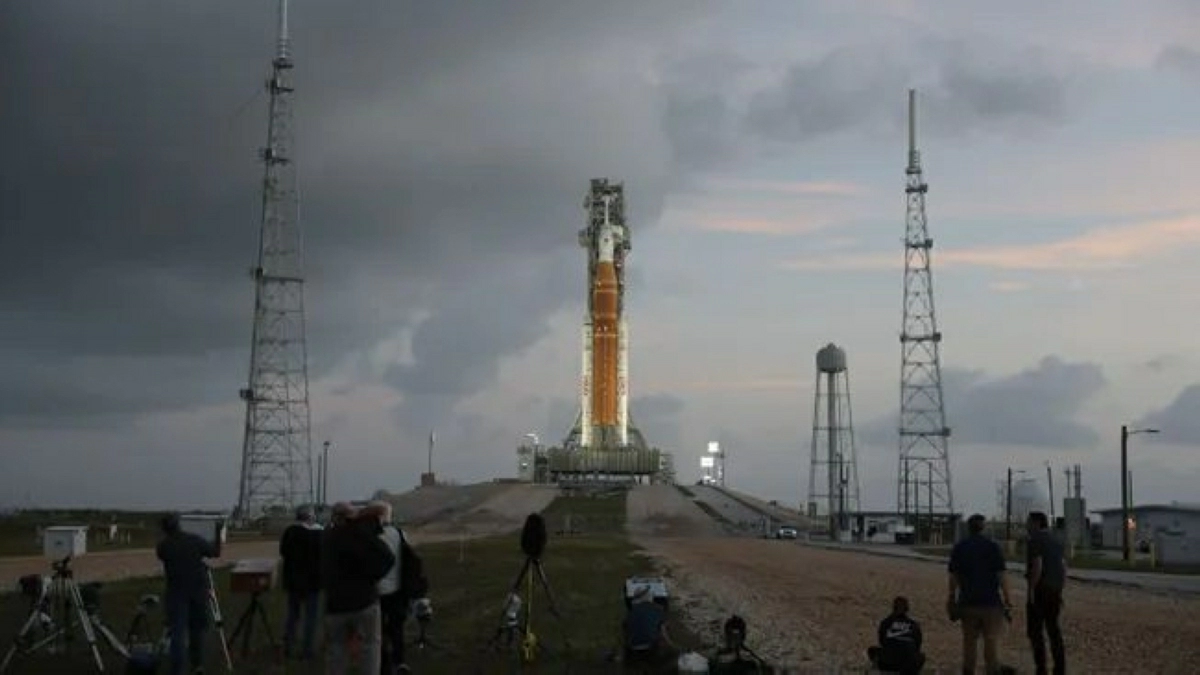
The countdown has begun at Kennedy Space Center for the launch of Artemis II, which will send four astronauts on a journey around the Moon, marking the first crewed mission to the Moon since 1972. Following a mission management team meeting on Monday, NASA's Deputy Administrator, Amit Kshatriya, confirmed that Artemis II is ready for launch on Wednesday.
At 6:24 PM Eastern Time (22:24 GMT) on Wednesday, a two-hour launch window will open for Artemis II to take off from Kennedy Space Center in Florida. The launch window will remain open until April 6, for two hours each day after sunset. The launch can only occur when the Moon's positions, orbital paths, weather, and Earth's rotation align safely.
Event Details
The Artemis II mission has faced significant delays that pushed the launch date from its original window in early 2026. In early February, the first launch attempt was canceled after a leak was discovered in the liquid hydrogen during a test countdown. The second launch attempt was also scrapped in early March when engineers identified a problem with helium flow in the upper stage of the rocket.
Launch teams have completed final preparations, including critical checks on the four RS-25 engines and rocket systems. Non-essential personnel were evacuated from the launch pad before fueling operations began earlier today. Media coverage started at 7:45 AM Eastern Time, with full launch coverage beginning at 12:50 PM.
Background & Context
The Artemis II mission is part of NASA's ambitious program to explore the Moon, which aims to return humans to the lunar surface and establish a permanent presence there. Since the last Apollo mission in 1972, humans have not returned to the Moon, making this mission a historic return.
Artemis II will carry astronauts Reid Wiseman, Victor Glover, Christina Koch, and Jeremy Hansen on a journey lasting approximately 10 days around the Moon before returning to Earth. Although the crew will not land on the lunar surface, the mission will allow them to make new observations of parts of the Moon that humans have never seen, providing data that may help identify potential landing sites for future missions.
Impact & Consequences
This mission is a significant step toward achieving NASA's long-term goals, including establishing a sustainable human presence on the Moon as a foundational step for future missions to Mars. The data collected during this mission will help improve the technology used in future space travel.
Additionally, collaboration between astronauts and scientists on Earth will contribute to enhancing scientific understanding of space, potentially leading to new discoveries in various fields, including astronomy and physics.
Regional Significance
This mission holds particular importance for the Arab region, as space exploration represents an opportunity to enhance scientific and technological cooperation among Arab countries. These achievements can inspire a new generation of scientists and engineers in the Arab world, increasing their interest in science and technology fields.
In light of the global trend toward space exploration, Arab countries can play a significant role in this field by developing their space programs and enhancing cooperation with global space agencies.