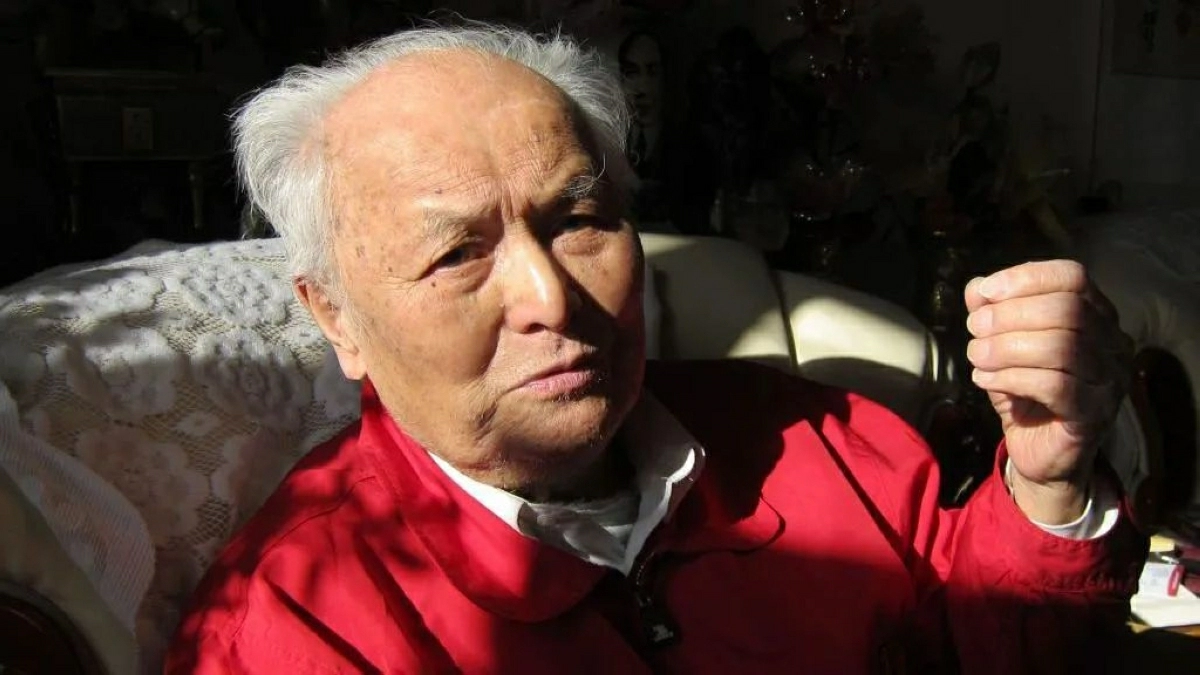
A California court has ruled that Stanford University can retain the personal archive of Li Rui, the former secretary of Mao Zedong, the founder of modern China. This archive, which includes diaries and historical correspondence, is of great value to researchers and historians, especially amid concerns that it could be censored if returned to China.
It is noteworthy that Li Rui was a prominent figure in the Chinese Communist Party, known for his sharp criticisms of the Chinese government in the later years of his life. It took more than five years of legal proceedings between Stanford University and the Hoover Institution to defend Li's right for his archive to be available for public study.
Court Ruling Details
In its ruling, the court confirmed that the donation made by Li Rui's daughter to the Hoover Institution was "legal and in accordance with Li's wishes." Evidence showed that Li Rui believed the Chinese Communist Party might hide, censor, or even destroy his papers if they were returned to China. Therefore, he decided to give these documents to his daughter with the aim of keeping them away from China.
The papers include diaries written by Li Rui from 1938 to 2019, covering a long period of Chinese Communist Party rule, as well as correspondence, meeting minutes, notes about his work, poetry, and photographs. Among the most notable contents of the archive is his personal account of the Tiananmen Square Massacre, which he witnessed from a balcony overlooking the square, where he described soldiers shooting at protesters.
Historical Context
Historically, Li Rui is considered a controversial figure in China. He was viewed as one of the senior figures in the Communist Party, but he also faced ostracism due to his scathing criticisms of party leaders, including President Xi Jinping. His writings have been banned in China, highlighting the tension between freedom of expression and government censorship.
In 2014, Li Rui's daughter, Li Nanyang, began donating his papers to Stanford University, indicating that this was in accordance with her father's wishes. However, after his death, his second wife filed a lawsuit to reclaim the documents, leading to a complex legal battle.
Implications and Impact
This ruling is seen as a victory for freedom of information, ensuring that one of the most important historical records about modern China remains available for researchers. Condoleezza Rice, the current director of the Hoover Institution, stated that this decision guarantees that "one of the most valuable records of modern Chinese history will be freely available for study."
Moreover, this ruling highlights the challenges faced by Western governments in dealing with issues of censorship and free expression in China, raising questions about how to protect individual rights in the face of repressive regimes.
Significance for the Arab Region
The importance of this event for the Arab region lies in its enhancement of freedom of expression and the right to access information. Given the challenges many Arab countries face in this context, this ruling serves as a model to aspire to in the pursuit of greater transparency.
In conclusion, this ruling demonstrates how personal archives can play a vital role in understanding history and documenting events, thereby underscoring the importance of preserving these documents in the face of censorship.