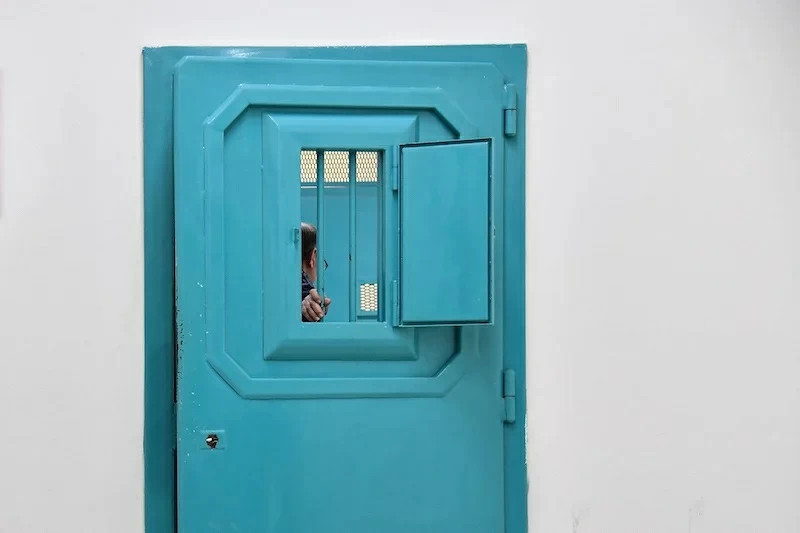
The Marrakech Court has sentenced the president of the National Association for the Defense of Human Rights, Abdelilah Tatoosh, to one and a half years in prison, in a ruling described as an earthquake within human rights and political circles.
The sentence against Tatoosh came after a thorough investigation, where he faced serious charges that tarnished his image as a human rights defender, including fraud, money laundering, and threats to disclose damaging information in exchange for financial compensation.
Details of the Case
The case began with a complaint filed by parliamentarian Tariq Hanich, who accused Tatoosh of defaming him and spreading false information that targeted his reputation. Tatoosh alleged that there was a transfer of public property to a private hospital, but investigations proved the official's innocence and revealed the falsehood of the association's claims, which had exploited its influence for pressure and extortion.
In addition to the prison sentence, the court issued an unusual order allowing two notaries to visit the prison to receive a mandate from Tatoosh to terminate the lease of the association's headquarters and sell two cars. This order was seen by observers as a definitive end to the association's activities under his leadership and a dismantling of its dubious funding sources.
Context and Background
This case comes at a sensitive time for the human rights movement in Morocco, where calls for accountability of corrupt individuals and abuse of power are increasing. The case has sparked widespread debate about the role of human rights associations in the country and their ability to maintain credibility in light of such accusations.
Historically, Morocco has witnessed numerous cases linked to corruption and abuse of power, leading to a decline in trust in some institutions. This case represents a turning point in how authorities deal with associations claiming to defend human rights.
Impact and Consequences
The ruling against Tatoosh sends a strong message that the "human rights shield" does not protect corrupt individuals in Morocco. It also highlights the importance of transparency and accountability in human rights work, which may lead to a reevaluation of the role of human rights associations in society.
This ruling is expected to have a significant impact on other associations, as they may feel concerned about facing accountability if they exploit their influence illegally. It may also enhance anti-corruption efforts in the country.
Regional Significance
This ruling may resonate in other Arab countries facing similar corruption issues. Such judgments can encourage the promotion of transparency and accountability in human rights work, reflecting a positive development in the region.
In conclusion, this ruling represents an important step towards enhancing justice and accountability in Morocco, reflecting the necessity of maintaining the credibility of human rights work in the face of corruption.