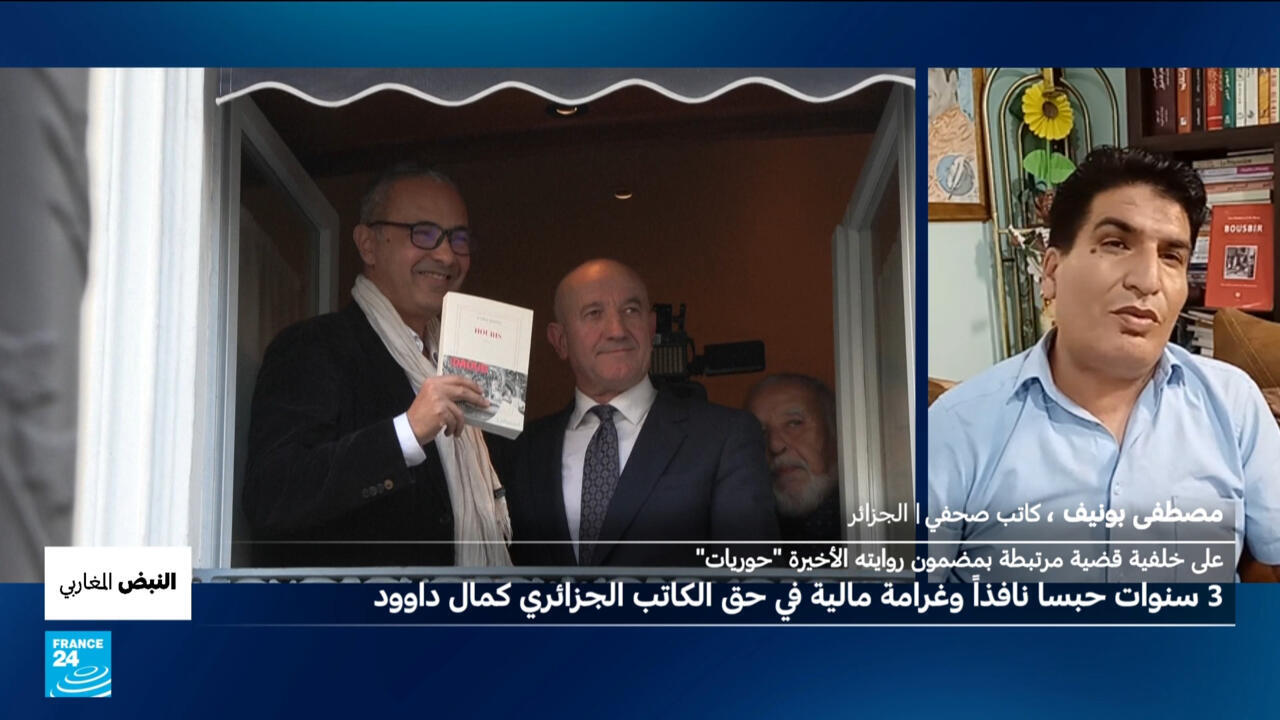
An Algerian court has issued a three-year absentia prison sentence against French-Algerian writer Kamel Daoud, stemming from his controversial novel 'Houriats', which has sparked widespread debate. The court also imposed a financial penalty on the author, raising concerns about the state of freedom of expression in Algeria and the acceptance of critical viewpoints.
Kamel Daoud, a recipient of the prestigious Goncourt Academy award, is known for his bold stances and provocative opinions on social and political issues in Algeria. This ruling comes at a sensitive time, as pressures on intellectuals and writers in the country are increasing, prompting an important question: Has Daoud become an undesirable figure in Algeria?
Details of the Ruling
The sentence against Kamel Daoud was issued following the publication of his novel 'Houriats', which addresses sensitive topics related to women and society. The novel, which has received acclaim in literary circles, has also faced criticism from conservative factions in Algeria. The absentia ruling reflects growing concerns over the decline of freedom of expression in the country, as it serves as a message to writers and thinkers about what they can and cannot say.
Simultaneously, this ruling also mirrors the political and social tensions in Algeria, where the regime seeks to control and direct public discourse to align with its interests. This situation is not new; Algeria has witnessed several similar cases in recent years, where writers and journalists have been targeted for their opinions.
Background & Context
Historically, Algeria has suffered from restrictions on freedom of expression, especially following the civil war in the 1990s. In recent years, with the rise of popular protests, authorities have intensified the suppression of dissenting voices. Kamel Daoud, who resides in France, represents a generation of writers striving to challenge these constraints through their literary works.
'Houriats' is considered one of the literary works that reflect social changes in Algeria, addressing issues related to identity and women. However, reactions to the novel indicate a divide in Algerian society regarding issues of freedom and rights.
Impact & Consequences
This ruling could have significant repercussions on the literary and cultural landscape in Algeria. Other writers may feel apprehensive about expressing their opinions freely, potentially leading to a decline in literary creativity in the country. Additionally, this ruling may affect Algeria's image abroad, as it is perceived as a country grappling with restrictions on freedom of expression.
Moreover, this ruling could heighten tensions between intellectuals and authorities, possibly contributing to an escalation of popular protests. Under these circumstances, writers and thinkers may find themselves facing greater challenges in articulating their views.
Regional Significance
The implications of this ruling extend beyond Algeria, highlighting the broader struggle for freedom of expression in the region. As writers like Kamel Daoud challenge oppressive narratives, their experiences resonate with others facing similar challenges across the Arab world.
In conclusion, the ruling against Kamel Daoud serves as a stark reminder of the ongoing battle for freedom of expression in Algeria, reflecting the increasing pressures on intellectuals and the need for a more open dialogue within society.