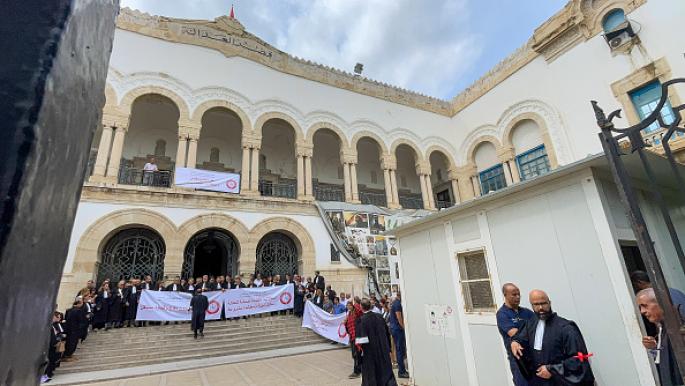
The criminal court in Tunisia issued a one-year prison sentence against Anas Hammadi, the president of the Tunisian Judges Association, on Monday evening. This ruling occurs in the context of legal and political tensions in the country, where Hammadi is considered a prominent figure in the defense of judicial independence.
This case arises at a time when criticisms are increasing regarding the executive branch's interference in judicial matters, raising concerns about the decline of human rights and public freedoms in Tunisia. Many human rights organizations have deemed this ruling a setback in the country's democratic progress.
Details of the Ruling
The sentence against Hammadi followed court sessions that sparked extensive debate regarding judicial independence. Hammadi faced several charges related to abuse of power, which he vehemently denies. In his previous statements, Hammadi emphasized his commitment to enhancing judicial independence and asserted that these charges are part of attempts to undermine the work of the association he leads.
In this context, Tunisia has witnessed numerous protests and demonstrations in recent years demanding the protection of judges' rights and the strengthening of judicial independence, reflecting public concern over increasing pressures on the judicial system.
Background & Context
The Tunisian Judges Association was established in 2011 following the Tunisian revolution, aiming to promote judicial independence and protect judges' rights. The association has played a significant role in defending judges' rights during periods of political turmoil. However, the relationship between the association and the executive authorities has increasingly strained, particularly under the current government.
The ruling against Hammadi is seen as part of a series of legal actions targeting prominent figures in civil society, raising questions about the future of democracy in Tunisia. Numerous international organizations have expressed concern over this trend, calling for respect for human rights and fundamental freedoms.
Impact & Consequences
This ruling could significantly affect the legal landscape in Tunisia, serving as a strong message to other judges and civil society at large. It may lead to a decline in trust in the judicial system and exacerbate tensions between judges and authorities.
Moreover, this ruling could impact Tunisia's international relations, as judicial independence is viewed as a fundamental criterion for democracy. Tunisia may face increased international pressure from human rights organizations and nations that support democratic values.
Regional Significance
The case of Hammadi is part of a broader phenomenon in the Arab region, where many countries face challenges related to judicial independence and human rights. The decline of judges' rights in Tunisia could serve as a model for other countries grappling with similar issues.
These events may bolster movements advocating for democracy and human rights in the region, as citizens strive for justice and equality. The situation in Tunisia could have profound implications for the trajectory of democratic transitions in neighboring countries.
In conclusion, the ruling against Anas Hammadi highlights the significant challenges Tunisia faces in its pursuit of democracy. Hope remains pinned on the ability of civil society and judges to confront these challenges and reclaim their rights.