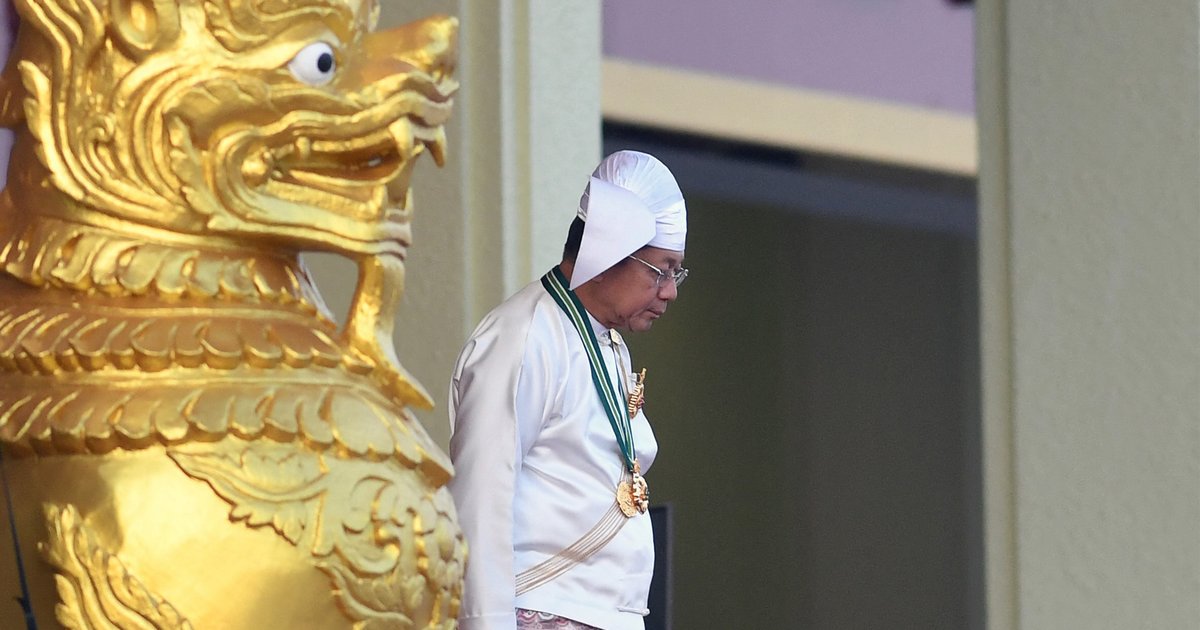
The Arakan Rohingya National Council (ARNC) has strongly condemned the election of Min Aung Hlaing as President of Myanmar, indicating that this step represents an attempt to bolster military authority in the country under a democratic facade. This statement followed the elections held on Friday, which many international observers deemed illegitimate.
In an official statement, the council described Hlaing's election process as "illegitimate," given that the parliament that elected him is dominated by military personnel. Hlaing secured more than half of the votes in parliament, obtaining 429 out of 584 votes, reflecting the military's control over the political process.
Details of the Event
The election of Min Aung Hlaing as the first president of Myanmar after the military coup in 2021 has sparked outrage from various parties. The United Nations and international observers criticized the elections, stating that they were neither free nor fair, raising questions about the future of democracy in the country.
It is noteworthy that Min Aung Hlaing took command of the army following the ousting of the elected government in 2021, which led to a surge in violence and displacement across the nation. The council pointed out that Hlaing bears responsibility for crimes against humanity committed against the Rohingya, including mass killings and forced displacement.
Background & Context
Historically, Myanmar has witnessed ongoing ethnic conflicts, particularly against the Rohingya minority, which has faced a violent crackdown since 2016. This campaign has resulted in the displacement of over 700,000 individuals to Bangladesh, where they live under dire humanitarian conditions. Cases have been filed against the military government at the International Criminal Court, reflecting international efforts to hold those responsible for these crimes accountable.
The military coup in 2021 marked a critical turning point in Myanmar's history, plunging the country back into a cycle of violence and instability. Since then, public protests against military rule have escalated, leading to bloody crackdowns by armed forces.
Impact & Consequences
The recent elections are seen as a step towards reinforcing military control in Myanmar, which could exacerbate the humanitarian and political situations in the country. The council warned that international recognition of Hlaing's presidency would strengthen the military's position and increase the repression of freedoms.
International calls for sanctions against the military regime are growing, as the global community demands accountability for those responsible for crimes against humanity. This situation could affect regional stability, as any escalation in Myanmar may have negative repercussions for neighboring countries.
Regional Significance
For the Arab world, events in Myanmar highlight the importance of humanitarian solidarity with persecuted minorities. The situation in Myanmar reflects the challenges faced by many countries in the region, where governments seek to control popular movements. Arab nations must be aware of the humanitarian and political implications of these events.
In conclusion, the situation in Myanmar remains complex and requires ongoing international attention, especially in light of continued violations of human rights. Supporting oppressed communities like the Rohingya should be part of global efforts to achieve justice and peace.