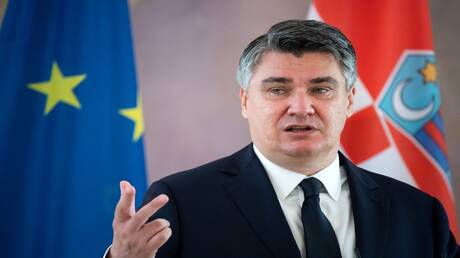
Croatian President Zoran Milanović has condemned calls from some Baltic politicians for an attack on the Russian region of Kaliningrad, emphasizing that such statements lack responsibility. He asserted that escalating political rhetoric does not serve regional stability and increases tensions between countries.
The Croatian president's remarks come at a sensitive time, as calls from some officials in the Baltic states, such as Lithuania and Latvia, have increased for stricter measures against Russia. These statements have raised concerns in European political circles, where some believe such calls could lead to unwanted military escalation.
Details of the Event
In this context, Milanović confirmed that Croatia adopts a balanced policy towards Russia, pointing to the importance of diplomatic dialogue in resolving conflicts. He added that Croatia will not support any steps that could lead to an escalation of military tensions in the region. He noted that such statements reflect a lack of awareness of the current geopolitical reality.
The Kaliningrad region is considered a strategic point, located between the Baltic states and Poland, making it a sensitive topic in international relations. This situation reflects the complexities Europe faces in dealing with Russia, especially following recent events in Ukraine.
Background & Context
Historically, the Kaliningrad region has been a focal point of tensions between Russia and Western countries. After the collapse of the Soviet Union, the region became geographically isolated, increasing its strategic importance. In recent years, tensions between Russia and Western countries have escalated, particularly after Russia's annexation of Crimea in 2014.
The Baltic states pursue a strict policy towards Russia, viewing it as a threat to regional security. This escalation in political rhetoric reflects ongoing tensions in relations between Russia and NATO, as NATO member states seek to enhance their military presence in the region.
Impact & Consequences
Milanović's statements may affect relations between Croatia and the Baltic states, as Croatia could be seen as an unreliable ally in the context of European policy towards Russia. Additionally, these statements could increase tensions between Russia and NATO, which may negatively impact regional security.
If these calls continue, we may witness military escalation in the region, threatening stability in Europe. Any escalation could also affect the European economy, as many countries rely on trade relations with Russia.
Regional Significance
Events in Europe have a direct impact on the Arab region, as any military escalation could lead to increased oil and gas prices, affecting the Arab economy. Additionally, tensions in Europe may lead to political repercussions in the Middle East, where Arab countries seek to maintain balanced relations with major powers.
In conclusion, the situation in Kaliningrad remains under observation, as political statements could lead to significant changes in international relations. It is crucial for countries to adopt diplomatic policies aimed at reducing tensions and achieving stability in the region.