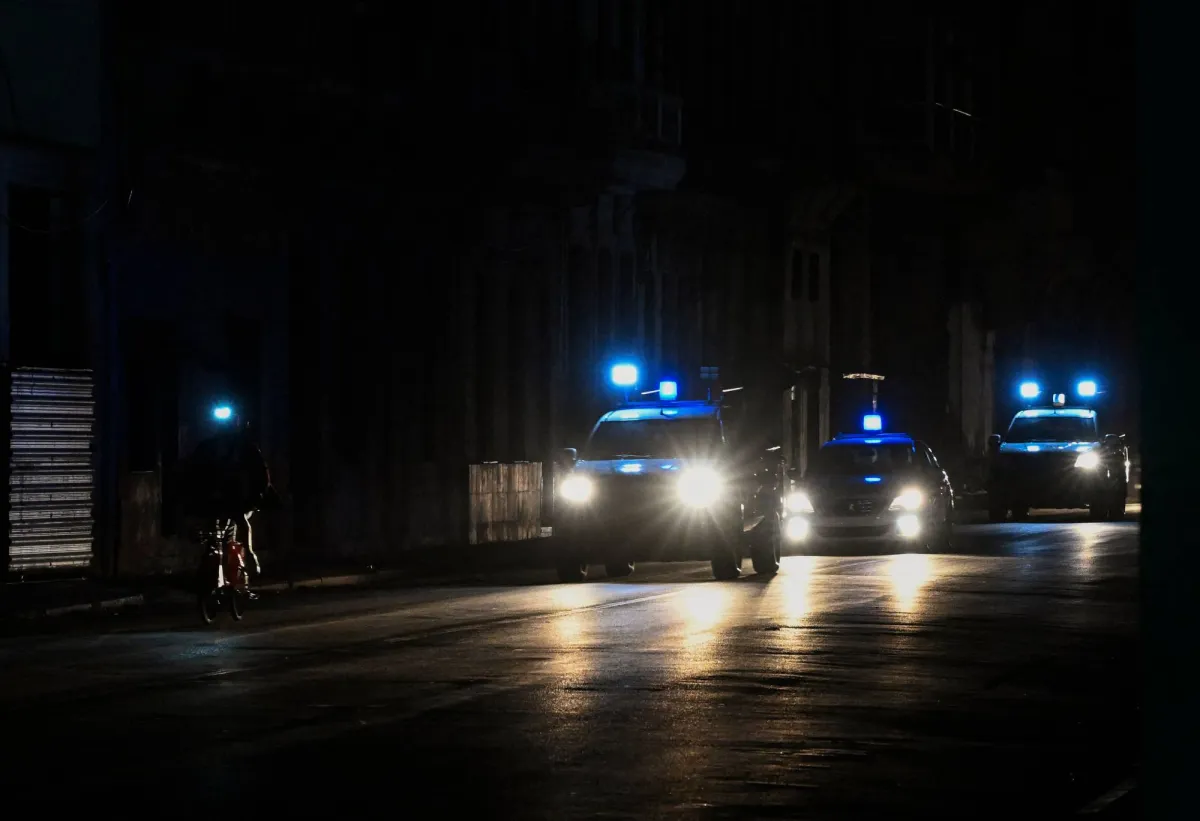
Cuba restored electricity on Sunday after a two-day blackout that affected the entire island, coinciding with rising US pressure on the communist government. This comes as President Donald Trump has expressed a desire to remove Cuban President Miguel Díaz-Canel, with hints that Trump may turn to members of the Castro family, who still hold significant influence in the country.
The electricity company in Havana announced that power was restored to two-thirds of the capital by Sunday afternoon, following the Ministry of Energy's declaration of a "complete blackout" of the national power grid in a country with an estimated population of about 9.6 million. Cuban Prime Minister Manuel Marrero Cruz explained that "the work of the electrical workers was essential to restore power to the national grid," but he also warned that demand would continue to exceed supply.
Details of the Incident
This recurring power outage occurs at a time when Cuba is grappling with a severe economic crisis, having experienced seven major blackouts since the beginning of this year. The outages directly impact the lives of Cubans, raising concerns about food spoilage and increasing protest methods, such as banging pots at night. Authorities report that the recent power outage was caused by a malfunction in a power generation unit at one of the old plants.
Cuban Deputy Foreign Minister Carlos Fernández de Cossío stated that the Cuban military "is preparing for the possibility of military aggression," but emphasized that Havana is ready to continue dialogue with Washington. Nevertheless, officials stressed that discussions about any changes in the political system are off the table.
Background & Context
Historically, the roots of Cuba's economic crises date back to US sanctions imposed decades ago, which have significantly worsened during the Trump administration. These pressures have deepened crises on social, health, and economic levels. Thus, Díaz-Canel faces significant political challenges amid growing internal dissent.
Recently, questions have arisen about who might succeed Díaz-Canel if Trump's administration succeeds in ousting him. Opinions suggest that a leadership vacuum could lead to greater confusion within the Cuban Communist Party, although young and civilian figures have not been able to form an effective alternative under these circumstances.
Impact & Consequences
What the Cuban regime is experiencing today highlights the fragility of the current situation. Reports claim that reshaping leadership could benefit traditional forces linked to the Castro family, especially amid divisions among protesters on the Cuban street. The deteriorating economic situation increases pressure on the government, making it more complicated for the current administration to maintain stability.
Continued pressure from the Trump administration could further escalate popular protests, creating opportunities for real change. Additionally, the return of tensions between Cuba and the United States could affect relations with other countries in the region and potentially re-energize external support for the Cuban opposition.
Regional Significance
The US effort to isolate Cuba raises questions about the regional impact in the Americas, a context that may affect Arab-American interests. Increased pressure to continue supporting democracy and human rights in Cuba could inspire opposition movements in other countries in the region, where human rights and democracy remain dominant issues.
In conclusion, the ongoing events in Cuba reflect a state of instability affecting the daily lives of Cubans and highlight the increasing difficulties in achieving legitimate authority. Local developments require close monitoring by the international community, especially given the risks posed by US policies toward the country.