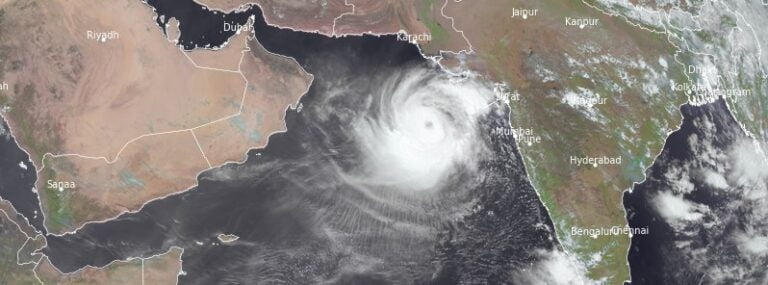
Cyclone Biparjoy has swept through western India, resulting in substantial damage and loss of life, and is now heading towards Pakistan. Indian authorities are warning residents about the dire consequences.
The cyclone has caused heavy rainfall and strong winds, leading to the destruction of numerous homes and farms. Reports of fatalities and injuries have emerged due to landslides and flooding caused by the torrential rains. The Indian government has issued urgent warnings to residents in the affected areas, urging them to take necessary precautions.
Details of the Event
Cyclone Biparjoy began impacting the western regions of India, with reports indicating wind speeds reaching 120 kilometers per hour. This has resulted in the destruction of infrastructure in many villages and towns. Schools and major roads have been closed as a precautionary measure.
Weather forecasts predict that the cyclone will continue to move northwest, threatening new areas in Pakistan. Pakistani authorities have prepared emergency plans to address any potential repercussions.
Background & Context
Cyclones are part of the natural climatic phenomena that frequently affect India, especially during the monsoon season. In recent years, the country has witnessed an increase in the intensity of cyclones, raising concerns about climate change and its impact on the region.
Historically, India has been affected by several devastating cyclones, resulting in the loss of many lives and destruction of property. These phenomena pose a significant challenge for the Indian government, which is continually striving to improve its emergency response.
Impact & Consequences
The repercussions of Cyclone Biparjoy are expected to exacerbate the humanitarian situation in the affected areas, where many residents are suffering from shortages of essential resources such as water and food. Additionally, the damage to farms may negatively impact agricultural production in the region, threatening food security.
Humanitarian organizations are working to provide assistance to the affected areas, but logistical challenges may hinder relief efforts. There are also concerns about the outbreak of diseases due to poor health conditions resulting from the flooding.
Regional Significance
While the world focuses on the impact of Cyclone Biparjoy in India and Pakistan, these climatic phenomena also raise concerns in the Arab region. Some Arab countries have experienced severe climatic changes in recent years, leading to increased flooding and storms.
These events serve as a reminder of the importance of preparedness for natural disasters and the need for enhanced regional and international cooperation to address climate challenges.
Cyclone Biparjoy presents a significant challenge for both Indian and Pakistani authorities, highlighting the urgent need to address the effects of climate change more effectively. The international community must unite to assist the affected countries and provide the necessary support to mitigate the impacts of these disasters.