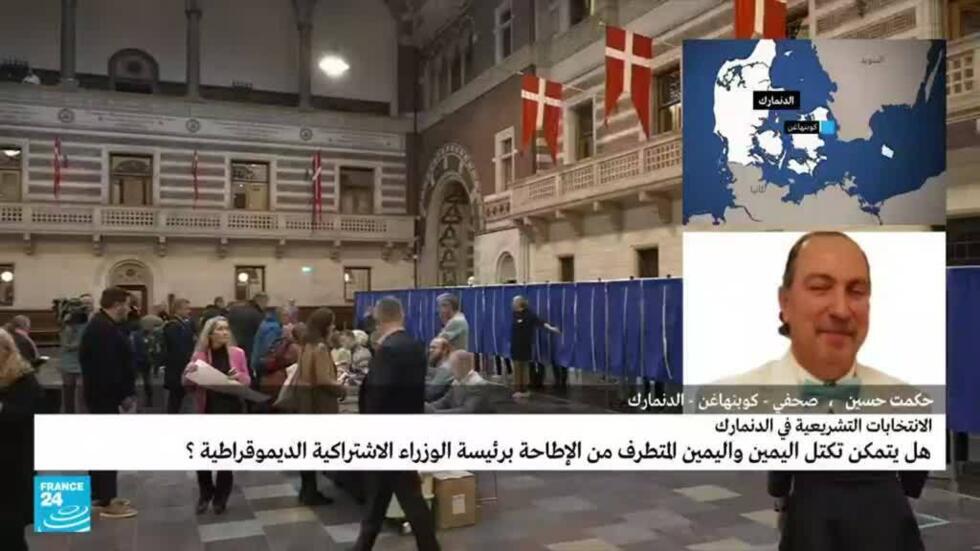
Danes are casting their votes today (Tuesday) in parliamentary elections expected to secure a third consecutive term for Social Democratic Prime Minister Mette Frederiksen. This election comes at a sensitive time, reflecting the local and international challenges facing the country.
Since early morning, voters have lined up at the Copenhagen Town Hall, most on their way to work, under overcast skies. Political analyst at the newspaper Politiken, Elisabeth Svan, confirmed to the French Press Agency that Frederiksen could take the reins again, despite uncertainty regarding the future government composition.
Details of the Event
Mette Frederiksen has been leading the Danish government since 2019, demonstrating her leadership ability to tackle challenges, including opposition from former U.S. President Donald Trump regarding Greenland. One of her campaign slogans was "A Prime Minister You Can Rely On," reflecting voters' desire for stability in a world filled with anxiety.
Conversely, Oli Weber, a political science professor at the University of Copenhagen, believes that forming a right-wing government will be difficult due to the diversity of parties that would need to unite. While polls indicate a lead for the left bloc, it is not expected that either bloc will secure a majority in the Danish Parliament (Folketing), which has 179 seats.
Background & Context
The elections coincide with pivotal issues such as rising living costs, the welfare system, and the environment. Left-wing parties have successfully made clean water issues a key focus, amid rising nitrate levels in water due to livestock waste. The issue of immigration has also emerged as a hot topic, with the Social Democratic Party supporting a new campaign to limit immigration.
Over 20 candidates are competing in Greenland for two seats in Parliament, reflecting the importance of these elections for residents of self-governing areas. Juno Berthelsen, a member of the local parliament, confirmed that these elections will determine the future course amid ongoing talks between Denmark and the United States regarding Greenland's future.
Impact & Consequences
The election results underscore the importance of political stability in Denmark, especially amid increasing global challenges. Frederiksen's victory could bolster Denmark's position on the international stage and reflect voters' desire to continue current policies. In contrast, a right-wing victory could lead to radical changes in domestic and foreign policy.
Attention is focused on how these elections will affect Danish-American relations, particularly amid tensions related to Greenland. Additionally, the election results could impact the security situation in the region, given the challenges facing European countries.
Regional Significance
The Danish elections are part of the global political landscape that influences relations between countries. Amid tensions in the Middle East, the election results could affect Denmark's policies toward immigration and asylum issues, reflecting on Arab countries experiencing political and economic crises.
In conclusion, the results of the Danish elections remain a significant point of interest, as they will determine the country's future amid local and international challenges. Voters are looking for a government capable of addressing crises and achieving stability.