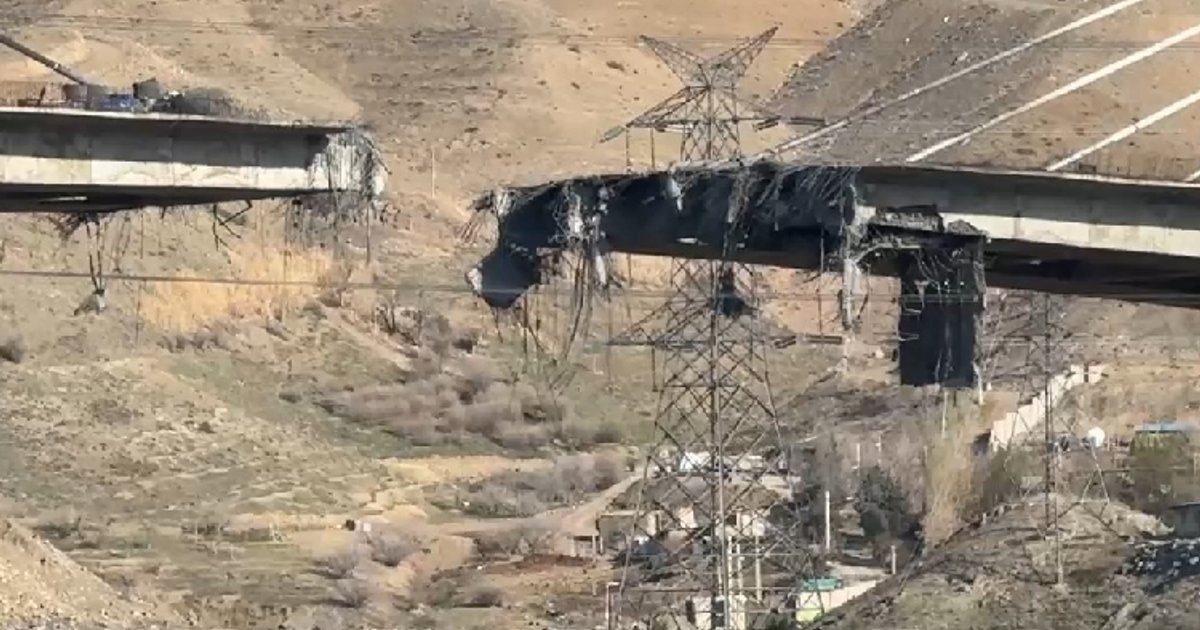
The death toll from the US-Israeli attack on a bridge in Alborz Province, northern Iran, has risen to 13 fatalities, according to the official Iranian news agency (IRNA). The attack, which took place last Thursday, comes amid escalating tensions between Iran and both the United States and Israel, raising concerns about its implications for regional security.
The attack targeted a strategic bridge considered a vital corridor in the region, resulting in significant damage to infrastructure. The number of casualties has been confirmed by official sources, with reports indicating that many individuals sustained serious injuries, heightening concerns regarding the humanitarian situation in the area.
Details of the Incident
The attack carried out by US and Israeli forces is seen as a serious escalation in the ongoing conflict, reflecting an increase in military cooperation between the two countries against Iran. Drones and precision missiles were reportedly used in the assault, showcasing the advanced military capabilities of these nations.
These events unfold at a sensitive time, as Iran has announced its readiness to respond to any aggressions, further intensifying tensions in the region. Iranian officials have indicated that this attack constitutes a blatant violation of national sovereignty, necessitating a strong response from their side.
Background & Context
Historically, relations between Iran and the United States and Israel have been marked by increasing tensions since the Iranian Revolution in 1979. These tensions have escalated in recent years, particularly following the US withdrawal from the Iranian nuclear deal in 2018. Since then, the US has imposed severe economic sanctions on Iran, significantly impacting its economy.
Israel views Iran as an existential threat, seeking to prevent it from developing a nuclear program that could lead to the production of nuclear weapons. This ongoing conflict reflects the geopolitical tensions in the region, where regional and international interests intersect in complex ways.
Impact & Consequences
The recent attack could lead to further escalation in the conflict, with expectations that Iran may respond militarily or through unconventional operations. Such escalation could affect the stability of the region as a whole, exacerbating existing conflicts in Iraq, Syria, and Lebanon.
Moreover, this attack may influence relations between Arab states and Iran, as some Arab countries might find themselves forced to choose between supporting Iran or aligning with the United States and Israel. This situation could lead to new divisions within the region, complicating the political landscape further.
Regional Significance
For Arab countries, the rising tensions between Iran, the United States, and Israel pose a significant challenge. Many Arab nations adopt varying stances towards Iran, increasing divisions within the region. The recent attack could bolster the position of countries seeking to counter Iranian influence in the region, such as Saudi Arabia and the UAE.
At the same time, this escalation may heighten fears of new conflicts erupting, impacting security and stability in Arab states. It is crucial for Arab nations to closely monitor the situation and work towards enhancing security cooperation to address shared challenges.