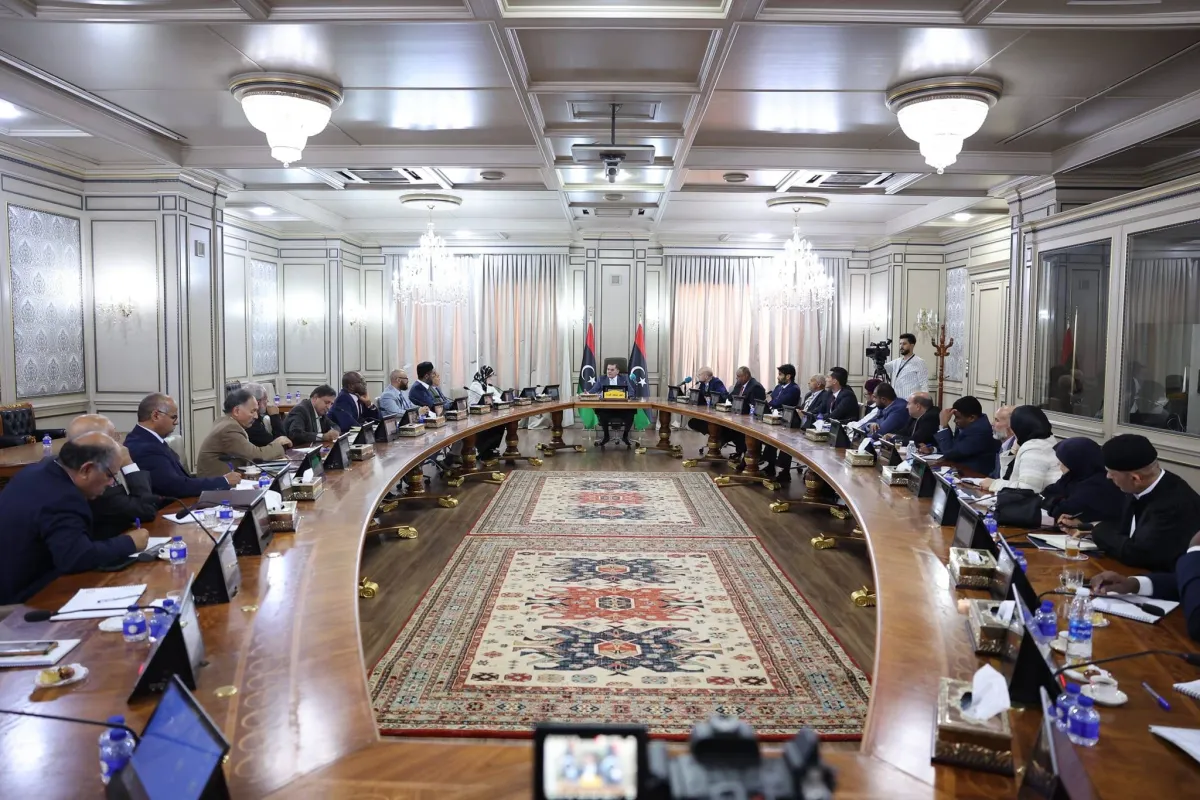
Libya's interim Prime Minister, Abdulhamid Dbeibah, has emphasized the importance of adopting the Libyan constitution first, asserting it as the only path to conducting general elections. He reiterated his firm rejection of what he terms military figures assuming power.
Dbeibah's statements made last week have reignited discussions surrounding the constitution, with some viewing them as contradictory. While he insists on activating and approving the constitution before elections, his government delegation is concurrently participating in the UN 4+4 committee meetings aimed at drafting electoral laws in preparation for the upcoming electoral process.
Details of the Event
In this context, Amar Alablak, a member of the Libyan House of Representatives, described Dbeibah's statements as contradictory, questioning, "What is the Dbeibah delegation negotiating in the committee meetings if they are committed to the constitution?" Alablak pointed out that the government delegation met in Rome with a delegation representing the Libyan National Army, asking, "Why engage in negotiations with those he labels as military?"
Libya has been experiencing political division for years between two competing governments: the National Unity Government led by Dbeibah in Tripoli and a parliament-appointed government led by Osama Hamad in the east and some southern regions, which is backed by Khalifa Haftar.
Context and Background
Alablak believes that Dbeibah's return to insisting on the constitution first aims to obstruct the outcomes of the UN 4+4 committee, noting that the involvement of active forces in the east and west in the U.S. initiative was to avoid angering Washington rather than out of conviction. He posits that Dbeibah fears the committee's success in overcoming the electoral law issues that have hindered elections for years, which, if resolved, would remove the current authorities from the political scene.
Meanwhile, Libyan political activist Ahmed Al-Tawati views the insistence on the constitution as a preemptive attempt to obstruct any electoral path produced by the UN committee. He pointed out that obstruction is often achieved by pushing for options that appear more legal, such as a referendum on the draft constitution issued in 2017, despite everyone recognizing the difficulty of achieving this due to existing disputes.
Implications and Effects
Al-Tawati describes the current scene as a playground for manipulating political statements, where each party directs rhetoric for local consumption to satisfy its supporters, far removed from actual developments. He clarified that the silence of active forces and their reluctance or refusal to acknowledge the adoption of the Paul's initiative, as it represents a sharing of power and wealth, generates increasing hostility from other forces opposing their exclusion.
Conversely, Nadia Imran, a member of the founding committee for the constitution project, praised the renewed call for adopting the constitution before elections, indicating that a referendum on the draft constitution is the easiest requirement as it can be conducted electronically. She emphasized that this is not solely the responsibility of the National Unity Government but must be embraced by all active parties and the international community to resolve the legitimacy renewal dilemma.
Impact on the Arab Region
Fathi Al-Shabli, head of the People's Voice Party, believes that Dbeibah's statements serve as a political message aimed at protecting his position by repositioning himself within the civil current, emphasizing the priority of the constitution, while not severing ties with existing economic agreements. He noted that Dbeibah's reference to the constitution and laws was a clever attempt to shift responsibility onto the 4+4 committee.
These statements come at a sensitive time as Libya seeks to emerge from its ongoing political crisis, reflecting the importance of the constitution in determining the country's future. Under these circumstances, the question remains regarding the political parties' ability to reach a consensus that ensures free and fair elections.