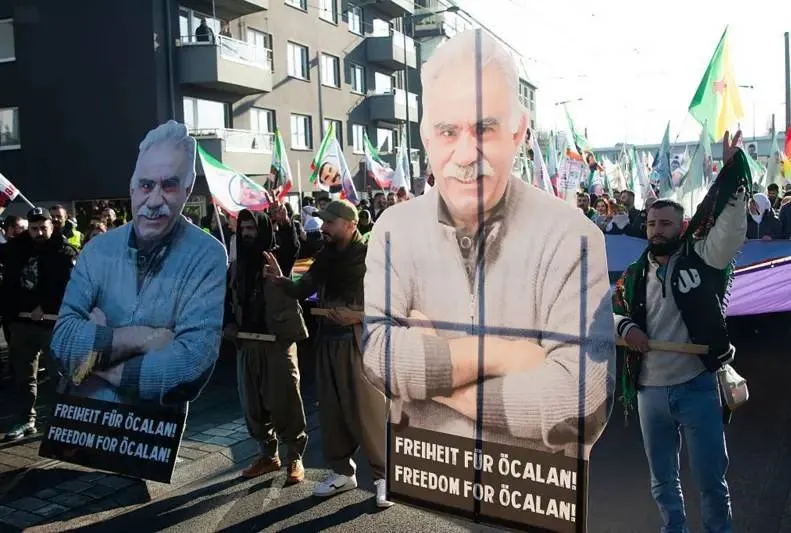
The announcement by the pro-Kurdish "Peoples' Democracy and Equality Party" regarding the establishment of a residential and administrative complex on Imrali Island, where the leader of the Kurdistan Workers' Party (PKK), Abdullah Ocalan, is detained, has ignited a significant political debate in Turkey. This announcement comes at a time when demands are escalating for a change in Ocalan's status or his release, given his central role in the "peace process."
In response to these reports, Turkish Minister of Justice Akın Gürlek denied the existence of any residence for Ocalan, who has been in Imrali Prison for nearly 27 years. Gürlek confirmed that there is only an administrative complex, and that new facilities could be constructed within it, but emphasized that there is no specific building designated as Ocalan's residence.
Details of the Event
Gürlek's statements came after Tulay Hatimoglu, co-chair of the "Peoples' Democracy and Equality Party," confirmed that there are indications of a residence being built for Ocalan in Imrali. She clarified that the issue pertains to defining Ocalan's status as the "chief negotiator" in the peace process, noting his desire to meet with intellectuals, writers, and politicians.
Ocalan, who is regarded as a pivotal figure in peace negotiations, has called on the PKK to disband and lay down arms, which contradicts the Turkish government's stance that the ongoing process is not a negotiation but requires the party to dissolve unconditionally.
Background & Context
The roots of the conflict between the Turkish government and the PKK date back decades, as the party seeks to achieve rights for Kurds in Turkey. The country has witnessed several rounds of negotiations, yet tensions remain high. Ocalan, who has been held in Imrali since 1999, is seen as a symbol of the Kurdish struggle and is viewed as a potential mediator in any future peace process.
In recent years, calls to change Ocalan's status have intensified, especially after he made appeals for peace. However, the Turkish government remains cautious about any changes to his detention conditions, further escalating the debate surrounding this issue.
Impact & Consequences
Pressure is mounting on the Turkish government to alter Ocalan's status, as many believe that doing so could contribute to the resumption of peace talks. Nevertheless, any move in this direction may face strong opposition from nationalist parties, which consider Ocalan a "criminal." This tension could exacerbate the political situation in the country.
Additionally, Tulay Hatimoglu's remarks about the importance of dialogue with Ocalan reflect the division within Turkish society regarding how to address the Kurdish issue. While some view dialogue as the best path forward, others see any rapprochement with Ocalan as a betrayal.
Regional Significance
The Kurdish issue in Turkey is part of a broader regional conflict that encompasses identity and rights issues in the Middle East. Any progress in the peace process could impact Kurds in other countries, such as Iraq and Syria, where Kurds are also striving for their political and cultural rights.
Ultimately, the issue of Ocalan and his status in Turkish prisons remains a focal point of significant debate, intertwining local politics with regional dimensions, making it difficult to predict the future of relations between the Turkish government and the Kurds.