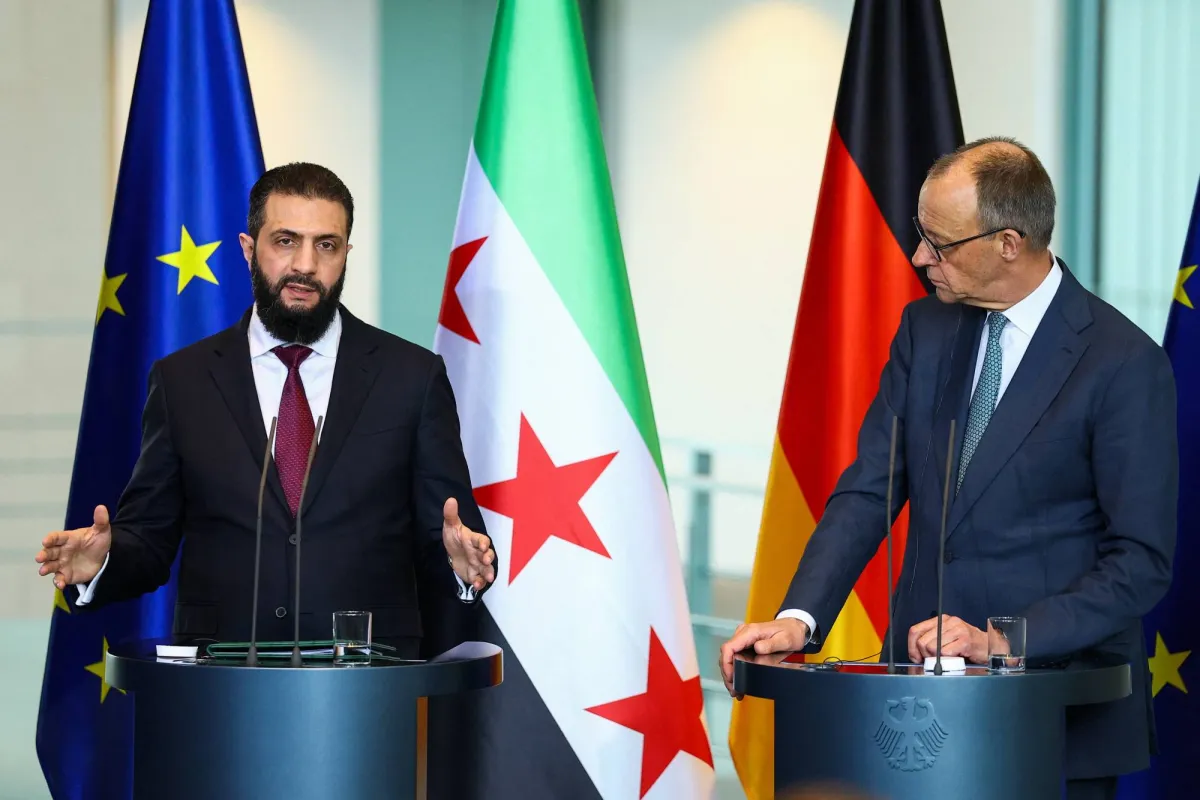
Discussions continue between the Syrian government and its German counterpart regarding the targeted return of 80% of Syrian refugees from Germany. Syrian Foreign Minister Asaad al-Shibani has firmly rejected any notion of forced deportation, emphasizing that Syrians abroad are strategic national assets rather than burdens.
In a related context, the German government has attempted to downplay the significance of the controversy sparked by Chancellor Friedrich Merz's statement, in which he indicated his expectation that 80% of Syrians residing in Germany would return to their homeland within three years. This statement was interpreted as an endorsement of this goal, but Merz later clarified that the figure mentioned was what the Syrian president had indicated.
Details of the Event
On Monday, Merz welcomed Syrian President Ahmad al-Shara in Berlin, marking his first visit to Germany since the ousting of Bashar al-Assad in late 2024. During a joint press conference, the two parties discussed the issue of one million Syrian citizens living in Germany, most of whom are refugees who fled the Syrian civil war.
Merz stated, "In the long term, around 80% of the Syrians currently in Germany should return to their homeland, which is also the desire of President al-Shara." However, al-Shara denied the figure when asked about it at an event at the Chatham House in London, complicating the situation further.
Background & Context
Germany is considered one of the European countries that has welcomed the largest number of Syrian refugees during the civil war, which has lasted for over 14 years. As the intensity of the conflict has decreased in some areas, some European governments have begun to seriously consider the repatriation of refugees to their home countries. However, this raises widespread debate about the security and economic conditions in Syria.
Al-Shibani pointed out that the Syrian government is working with international partners to rehabilitate infrastructure and provide a safe environment for voluntary return. He stressed that the only standard for political action is the "Syrian national interest," reflecting the significant challenges the government faces in reconstruction efforts.
Impact & Consequences
These discussions raise questions about how European countries are handling the refugee issue, especially given the current conditions in Syria. While some governments seek to reduce the number of refugees, the question remains whether the conditions in Syria allow for a safe and voluntary return of refugees.
Furthermore, the statements from Syrian and German officials reflect the political tensions between the two countries, as each side seeks to achieve its own interests amid complex circumstances. It appears that this debate will continue to provoke discussions about asylum policy in Europe.
Regional Significance
The issue of Syrian refugees is one of the most complex issues in the region, affecting relations between Arab countries and Europe. While some Arab countries are seeking to repatriate refugees, the biggest challenge remains providing the appropriate conditions for their return.
The ongoing debate over the return of refugees may impact relations between Syria and European countries, potentially opening the door for further discussions on how to address refugee issues in the future.
In conclusion, the issue of Syrian refugees remains a central topic in political discussions, intertwining humanitarian dimensions with political interests, making it a complex issue that requires comprehensive solutions.