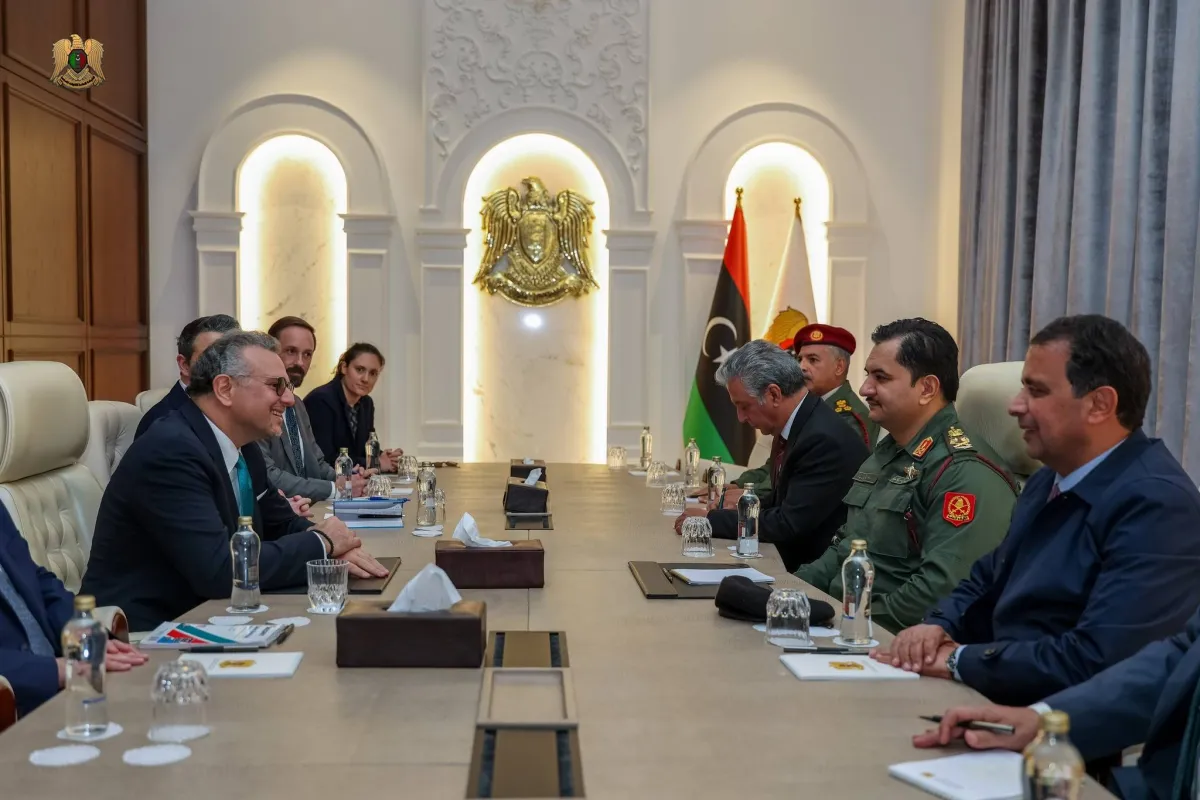
A contentious debate has emerged in the Libyan political circles regarding a US proposal concerning the merger of the two rival governments vying for power in the country. The proposal, announced by the US presidential advisor for African affairs, Moussa Boules, has elicited varied responses from supporters and opponents alike.
The initiative involves appointing Saad al-Hifter, the deputy commander of the National Army, as the head of the new presidential council, while Abdul Hamid Dbeibah continues to lead the Government of National Unity. However, this proposal has been met with widespread rejection from members of the High State Council, who view this step as an attempt to share power between Hifter and Dbeibah under US auspices.
Details of the Proposal
Amina al-Mahjoub, a member of the High State Council, stated that the council's rejection of the proposal reflects their concerns about being sidelined in the political process. She pointed out that selecting specific figures without consulting the House of Representatives and the High State Council undermines their roles. Conversely, some observers believe that the opposition reflects personal interests rather than national ones.
On the other hand, Amar al-Ablaq, a member of the House of Representatives, warned that any agreement on a new government without a clear electoral path could lead to renewed disputes among political forces, potentially bringing the country back to square one. He also noted that the opposition to the proposal might be driven by calculations to remain in power.
Background & Context
Libya has been experiencing a state of political division for years, with two governments competing for power: the Government of National Unity in Tripoli and a parliament-appointed government in the east led by Osama Hamad. This division reflects ongoing tensions in the country, which have escalated since the overthrow of Muammar Gaddafi in 2011.
The reasons behind this division are multifaceted, including tribal and political conflicts, as well as external interventions that have complicated the situation. Nonetheless, there remains hope for achieving stability through dialogue and political negotiations.
Impact & Consequences
If the US proposal is accepted, it could lead to a reshaping of the political landscape in Libya, but it may face significant challenges from opposing political forces. Furthermore, any change in power must be supported by popular will, which necessitates conducting free and fair elections.
Concerns are growing that any agreement might only serve as a temporary solution, failing to address the underlying roots of the crisis. At the same time, the Libyan street remains vigilant for any developments that could impact its political and economic future.
Regional Significance
Libya serves as an example of the challenges faced by many Arab countries in their quest for political stability. The political division in Libya could affect regional security and reflects larger conflicts in the area.
Under these circumstances, it remains essential for the involved parties to work towards comprehensive solutions that ensure peace and stability, not only in Libya but across the entire region.