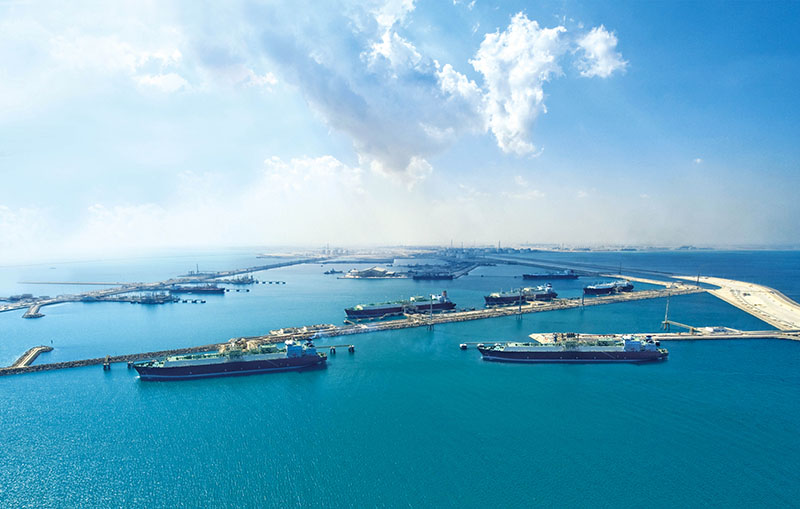
QatarEnergy announced on Tuesday the declaration of 'force majeure' in some liquefied natural gas (LNG) supply contracts with four countries, following Iran's targeting of some of its facilities. The company clarified in an official statement that the countries involved include China, Italy, Belgium, and South Korea, reflecting the impact of regional events on the global energy market.
This move comes at a sensitive time, as the global energy sector faces significant challenges due to geopolitical tensions. The statement indicated that the declaration of force majeure means that the company is unable to fulfill its contractual obligations due to circumstances beyond its control, placing it in a difficult position with its clients.
Details of the Event
In the statement issued by QatarEnergy, it was confirmed that the force majeure was declared due to recent events in the region, which led to the targeting of some vital facilities. These events raise concerns about the stability of LNG supplies, which is considered vital for many importing countries.
Qatar is one of the largest exporters of LNG in the world and has played a pivotal role in meeting global energy needs. However, regional tensions may affect its ability to meet its contractual obligations, potentially leading to widespread economic repercussions.
Background & Context
Historically, the Middle East has witnessed numerous crises that have impacted the energy market. In recent years, tensions between Iran and other countries in the region have escalated, leading to increased concerns about the stability of energy supplies. Iran and Qatar are neighbors, and any escalation in tensions between them can directly affect the natural gas market.
It is worth noting that LNG is a primary energy source for many countries, relying on it for electricity generation and various industries. Therefore, any disruption in gas supplies can lead to price increases and impact the global economy.
Impact & Consequences
The declaration of force majeure is expected to have negative effects on trade relations between Qatar and the four affected countries. Importing companies may face difficulties in securing gas supplies, which could lead to price increases in global markets. Additionally, these developments may affect Qatar's investments in the energy sector, as companies may hesitate to enter into new contracts amid uncertainty.
On another front, the affected countries may seek alternative sources of natural gas, which could lead to changes in market dynamics. These shifts may prompt a reevaluation of energy strategies in many countries, especially those that heavily depend on LNG.
Regional Significance
These developments serve as a wake-up call for other Arab countries that rely on energy supplies from Qatar. The declaration of force majeure could increase tensions between producing and consuming countries, reflecting negative impacts on regional stability. Furthermore, these events may affect regional cooperation in the energy sector, as countries may seek to secure their supplies from other sources.
In conclusion, the importance of enhancing regional cooperation in the energy sector and developing alternative strategies to ensure supply stability is highlighted. The current situation requires Arab countries to consider how to address future challenges in the energy market.