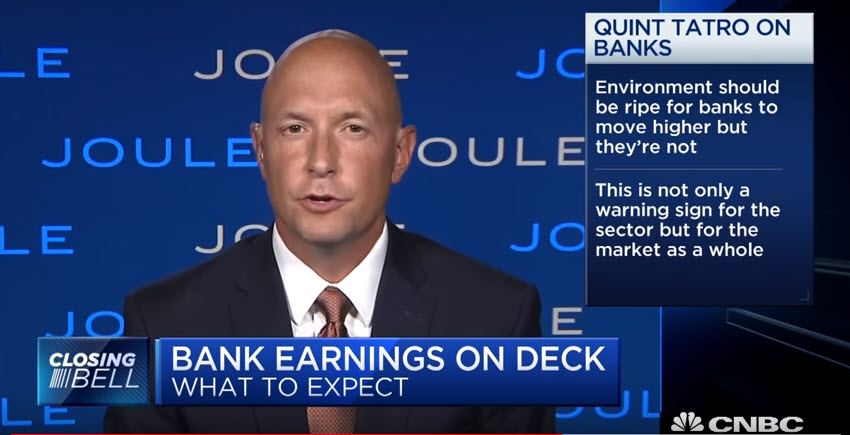
U.S. financial markets experienced a notable decline in buyer activity just minutes before the trading session closed on Wall Street, raising questions about the future of the market amid current economic conditions. Analysts have indicated that this decline may be the result of a combination of economic and political factors affecting investor confidence.
In today's episode of Bloomberg, the program hosted a group of financial experts, including Jason Pride from Glenmede, Rebecca Babin from CIBC Private Wealth, and Dan Niles, founder of Niles Investment Management, along with several other analysts. They all discussed the impact of current events on financial markets.
Details of the Event
These developments come at a sensitive time for the markets, as concerns about inflation and rising interest rates grow. Colin Martin from the Schwab Center for Financial Research noted that investors have become more cautious in their decision-making, leading to a decline in buying activity in the markets.
The discussions also addressed the impact of monetary policies adopted by the U.S. Federal Reserve, where Esther George, the former president of the Federal Reserve Bank of Kansas City, emphasized the importance of a swift response to economic changes to ensure market stability.
Background & Context
Historically, U.S. financial markets have experienced significant fluctuations during times of economic crises. For instance, during the global financial crisis in 2008, buyer activity sharply declined, leading to the collapse of many financial institutions. Today, it seems history is repeating itself, as fears about economic stability increase.
It is worth noting that financial markets are also affected by geopolitical events, such as tensions between major countries, which may impact confidence in the markets. In this context, Kevin Kajiwara from Teneo pointed out the importance of monitoring these events and their effects on the markets.
Impact & Consequences
These developments could lead to negative effects on the U.S. economy, as a decline in buyer activity may result in reduced investments and slower economic growth. This could also impact global markets, as many markets are interconnected.
Moreover, this decline could increase pressure on the Federal Reserve to take additional measures to support the economy, potentially leading to changes in monetary policies in the near future.
Regional Significance
For the Arab region, the decline in U.S. financial markets may affect foreign investments in Arab countries, as many Arab investors rely on U.S. markets as a primary source of investment. Additionally, any fluctuations in the U.S. economy could impact oil prices and commodity prices, reflecting on the economies of producing countries.
In conclusion, it appears that U.S. financial markets are facing significant challenges at present, necessitating close monitoring of developments by investors and analysts. Understanding these dynamics will be crucial for determining future trends in the markets.