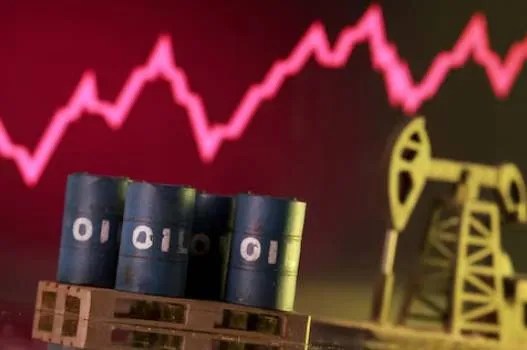
Energy stocks in the United States and Europe fell on Wednesday due to a drop in oil prices after a two-week ceasefire was announced in the Middle East. This announcement raised hopes for the resumption of oil and gas supplies through the Strait of Hormuz, contributing to the price decline.
On Tuesday, U.S. President Donald Trump agreed to the ceasefire just two hours before the deadline set by Iran to reopen the strait. Trump warned of devastating attacks on Iranian civilian infrastructure if Tehran did not comply with the decision, according to Reuters.
Details of the Event
The ceasefire came after a six-week conflict that led to a sharp rise in oil prices, prompting governments and companies to seek precautionary solutions to address any sudden shocks in the energy sector. Oil prices fell below $100 per barrel on Wednesday, with Brent crude futures hitting their lowest level in nearly a month at $91.70, following record monthly gains in March due to the conflict's impact on global supplies.
Matt Britzman, senior equity analyst at Hargreaves Lansdown, stated, "Restoring free navigation through the Strait of Hormuz without any Iranian fees or restrictions is crucial for oil prices to gradually return to the levels we saw before the conflict began."
Background & Context
Shares of major U.S. energy companies declined, with Exxon Mobil and Chevron dropping by 6.3% and 4.6%, respectively, in pre-market trading. Shares of other oil and gas producers, such as Occidental Petroleum and Devon Energy, fell between 5% and 8%.
In Europe, shares of British companies BP and Shell, Italian Eni, French Total Energies, and Spanish Repsol dropped between 6% and 9%. Norwegian Equinor saw a decline of 12.5%, while local companies Var Energy and Aker BP, which had previously benefited from disruptions in Qatari gas flows, lost 11.3% and 2.6%, respectively.
Impact & Consequences
The European oil and gas sector was the worst performer, declining by 4.3%, heading towards its largest daily drop since April 2025. However, the index remains up by about 30% so far in 2026.
On Wednesday, Hapag-Lloyd expressed cautious optimism about the possibility of resuming shipping through the Strait of Hormuz following the ceasefire agreement. However, it noted that restoring normal shipping operations would take at least 6 to 8 weeks.
Regional Significance
Signs of resuming maritime activity in the Strait of Hormuz became apparent immediately after the ceasefire agreement was announced. Marine Traffic Observatory data showed initial movements of commercial vessels after a period of complete paralysis in the region.
These movements come amid global anticipation of the truce's ability to secure "safe" and sustainable passage for the stranded supertankers, particularly liquefied natural gas carriers heading to European and Asian markets, which are vital to energy supplies at this sensitive stage.
The International Maritime Organization (IMO) announced on Wednesday that it is working to ensure "safe passage" for ships through the Strait of Hormuz following the announcement of a ceasefire in the ongoing war. The organization's Secretary-General, Arsenio Dominguez, confirmed that efforts are focused on implementing arrangements to ensure the safety of maritime traffic during this critical phase.