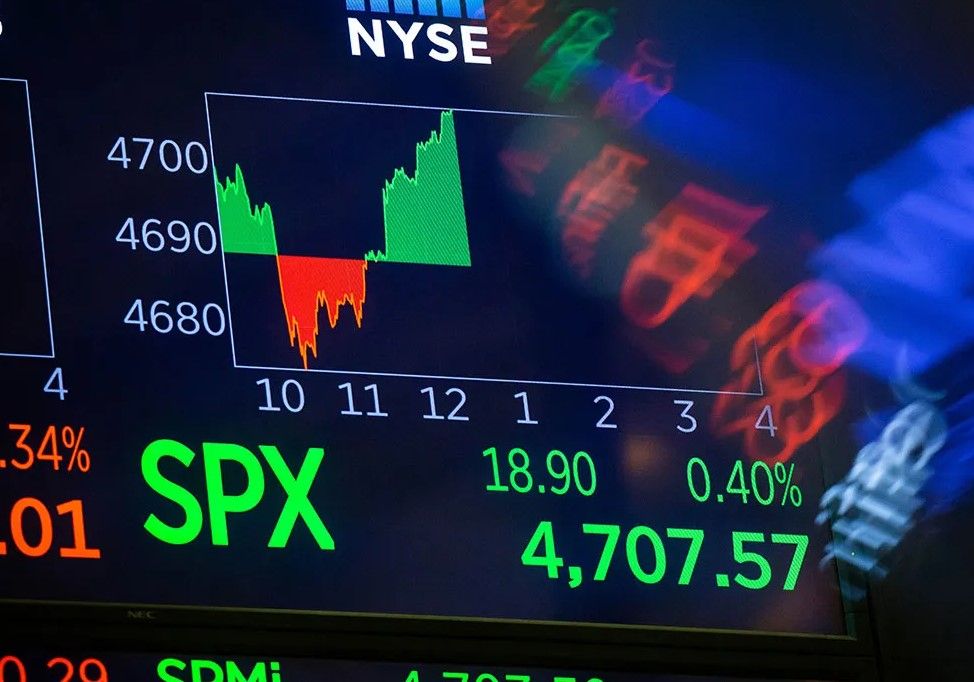
Economic reports indicate that the 200-day moving average of the S&P 500 has become a victim of the success of exchange-traded funds (ETFs), affecting the accuracy of this index in market evaluation. This change raises questions about the future of investments in financial markets.
In recent years, ETFs have become one of the most popular investment tools among investors. With the increasing use of these instruments, the 200-day moving average of the S&P 500, which is one of the most prominent indicators of the U.S. market, has started to lose some of its effectiveness as a key indicator of market trends.
Details of the Event
ETFs are considered an easy way for investors to access a diverse range of assets, making them attractive to both individual and institutional investors. However, this success has led to the distortion of some traditional indicators such as the 200-day moving average, as these indicators have become more influenced by ETF movements.
Data shows that many investors are increasingly relying on these funds, which means that market movements have become more volatile and less stable. This change in investor behavior raises questions about how these indicators are used in making investment decisions.
Background & Context
The S&P 500 index was established in 1957 and is considered one of the most important indicators reflecting the performance of the U.S. market. The index measures the performance of 500 of the largest companies listed on the U.S. stock exchange. Over time, this index has become a key benchmark for investors and analysts in assessing the health of the U.S. economy.
With the increasing popularity of ETFs, financial markets have witnessed a significant shift in how stocks are traded. These funds now represent a large percentage of daily trading volume, affecting how traditional indicators like the S&P 500 move.
Impact & Consequences
The impact resulting from this change in the use of ETFs is significant, as it may lead to greater market fluctuations. Investors who rely on the 200-day moving average as a tool to determine entry and exit points may find themselves in a difficult position, as this index no longer accurately reflects the true market trends.
Moreover, this change may increase risks for investors, as reliance on potentially distorted indicators can lead to incorrect investment decisions. Therefore, investors need to reassess their investment strategies in light of these changes.
Regional Significance
While these changes affect U.S. markets, they also have implications for financial markets in the Arab region. Many Arab investors closely monitor the performance of U.S. markets, considering them a benchmark for their investment directions.
If these trends continue to affect U.S. market indicators, Arab investors may need to rethink their investment strategies, especially given the increasing reliance on tools like ETFs.
In conclusion, it is clear that the success of ETFs may bring new challenges for investors, requiring them to adapt to these changes to ensure they achieve their investment goals.