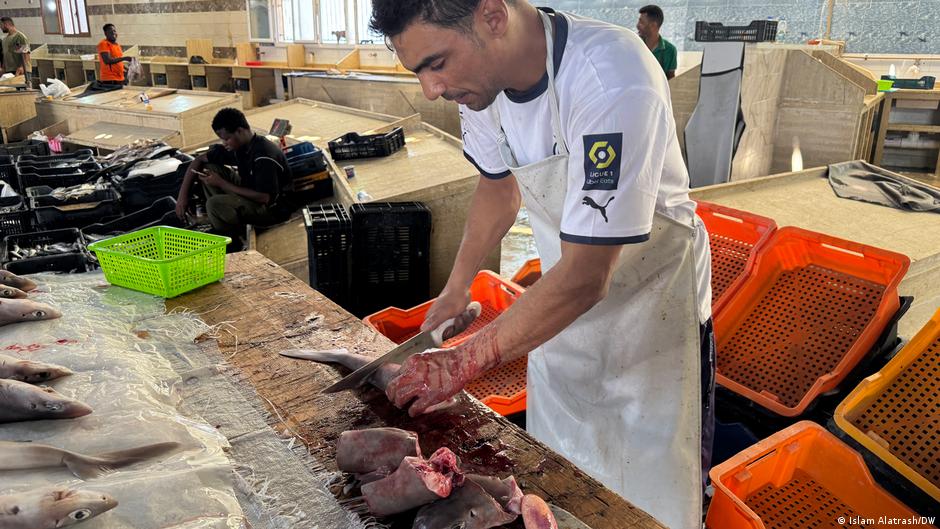
The coasts of Libya, particularly in the capital, Tripoli, are experiencing a concerning decline in shark populations, as endangered species, including pregnant females, are sold in markets without any oversight. This alarming situation highlights a complete lack of regulation in fishing, threatening the survival of these species in their natural habitat.
In one fish market in Tripoli, vendors compete to attract customers to their stalls filled with various types of seafood, but among these species, sharks are prominently displayed, including the locally known "Calab Sea" species, which is caught during breeding times. One fisherman, who requested anonymity for security reasons, stated that there is a total absence of regulation both at sea and at the point of sale.
Details of the Situation
The "Calab Sea" is considered one of the species sold at low prices, making it popular among local consumers. As the economic situation in the country deteriorates, fishermen ignore restrictions on fishing during breeding seasons, continuing to catch these species despite knowing they are carrying eggs. The fisherman noted, "We sell it in the market because it brings in money."
Studies show that shark and ray populations in the oceans have declined by up to 71% since 1970, placing approximately 38% of these species on the endangered species list according to the International Union for Conservation of Nature.
Background & Context
Libyan waters are considered among the most important habitats for sharks in the region; however, fishing laws dating back to 1989 are not strictly enforced. Fishermen are facing increasing economic pressures, leading them to disregard laws aimed at protecting endangered species.
Research indicates a pressing need for regional coordination regarding the monitoring of shared waters, data exchange, and the implementation of protective measures. However, these efforts remain limited, increasing the risk of species extinction.
Impact & Consequences
Marine biologists emphasize that the decline in shark populations can lead to imbalances in the marine ecosystem, negatively affecting important commercial fish species such as sardines and mullet, which many coastal communities rely on.
Sharks are considered keystone species in regulating the marine food chain, and their decline could have adverse effects on biodiversity in the seas.
Regional Significance
The issue of shark protection in Libya is of great importance to the Arab region, as it reflects the common challenges faced by countries in preserving marine biodiversity. Interventions to protect these species could contribute to the sustainability of marine resources in the long term.
Given the unstable economic and political situation in Libya, protecting marine heritage may seem to have limited immediate consequences, but intervention at this stage can lay the groundwork for the sustainability of the ecosystem for years to come.