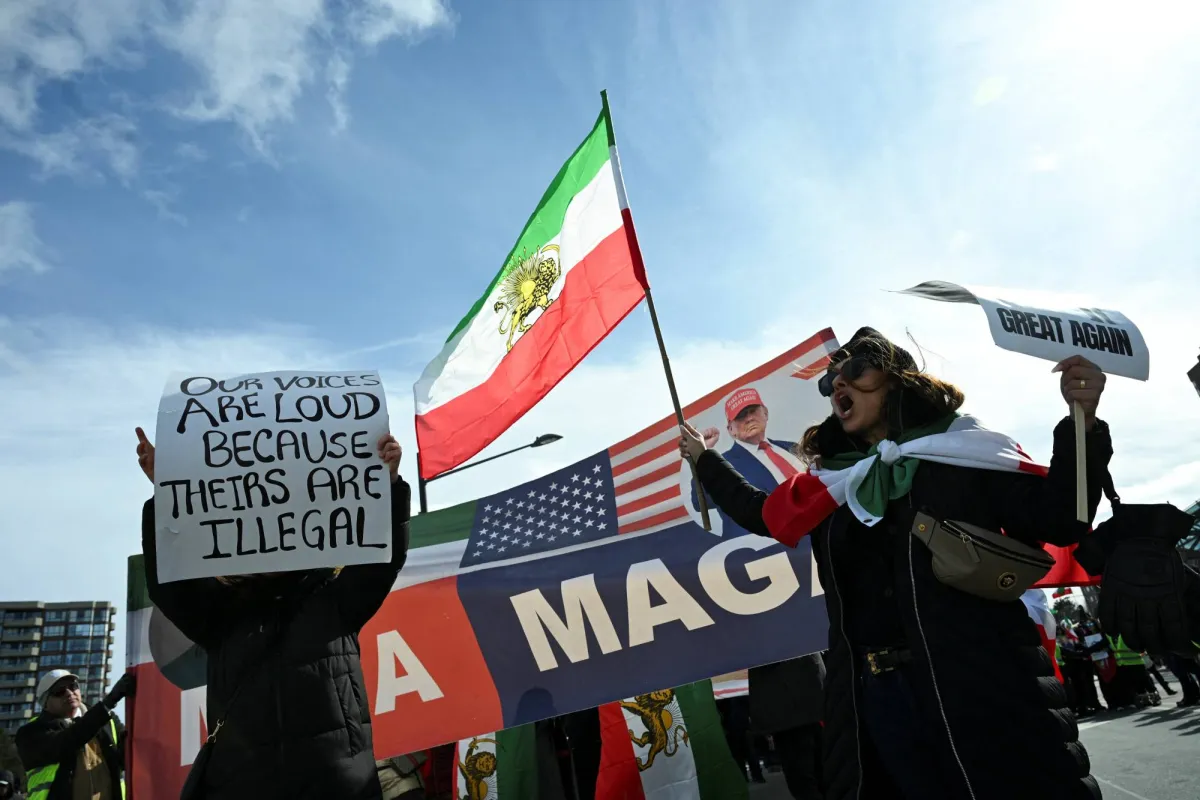
Divisions within the American right are intensifying amid the escalating war against Iran, where polls show that the 'MAGA' base still supports President Donald Trump, but dissenting voices are rising from within the right-wing camp. There is increasing rebellion within the Republican Party, with accusations against Trump of betraying his promises to put 'America First' and end endless wars.
Prominent conservative voices such as Tucker Carlson, Megan Kelly, and former Congresswoman Marjorie Taylor Greene have joined the ranks of war opponents, urging Trump to end it. The 'Washington Report' program, a collaboration between the Middle East newspaper and Sharq channel, reviews how the coalition that brought Trump to the White House is beginning to fracture, how he has so far managed to maintain the loyalty of his popular base, and the potential for 'MAGA' to change its identity and distance itself from conservatives.
Details of the Event
Conservatives opposing the Iran war accuse Trump of betraying his electoral promises. Justin Logan, director of defense and foreign policy studies at the Cato Institute, recalled Trump's statements during his election campaign, where he urged voters to support him to avoid U.S. involvement in a war with Iran. Logan considered the administration's argument for waging war to be 'extremely weak', pointing out that Tehran was not two weeks away from acquiring a nuclear weapon. He expressed concerns that Trump might feel intense frustration, pushing him to take extreme measures against Iran.
Despite the criticisms, the majority of the 'MAGA' base does not see Trump as having betrayed his promise to put 'America First'. Alex DeGrasse, a consultant to Republican leadership in Congress, opposed the idea that Trump violated his electoral promise, noting that strikes against Iran were in response to its aggressive actions. He emphasized that the Iranian regime is the 'head of the snake of terrorism' in the region and that it is essential to take action to protect U.S. security.
Background & Context
Historically, U.S.-Iranian relations have seen increasing tensions, especially after Trump's withdrawal from the nuclear agreement in 2018. This decision had significant effects on regional stability, heightening the conflict between the United States and Iran. Since then, the U.S. administration has taken a series of military actions against Iran, leading to escalating tensions in the region.
These events coincide with the upcoming midterm elections in the United States, increasing pressure on Republicans. Many analysts believe that the continuation of the war could negatively impact the Republican Party's chances in the elections, especially with the rising cost of living resulting from this war.
Impact & Consequences
The division within the American right could have significant repercussions for the future of the Republican Party. If the situation remains as it is, it could lead to further splits within the party, weakening Trump's position in the upcoming elections. At the same time, the increasing economic pressures resulting from the war could affect American public opinion, as polls show that over 50% of Americans do not support the war.
Concerns about deploying U.S. ground troops in Iran are raising alarm among many Republicans, as they believe this decision could lead to increased casualties among the U.S. military, which could heighten opposition within the party. Conversely, some Trump supporters believe that any decision he makes will be in the interest of national security.
Regional Significance
The impact of the war on Iran extends to the Arab region, where Iran is considered a key player in many regional conflicts. The escalation of tensions could destabilize countries like Iraq, Syria, and Lebanon, where Iran-backed groups are present. At the same time, any military escalation could affect global oil prices, negatively impacting the economies of Arab countries.
In conclusion, the situation in and around Iran remains complex, with military, political, and economic factors intertwining. How Trump will deal with these challenges, and whether he will be able to maintain the support of his popular base, remains an open question under the current circumstances.