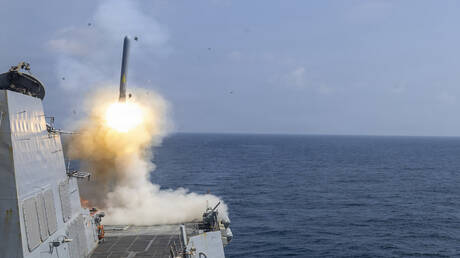
Reports indicate that Japan's order for approximately 400 Tomahawk missiles may be delayed due to the United States depleting its stockpile in the ongoing conflict with Iran.
This delay comes at a critical time as Japan seeks to enhance its defense capabilities amidst rising regional tensions. The Tomahawk missile is one of the advanced systems relied upon by many countries to bolster their military capabilities.
Details of the Event
In recent years, the relationship between the United States and Japan has seen a marked improvement, as Tokyo aims to strengthen its security partnership with Washington. However, the ongoing conflict with Iran has impacted the United States' ability to fulfill its military commitments to its allies, including Japan.
Tomahawk missiles are strategic weapons used by the U.S. Navy, known for their high precision in hitting targets. Japan has requested these missiles as part of its efforts to enhance its defenses against potential threats from North Korea and China.
Background & Context
Historically, Japan has relied on the United States for securing its defenses, especially after World War II. As tensions escalate in the Asia-Pacific region, Tokyo has begun to seek ways to enhance its independent military capabilities.
In recent years, Japan has modernized its armed forces and increased its defense budget, reflecting a shift in its traditional defense policy. However, reliance on American weapons, such as Tomahawk missiles, highlights the challenges Tokyo faces in achieving complete military independence.
Impact & Consequences
The delay in the delivery of Tomahawk missiles may affect Japan's defense strategy, especially in light of increasing threats from its neighbors. This situation could lead to increased pressure on the Japanese government to expedite the development of domestic defense systems.
Moreover, this delay may negatively impact U.S.-Japan relations, as Tokyo may feel that Washington is unable to meet its security commitments. This could lead Japan to reassess its defense policies and its relationships with other countries in the region.
Regional Significance
While this event focuses on U.S.-Japan relations, it has broader implications for regional security. The conflict with Iran affects the balance of power in the Middle East, which may reflect on the overall stability of the region.
Concerns are growing in Arab countries over rising military tensions, especially with major powers like the United States involved in multiple conflicts. This situation may prompt Arab nations to reevaluate their security and military strategies.
In conclusion, this event illustrates how regional conflicts can impact international relations and reshape the defense policies of nations. As tensions continue, the question remains on how different countries will respond to these challenges.