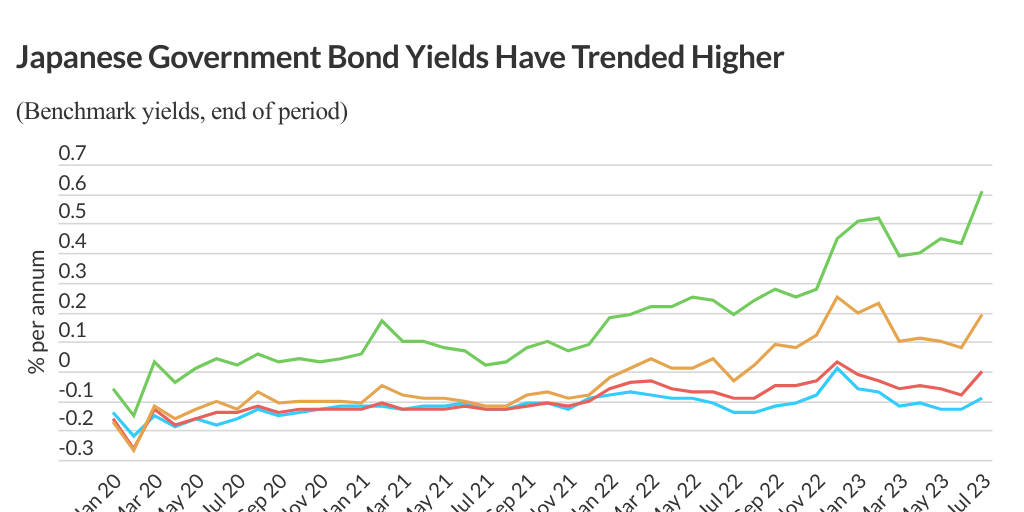
Japanese government bond auctions for ten years have recorded the lowest demand since May, as renewed increases in oil prices have raised inflation concerns and negatively impacted investor appetite. These developments come at a critical time for the Japanese economy, which is striving to achieve stability amid volatile economic conditions.
Data shows that demand for Japanese government bonds has significantly declined, reflecting investors' worries about rising oil prices and their impact on inflation. This raises questions about the Japanese government's ability to manage public debt under these circumstances.
Details of the Event
In the latest auction, Japanese government bonds for ten years saw weak demand, as investors were unable to absorb the offered quantity adequately. This decline in demand reflects a lack of confidence in market stability, especially in light of recent surges in global oil prices.
The increase in oil prices, which have surpassed previous levels, has exacerbated inflation fears, negatively affecting investor appetite. At the same time, the Japanese government continues its efforts to support the economy through flexible monetary policies, but these measures appear insufficient to alleviate current concerns.
Background & Context
Historically, Japan has been one of the largest government bond markets in the world, with investors relying on bonds as a safe haven. However, fluctuations in global oil prices can significantly impact this market, especially given the Japanese economy's heavy reliance on imported energy.
In recent years, Japan has faced several economic challenges, including sluggish economic growth and rising levels of public debt. These factors make it difficult for the government to achieve financial stability, complicating the current situation further.
Impact & Consequences
The decline in demand for government bonds may lead to increased borrowing costs for the Japanese government, potentially affecting its ability to finance development projects and public services. If this trend continues, the government may need to reassess its financial and monetary strategies.
Moreover, inflation fears could lead to higher interest rates, which will impact the economy as a whole. Under these conditions, investors may find themselves in a difficult position, needing to make tough investment decisions in an unstable environment.
Regional Significance
Oil prices are a significant factor influencing the global economy, including Arab countries that rely on oil exports. Any increase in oil prices could lead to higher revenues for producing countries, but it may also result in increased inflation for importing countries.
Thus, developments in the Japanese market could have repercussions on Arab markets, potentially affecting their investments and trade relations with Japan and other countries. It is crucial for Arab nations to closely monitor these developments, especially amid ongoing fluctuations in oil prices.
The decline in demand for Japanese government bonds reflects significant economic challenges facing the country and indicates the need for urgent measures to ensure market stability. Under these circumstances, investors and governments in the Arab region must be prepared to adapt to potential changes in the global market.