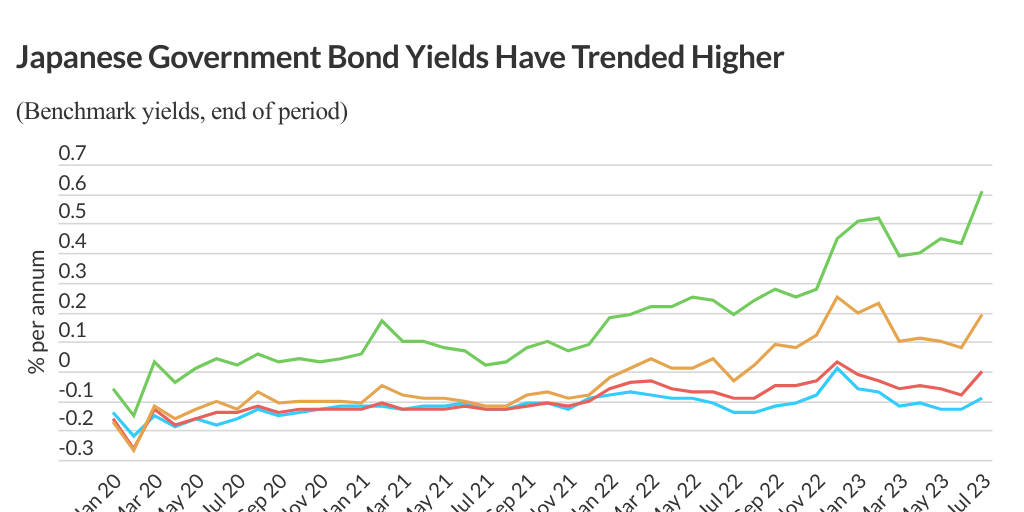
Japanese government bond auctions for two-year terms saw demand in line with the average over the past twelve months. Data showed that investors displayed significant interest in the bonds, thanks to the high yields they offer, despite prevailing concerns about the possibility of interest rate hikes by the Bank of Japan in the near future.
These auctions are an important indicator of the health of the Japanese economy, reflecting investor confidence in the government's ability to manage debt. The results indicated that demand for bonds was strong, suggesting that the market still trusts in the stability of short-term yields.
Details of the Event
In the Japanese government bond auction, two-year bonds were sold at a high yield rate, attracting many investors. Data showed that demand was consistent with the average demand over the past twelve months, reflecting market stability amid current economic conditions.
Despite concerns about potential interest rate hikes, the attractive yields of Japanese government bonds contributed to drawing in investors. Some analysts noted that this strong demand could indicate that investors expect stability in yields in the short term.
Background & Context
Historically, Japan has suffered from low interest rates for a long time, making government bonds an attractive option for investors. However, expectations regarding interest rate hikes have raised concerns in the market, as the Bank of Japan seeks to achieve economic stability amid changing global conditions.
In recent years, Japan has witnessed significant economic shifts, including government efforts to stimulate growth through accommodative monetary policies. Nevertheless, economic challenges such as inflation and potential recession continue to affect investor decisions.
Impact & Consequences
These auctions are a crucial indicator of the health of the Japanese economy, reflecting investor confidence in the government's ability to manage debt. Additionally, strong demand for government bonds may contribute to the stability of the financial market, enhancing the government's ability to finance its future projects.
On the other hand, fears of interest rate hikes could lead to market volatility, as investors seek to assess the risks associated with investing in government bonds. Consequently, any changes in the Bank of Japan's policy could significantly impact the financial market.
Regional Significance
The financial markets in the Arab region are significantly affected by global economic changes, including movements from the Bank of Japan. An increase in interest rates in Japan could lead to capital flows toward more stable markets, impacting investments in the region.
Furthermore, the stability of the Japanese financial market may help bolster confidence in global markets, potentially benefiting Arab countries seeking to attract foreign investments.
In conclusion, Japanese government bonds remain an attractive option for investors, given the high yields and stable demand, despite concerns about interest rate hikes. It requires close monitoring of economic developments in Japan and their impact on global markets.