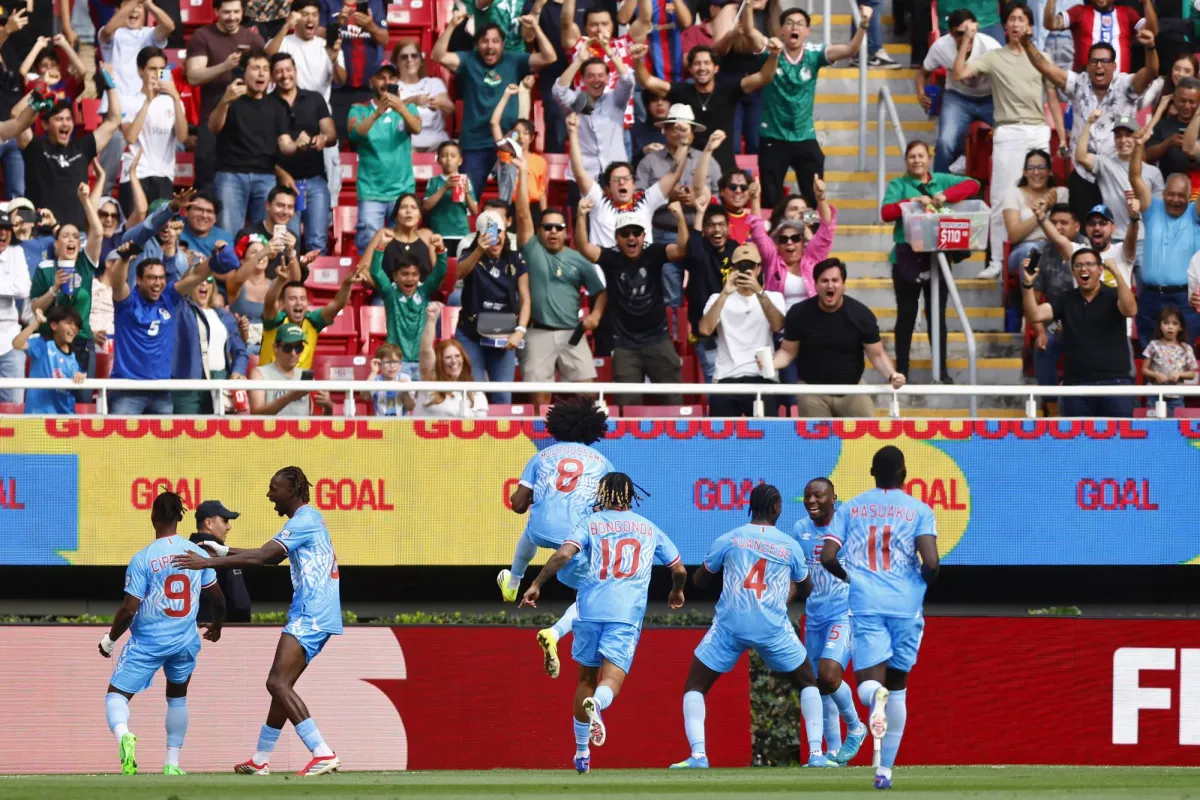
The Democratic Republic of Congo has qualified for the 2026 World Cup after defeating Jamaica 1-0 in the continental playoff, which took place at Estadio Guadalajara in Mexico. The decisive goal came in the 100th minute from player Axel Tuanzebe, who scored from a corner kick, leading players and fans to celebrate this historic achievement.
Despite the Congolese team's dominance throughout the match, there were few clear opportunities, as the team struggled with the final touch. Nevertheless, Tuanzebe managed to secure the victory in extra time, bringing the Democratic Republic of Congo back to the World Cup finals for the second time in its history, following its first appearance in 1974 under the name Zaire.
Details of the Event
This moment is historic for the Democratic Republic of Congo, as it ends a long wait of 52 years. The team displayed a strong performance during the match, managing to control the field, even though they were unable to score during regular time. Tuanzebe's goal was confirmed after a thorough review by the video assistant referee, which heightened the excitement among the fans.
The qualification of the Democratic Republic of Congo reflects the development of football in the country and boosts the hopes of fans for positive results in the upcoming tournament. This qualification comes at a crucial time for African football, as many teams strive to establish their presence on the global stage.
Background & Context
Historically, Congolese football has faced numerous challenges, ranging from political and economic crises to weak sports infrastructure. However, qualifying for the World Cup represents a milestone in the history of sports in the country. The last appearance of Congo in the World Cup was in 1974, where they failed to achieve notable results, making this new qualification particularly significant.
It is worth noting that the Democratic Republic of Congo has seen remarkable progress in recent years, having invested in developing local talents and enhancing sports infrastructure. This qualification is the culmination of long-term efforts by players, coaches, and administrators.
Impact & Consequences
The Democratic Republic of Congo's qualification for the World Cup is a positive step that enhances the status of African football on the international stage. This achievement is expected to attract more investments into sports in the country, which could lead to improved standards of play and the development of young talents.
Additionally, this qualification may inspire new generations of players in Congo, as they see that dreams can be realized through hard work and dedication. This achievement is likely to increase fan support for the national team, boosting national spirit and uniting people around sports.
Regional Significance
The Democratic Republic of Congo's qualification for the World Cup highlights the importance of football as a means of communication between cultures and peoples. As Arab teams prepare to compete in the tournament, the experience of the Democratic Republic of Congo could have a positive impact on Arab teams, as they may draw inspiration from the spirit of determination and perseverance.
Moreover, Congo's success may encourage Arab nations to enhance their investments in football and develop their sports programs, potentially leading to improved performance on the international level. Ultimately, this qualification represents an opportunity to strengthen ties between African and Arab countries through sports.