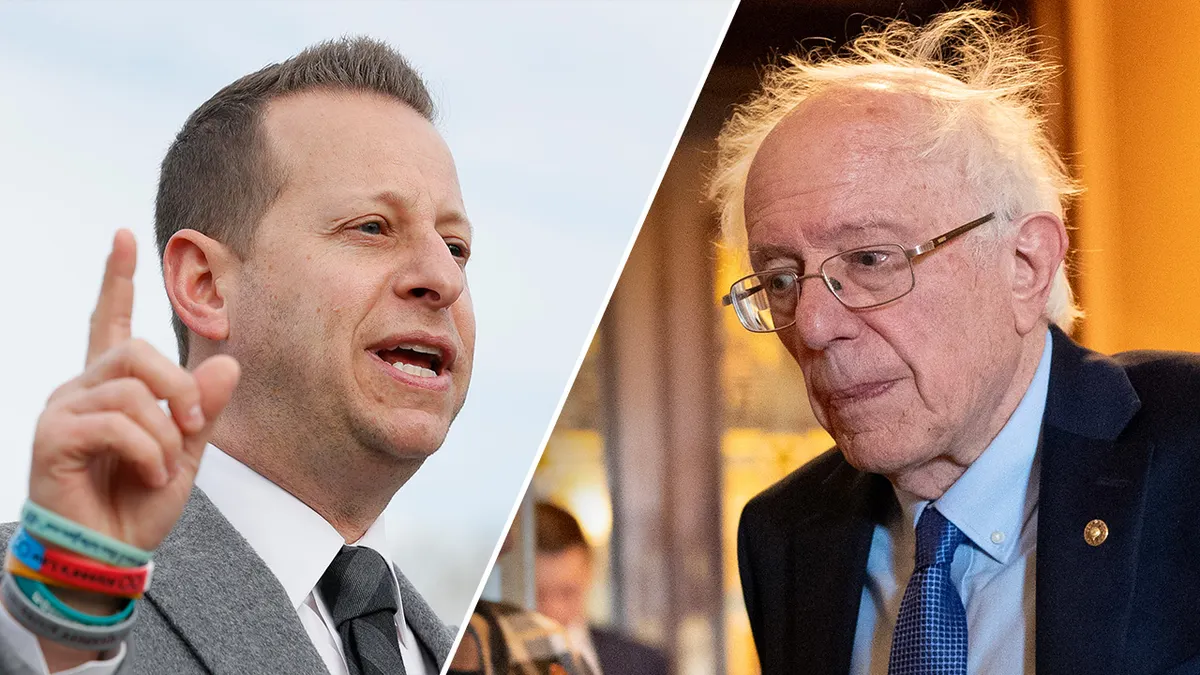
Senator Bernie Sanders has revealed a notable shift in the Democrats' stance in the Senate regarding military aid provided to Israel. This change comes at a time when public anger in the United States is increasing over the continued support Washington provides to Israel, especially amid escalating military operations in Gaza, Lebanon, and Iran.
In an exclusive interview with Politico, Sanders pointed out that the most significant evidence of this shift is the substantial increase in the number of Democratic senators who have supported his initiatives to block arms deals to Israel. In April 2025, when Sanders first proposed his initiative to halt a U.S. arms deal to Israel, he received support from only 14 Democratic members. By April 2026, that number rose to 39 members, reflecting a major political shift in the U.S. stance towards Israel.
Details of the Event
Although Republicans and some pro-Israel Democrats can still pass arms shipments, Sanders' allies believe that the growing support for opposing these deals sends a clear message to Israeli Prime Minister Benjamin Netanyahu: Israel can no longer rely on unconditional American support.
Sanders emphasized that he did not need to exert significant pressure behind the scenes, as the issue has become clear to everyone. He explained that when senators return to their states and hold town hall meetings, they hear voters asking, "Why are you spending our money on military aid to Israel?"
Background & Context
These transformations coincide with increasing public and political criticism of Israeli policies, as polls have shown that the majority of the American public, including independents and Republicans, believe military aid to Israel should not be provided. This trend reflects a change in the general mood regarding foreign issues, particularly those related to the Israeli-Palestinian conflict.
Sanders also acknowledged the difficulty of confronting the influence of the pro-Israel lobby, especially the American Israel Public Affairs Committee (AIPAC), which has spent tens of millions of dollars on campaign donations and wields significant influence in Washington. This makes opposing its policies challenging for many Democrats.
Impact & Consequences
Sanders rejected accusations linking criticism of Netanyahu's government to anti-Semitism, asserting that anti-Semitism is "a completely disgusting ideology." He clarified that opposing the racist and extremist policies of Netanyahu's government is not anti-Jewish but a legitimate political stance. This statement reflects the increasing tension between political positions and the accusations that opponents may face.
Sanders expects his efforts in the Senate to continue, and the scope of support for opposing arms to Israel may expand, potentially leading to "significant splits within the Republican Party." This indicates that the American debate over arming Israel is still in its early stages and could significantly impact U.S. policies in the region.
Regional Significance
This shift in the American stance towards arming Israel represents a turning point that could affect relations between the United States and Arab countries. Amid rising public criticism, Arab governments may find themselves in a stronger position to demand changes in U.S. policies regarding the Israeli-Palestinian conflict.
In conclusion, it seems that the transformations within the American Democratic bloc may open new avenues for discussion regarding military policies and U.S. support for Israel, potentially leading to changes in regional and international stances.