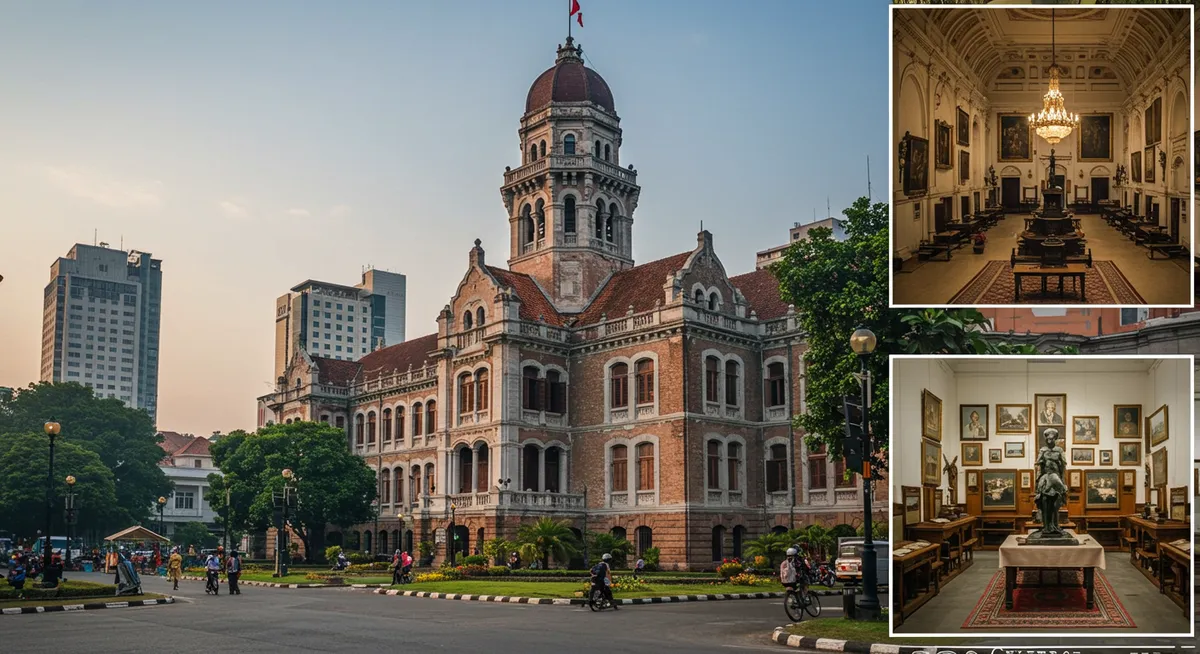
In the heart of Surabaya, where roads meet at restless corners, pedestrians have paused before strange columns on the sidewalk. These columns were part of the Nam Merchant facade, which has lived in the city's memory for many years, but now the demolition process has begun, opening a new chapter in the city's history.
This step is part of local government efforts to renew the city, with confirmation that the demolished structure was not an original part of the historical buildings. This decision symbolizes the balance between the need for modernization and the preservation of cultural heritage.
Details of the Event
The demolition of the Nam Merchant facade began on Jalan Embong Malang, a process expected to take between three to five days. This step is not just a technical action, but represents a symbolic event reflecting the city's struggle between the past and the present.
Historically, Nam Merchant was one of the first stores to introduce the concept of modern retail in Surabaya, established in the early 20th century. The store was a pioneer in offering delivery services, which was considered revolutionary at the time.
Background & Context
Surabaya was founded as a trading city in the 15th century, and its history is filled with events and transformations. The city witnessed significant developments during the Dutch colonial period, becoming an important economic and cultural center in the Dutch East Indies.
Over time, the city has faced numerous challenges in preserving its architectural heritage, especially with the increasing demand for modernization and urban development. The demolition of the Nam Merchant facade comes amid these challenges, as officials seek to find a balance between preserving collective memory and progressing toward the future.
Impact & Consequences
This move raises questions about how cities handle their collective memory. Should we retain everything old even if it is not authentic? Or should we allow for renewal and modernization? These questions arise in various contexts around the world, as cities strive to build their contemporary identity.
This process may affect how residents perceive the history of their city. While some seek to preserve heritage, others see renewal as the path to the future. This struggle between the old and the new is part of the city's cultural identity.
Regional Significance
Surabaya's renewal reminds us of the challenges many Arab cities face in preserving their cultural heritage. Cities like Cairo and Damascus encounter similar struggles between maintaining historical landmarks and urban modernization.
The experiences of Surabaya can serve as a lesson for Arab cities on how to manage this balance, as the renewal process can be an opportunity to reassess cultural identity and enhance collective memory.
The demolition of the Nam Merchant facade in Surabaya represents more than just a construction process; it is a call to reflect on how cities deal with their history and memory. In a rapidly changing world, the question remains: how can we preserve our cultural identity while moving toward the future?