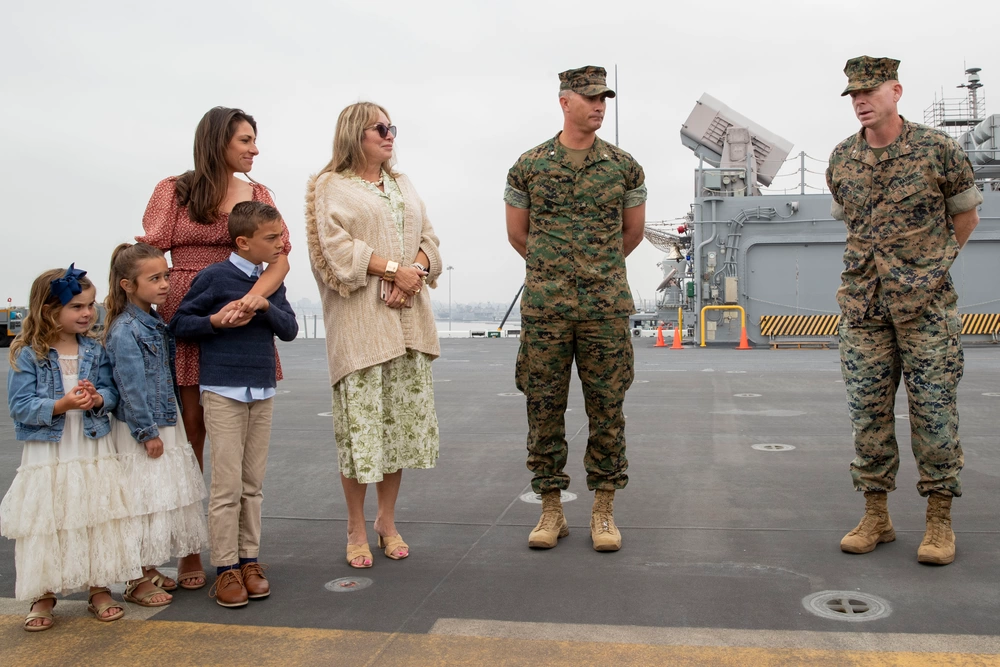
The US Central Command (CentCom) has announced the presence of approximately 3,500 US Marines and sailors under the USS Tripoli carrier group in the Indian Ocean. This military deployment occurs during a period of escalating tensions in the region, raising questions about the strategic objectives behind this move.
The USS Tripoli group is considered one of the advanced naval units with high capabilities to conduct military operations in international waters. This deployment reflects the United States' commitment to regional security, particularly in light of increasing challenges from certain nations.
Details of the Deployment
The USS Tripoli group consists of several warships and helicopters, enabling it to perform a wide range of missions, including amphibious assaults and air support. This deployment comes at a time when the Indian Ocean is witnessing increased military activities from countries like China, which seeks to enhance its presence in the region.
Reports indicate that this step may be part of a broader strategy to address security challenges, as the United States aims to ensure freedom of navigation in international waters. The presence of these forces also reflects Washington's desire to strengthen its alliances with friendly nations in the region.
Background & Context
Historically, the Indian Ocean has been a strategic area for the United States, through which a significant portion of global trade passes. In recent years, the region has experienced a rise in tensions, particularly with the growing influence of China. In this context, the US military presence in the area is deemed essential to ensure stability.
It is noteworthy that the United States has conducted several military operations in the Indian Ocean over the years, reflecting the importance of this region in its defense strategy. Additionally, relations with other countries in the region, such as India and Japan, play a pivotal role in this strategy.
Impact & Consequences
This military deployment could have multiple implications for regional security. On one hand, it may enhance the United States' ability to respond quickly to any potential threats, thereby increasing the sense of security among allies. On the other hand, this deployment could escalate tensions with countries that view the presence of US forces in the region as a threat.
Furthermore, this deployment may affect relations between the United States and other countries in the region, as this move could be perceived as a show of force. This may lead to varied reactions from different nations, complicating the security landscape in the area.
Regional Significance
For the Arab region, the presence of US forces in the Indian Ocean may have both direct and indirect effects. With rising tensions in areas like the Arabian Gulf, Arab countries may seek to enhance their cooperation with the United States to ensure their security. Additionally, this deployment may reflect the United States' desire to protect its interests in the region, especially amid increasing security challenges.
In conclusion, the presence of 3,500 US Marines in the Indian Ocean represents a strategic move that reflects the escalating tensions in the region. These developments are expected to continue influencing the security and political landscape in the Arab region and the world.