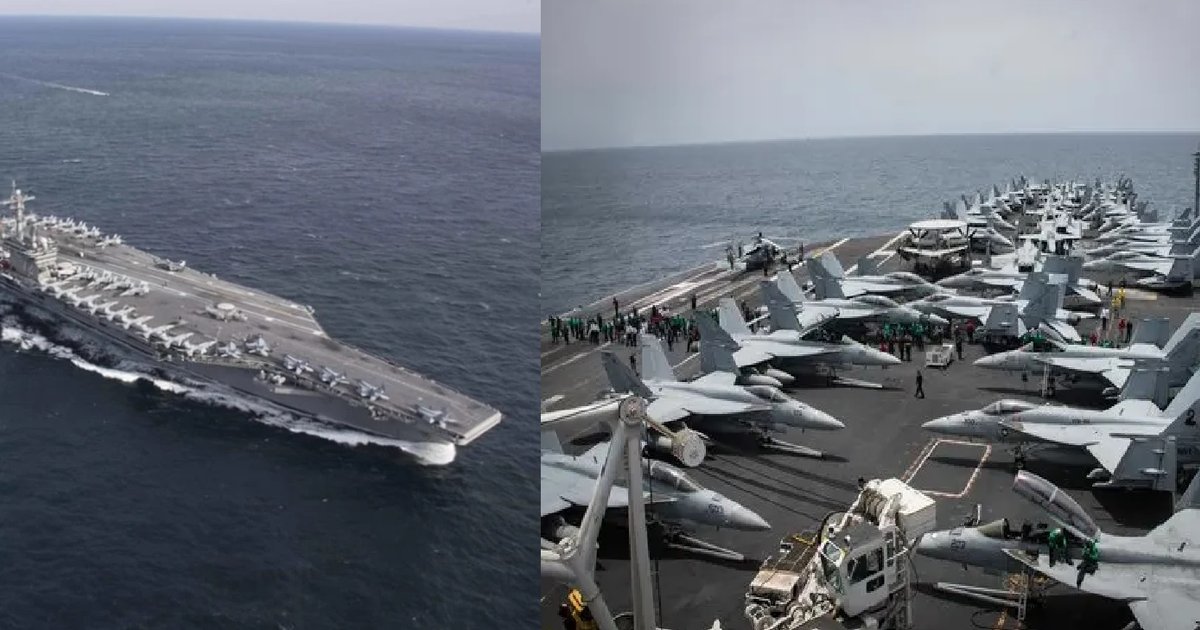
The USS George H.W. Bush aircraft carrier has left Norfolk, Virginia earlier this week, heading towards the Middle East, according to American sources reported by ABC News. This deployment is part of a scheduled plan, raising the number of U.S. carriers assigned to operations against Iran to three.
This move is considered part of the United States' strategy to enhance its military presence in the region amid escalating tensions with Iran. Washington aims to send a clear message to Tehran that any threat to its interests or those of its allies will not be ignored.
Details of the Deployment
The USS George H.W. Bush is one of the largest warships in the world and carries a fleet of fighter jets that can be utilized in military operations. Launched in 2009, this carrier is part of a carrier group that also includes the USS Nimitz and the USS Eisenhower, reflecting the U.S. commitment to strengthening its presence in the Middle East.
This deployment comes at a sensitive time, as relations between the United States and Iran are increasingly strained, particularly following a series of military incidents in the Arabian Gulf. These carriers are believed to play a crucial role in any potential military operations against Iran or in supporting allies in the region.
Background & Context
Historically, the Middle East has been a focal point of conflicts and disputes, with major powers vying for influence. Since the United States withdrew from the nuclear agreement with Iran in 2018, tensions have significantly escalated, leading to a series of attacks and military responses between the two parties.
Iran is a key player in the region, supporting a range of militias in Iraq, Syria, and Lebanon, complicating the security situation. In this context, the United States seeks to secure its interests and those of its allies, justifying the deployment of additional naval forces to the area.
Impact & Consequences
This move could escalate tensions between the United States and Iran, as Tehran may interpret this deployment as a provocation. Should any escalation occur, oil prices and financial markets could be significantly affected, impacting the global economy.
Furthermore, the presence of three aircraft carriers in the region may enhance the U.S. ability to respond quickly to any potential threats, increasing the state of alert in the area. This situation could also lead to changes in Iran's military strategies, as it may seek to develop its defensive capabilities to counter this challenge.
Regional Significance
Neighboring Arab countries such as Iraq, Saudi Arabia, and the UAE are on high alert. The presence of an American aircraft carrier in the region could contribute to enhancing regional security, but it may also increase the risks of military escalation.
Many Arab countries are striving to balance their relations with both the United States and Iran, complicating the situation further. In the event of any conflict, Arab nations would be among the most affected, both economically and security-wise.
In conclusion, this American military deployment in the Middle East reflects the escalating tensions between Washington and Tehran, indicating that the region may be on the brink of a new phase of conflict. Arab states must be prepared to deal with the potential repercussions of this changing situation.