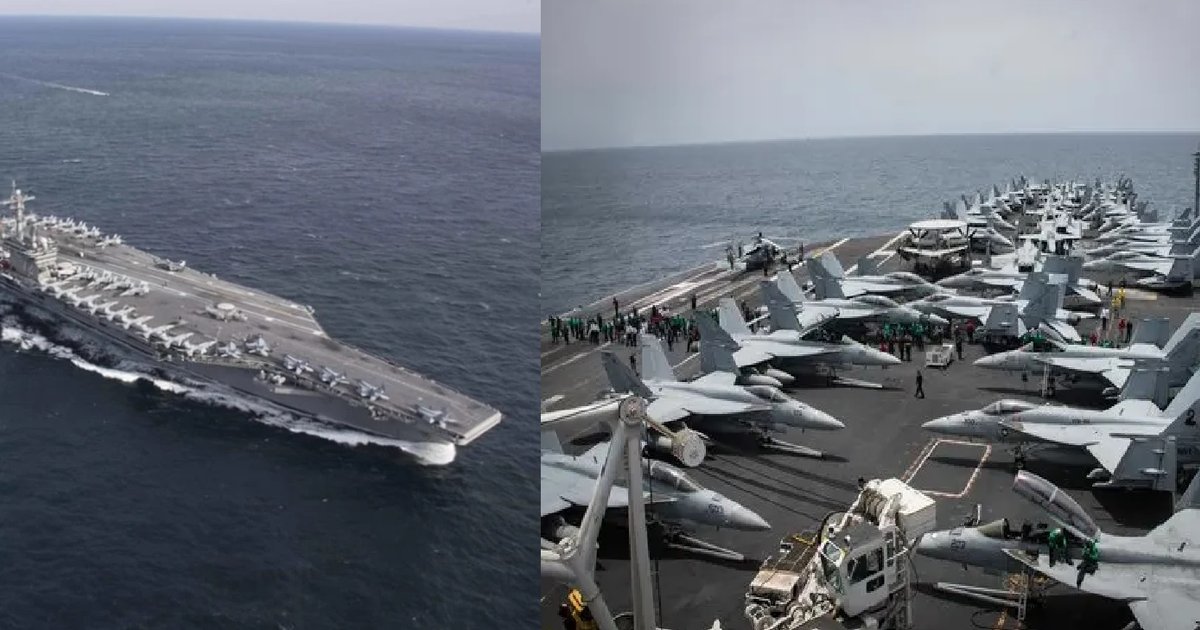
The U.S. Navy has announced the deployment of a new aircraft carrier to the Middle East, coinciding with escalating military operations against Iran. This move underscores the increasing tensions in the region and reaffirms the United States' commitment to the security of its allies.
This military maneuver comes at a time when U.S.-Iran relations are notably deteriorating, with rising concerns over Iran's nuclear activities and its interventions in regional affairs. The new carrier, named USS George H.W. Bush, will enhance the U.S. military presence in the area, raising questions about potential Iranian reactions.
Details of the Deployment
The USS George H.W. Bush, one of the largest aircraft carriers in the U.S. fleet, is expected to arrive in the Arabian Gulf within the next few days. This step is part of the United States' strategy to bolster its military presence in the region, especially following a series of attacks targeting U.S. interests and its allies in the Middle East.
The military operations conducted by the United States against Iran include airstrikes and targeting sites affiliated with Iranian-backed militias in Iraq and Syria. These operations aim to undermine Iran's ability to carry out attacks against U.S. forces and its allies in the region.
Background & Context
Historically, U.S.-Iran relations have been tense, particularly after Washington's withdrawal from the Iranian nuclear deal in 2018. Since then, the United States has imposed stringent economic sanctions on Iran, exacerbating the country's economic and political situation.
Iran is considered a major sphere of influence in the Middle East, supporting numerous militias in Iraq, Syria, and Lebanon. This influence raises concerns for the United States and its allies, prompting them to take military actions to enhance their security.
Impact & Consequences
This deployment is expected to escalate tensions in the region, as Iran may respond to the presence of the U.S. carrier with military operations or by mobilizing its affiliated militias. Such escalation could affect regional stability and increase the risk of a full-scale military conflict.
Moreover, the presence of the U.S. aircraft carrier may alter the dynamics of the conflict in the region, potentially strengthening the position of the United States and its allies against Iranian threats. However, this move could also provoke negative reactions from Iran, complicating the situation further.
Regional Significance
The Arab states in the Arabian Gulf are among the most affected by the tensions between the United States and Iran. The presence of the U.S. aircraft carrier in the region may enhance the sense of security for some countries, but it may also increase the risks of military escalation.
Arab nations, especially those sharing maritime borders with Iran, are closely monitoring these developments. Any military escalation could impact commercial shipping in the Gulf, adversely affecting the regional economy.
In conclusion, the situation in the Middle East remains complex, with political and military interests intertwined. The recent U.S. actions reflect Washington's commitment to the security of its allies, but they may also lead to heightened tensions with Iran, increasing the risks of conflict in the region.