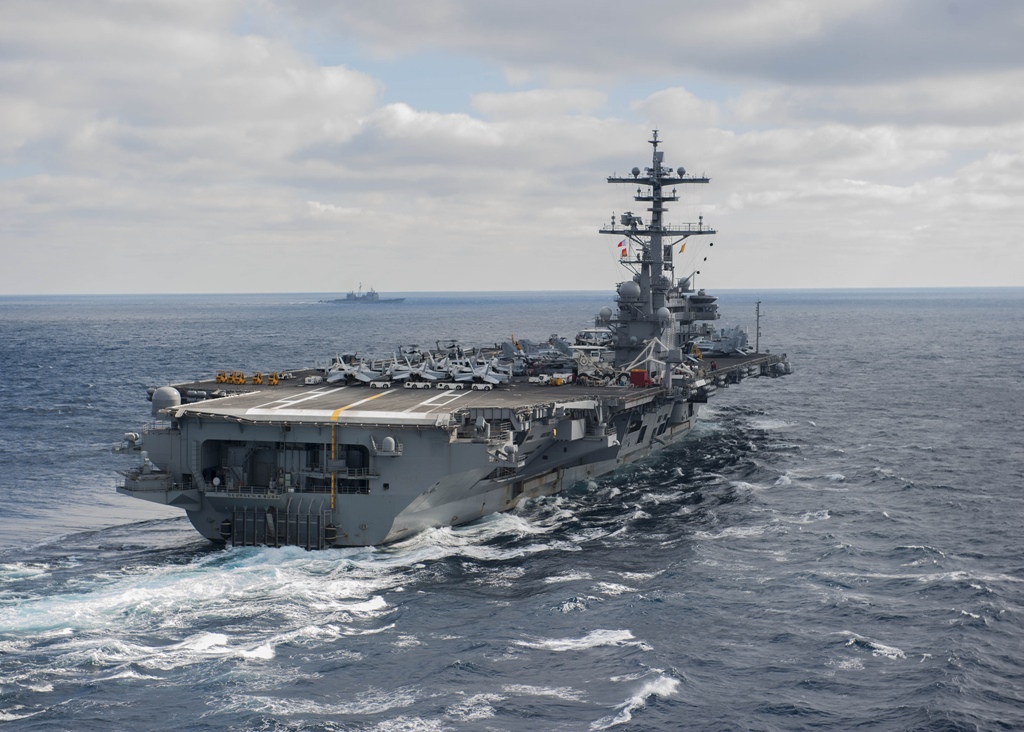
The US aircraft carrier 'USS George H.W. Bush' and its accompanying warships are heading to the Middle East to join two other carrier groups, according to informed sources. This move comes at a sensitive time, as fears of escalating tensions in the region grow, especially due to increasing Iranian threats.
The deployment of this carrier is part of the United States' strategy to bolster its military presence in the Middle East, where tensions between Iran, the US, and its allies are on the rise. Reports indicate that this carrier will support potential military operations should the situation worsen.
Details of the Deployment
The 'USS George H.W. Bush' is one of the largest aircraft carriers in the US fleet, capable of carrying a wide range of military aircraft. With its addition to two other carrier groups, the US military capability in the region increases, reflecting Washington's commitment to the security of its allies in the Middle East.
The second group of aircraft carriers includes the 'USS Dwight D. Eisenhower' and the 'USS Harry S. Truman', indicating that the United States is preparing to confront any potential escalation from Iran or other threats in the region. This military deployment comes at a time when relations between Iran and the United States are highly strained, especially following Washington's withdrawal from the Iranian nuclear agreement.
Background & Context
Historically, the Middle East has been a theater for numerous armed conflicts and political tensions, with major powers playing a pivotal role in shaping the events. For decades, the United States has been heavily present in the region, seeking to protect its interests and those of its allies.
Iran is considered one of the foremost challenges facing the US in the Middle East, as Tehran seeks to enhance its influence in the region by supporting armed groups in Iraq, Syria, and Lebanon. This Iranian influence has raised concerns among many Arab states, prompting them to strengthen cooperation with the United States.
Impact & Consequences
The enhancement of the US military presence in the Middle East could lead to escalating tensions between the US and Iran, increasing the likelihood of armed conflict. Additionally, this deployment may affect the stability of the region, potentially provoking reactions from Iran and its allies.
Moreover, this military deployment could impact global oil markets, as any escalation in the region may lead to rising oil prices due to concerns over supply disruptions. Neighboring Arab states will closely monitor the developments, as any escalation could affect their security and stability.
Regional Significance
Arab countries neighboring Iran, such as Iraq, Saudi Arabia, and the UAE, are on high alert due to these developments. Any escalation in tensions could impact regional security, necessitating enhanced cooperation between these countries and the United States.
Furthermore, these events may affect the relationships between Arab states and Iran, potentially pushing some countries to adopt a more hardline stance towards Tehran. At the same time, other nations may seek to maintain dialogue channels to avoid escalation.
In conclusion, the deployment of the US aircraft carrier 'USS George H.W. Bush' to the Middle East represents a strategic move reflecting the increasing tensions in the region. All parties involved must take prudent steps to avoid escalation and maintain regional stability.