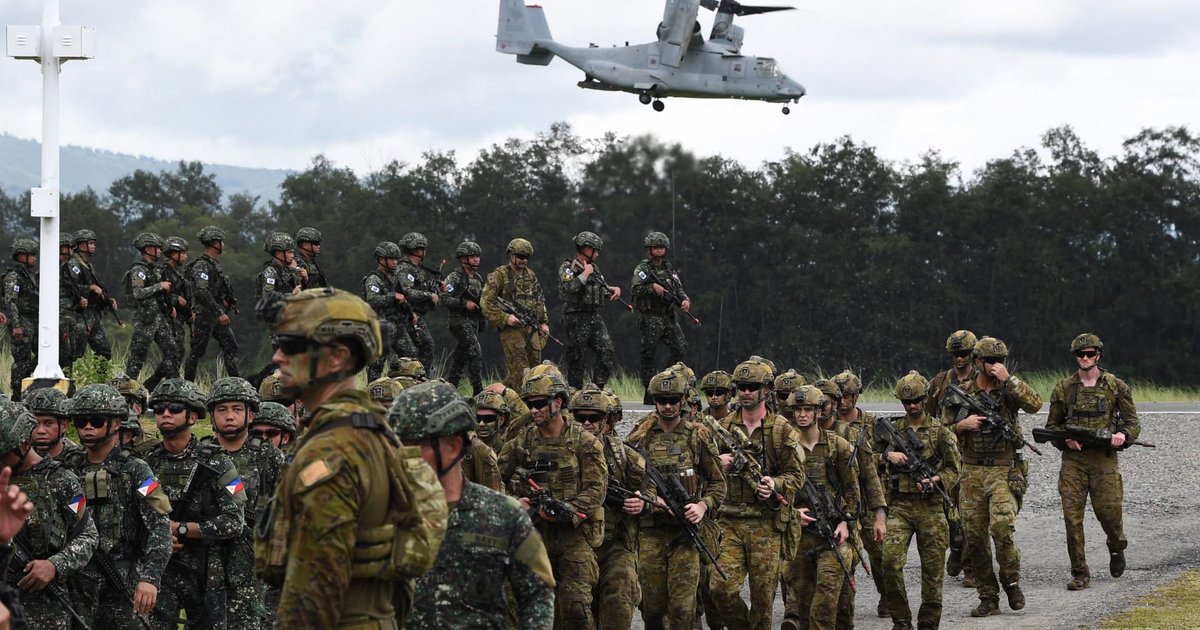
US sources expect thousands of US Marines to arrive in the Middle East next Friday, coinciding with the end of the new deadline set by President Donald Trump for Iran to open the Strait of Hormuz. This action comes amid increasing tensions between the United States and Iran, where regional tensions have noticeably escalated.
According to the Wall Street Journal, around 2,200 Marines, along with the warships USS Tripoli and USS New Orleans, will head to the area of responsibility of the US Central Command (CENTCOM) on Friday. Additionally, it is expected that in the coming weeks, the 11th Marine Expeditionary Unit, stationed aboard the USS Boxer, will also head towards the Middle East.
Details of the Event
On March 2, Iran announced restrictions on navigation in the Strait of Hormuz, threatening to attack any ships attempting to cross the strait without coordination, in response to what it describes as ongoing US-Israeli aggression. The Strait of Hormuz is a vital artery, through which approximately 20 million barrels of oil pass daily, making any closure significantly impact the global economy.
The closure of the strait has caused shipping and insurance costs to rise, leading to increased oil prices and raising global economic concerns. In this context, President Trump stated in his remarks that he had conducted "very good and fruitful discussions" with Iran, a claim later denied by Iranian officials. Trump also indicated that he ordered a postponement of military strikes against Iranian energy facilities and infrastructure for five days, which were previously scheduled.
Background & Context
The roots of the current tensions between the United States and Iran date back several years, with relations between the two countries deteriorating significantly after the US withdrawal from the Iranian nuclear deal in 2018. Since then, the United States has imposed strict economic sanctions on Iran, exacerbating tensions in the region.
Iran considers the Strait of Hormuz a strategic point, through which about 30% of the world's oil passes. Therefore, any escalation in the region could lead to negative impacts on global markets and increase instability in the Middle East.
Impact & Consequences
Many analyses predict that these developments will lead to greater escalation of tensions between the United States and Iran, which could negatively affect regional security. If Iran continues to restrict navigation, this may provoke military responses from the United States, increasing the likelihood of military conflict.
Additionally, escalating situations in the Strait of Hormuz could affect global oil prices, as any closure of the strait could lead to a significant price increase, adversely impacting the global economy and raising the cost of living for citizens in many countries.
Regional Significance
The Arab countries neighboring Iran, such as Iraq, Kuwait, and Saudi Arabia, are among the most affected by the current tensions. Increased tensions in the region could lead to a flow of refugees and heightened security threats, putting additional pressure on Arab governments.
In conclusion, the situation in the Strait of Hormuz remains under scrutiny, with observers expecting that tensions between the United States and Iran will continue to impact security and stability in the region.