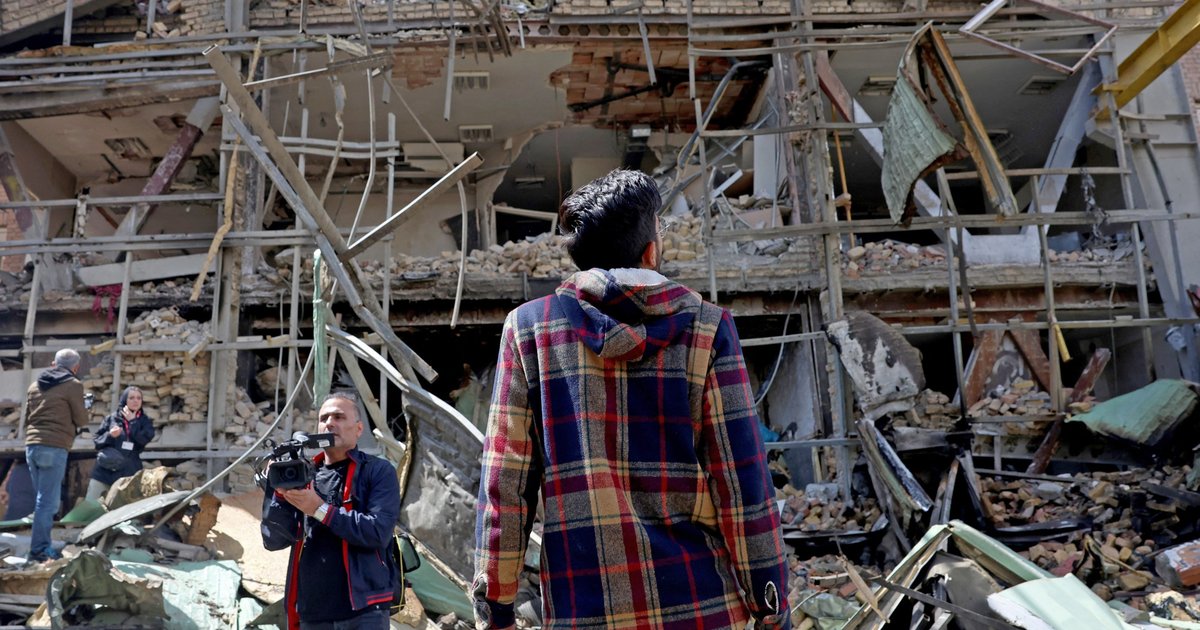
Local sources have announced that the attacks launched by the United States and Israel on Iran have led to the destruction of 55 libraries across the country, with two libraries completely destroyed. These attacks are part of a military escalation that began in late February, targeting various academic and heritage sites, including 30 universities.
Libraries are considered an essential part of the cultural and intellectual heritage of any nation, playing a crucial role in preserving knowledge and providing educational resources for students and researchers. The Public Libraries Association in Iran has expressed deep concern over this destruction, noting that these attacks not only affect cultural infrastructure but also threaten the future of education and scientific research in the country.
Details of the Incident
Since the beginning of the war, a number of libraries housing valuable collections of books and manuscripts have been targeted. The attacks have not been limited to libraries alone; they have also affected academic institutions and research centers, reflecting a systematic strategy to undermine education and culture in Iran. Reports have shown that some libraries have sustained severe damage, making it difficult to rebuild what has been destroyed.
Statistics indicate that Iran has over 2500 public libraries, but the recent attacks could significantly impact these libraries' ability to provide services to the community. Reports have confirmed that many of the libraries targeted contained rare collections of books and manuscripts that cannot be replaced.
Background & Context
Historically, Iran has witnessed numerous political and military crises, but the current attacks come amid escalating tensions between Iran and the United States and its allies. Since the US withdrawal from the nuclear agreement in 2018, military and political pressures on Iran have increased, leading to an escalation of conflict in the region.
Libraries in Iran are part of the country's cultural identity, housing a wide range of books that reflect the history and culture of the Iranian people. The attacks on these libraries represent an assault on cultural and intellectual heritage, raising concerns among intellectuals and researchers worldwide.
Impact & Consequences
The repercussions of these attacks extend beyond cultural dimensions, as they also affect education and scientific research in Iran. With the destruction of libraries, it becomes challenging for students and researchers to access the necessary information and resources for their studies. This may lead to a decline in the quality of education in the country, impacting the future of upcoming generations.
Moreover, the attacks on libraries may exacerbate feelings of resentment and anger among the Iranian people towards the United States and Israel, potentially heightening tensions in the region. Under these circumstances, achieving any form of dialogue or peaceful settlement among the involved parties may be difficult.
Regional Significance
The events in Iran hold significant importance for the Arab region, reflecting the ongoing tensions between major powers in the Middle East. The attacks on libraries also illustrate the increasing targeting of culture and knowledge in the region, raising concerns among Arab nations facing similar challenges.
In light of these circumstances, it is crucial for Arab countries to stand in solidarity with Iran in facing these challenges and to work towards protecting cultural and intellectual heritage in the region. There should also be joint efforts to promote dialogue and understanding among peoples, rather than military escalation that leads to further destruction.