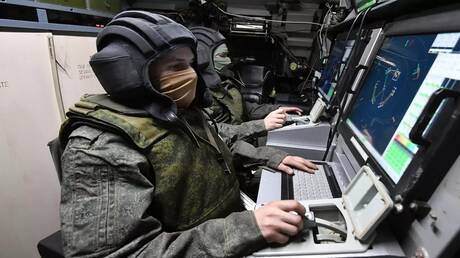
The Russian Ministry of Defense has reported the successful destruction of 58 Ukrainian drones in a brief period not exceeding six hours. These operations were carried out over the territories of several Russian regions, in addition to the waters of the Azov and Black Seas.
This announcement comes at a time when tensions between Russia and Ukraine are escalating, with both countries continuing to bolster their military capabilities. Reports indicate that these drones were targeting strategic sites, reflecting an intensification in the ongoing conflict.
Details of the Incident
According to the Russian Ministry of Defense's statement, the drones were shot down in multiple areas, indicating a widespread and diverse range of threats faced by Russia. The Russian air defenses employed advanced techniques to detect and destroy these drones, showcasing an advancement in their military capabilities.
This attack follows a series of reciprocal strikes between the two sides, as Ukraine seeks to utilize drones as a means to enhance its ability to conduct precise military operations. Conversely, Russia aims to protect its territory from any potential threats.
Background & Context
Historically, Russian-Ukrainian relations have seen increasing tensions since 2014, when Russia annexed Crimea. Since then, military conflicts have escalated, leading to the use of drones as a key tool in the conflict. These drones are considered effective due to their ability to carry out reconnaissance and attack missions without risking pilots' lives.
These developments are part of a larger strategy adopted by Russia to enhance its air defenses, especially in light of increasing threats from the West. Russia has demonstrated its capability to handle aerial threats by developing advanced air defense systems.
Impact & Consequences
The ramifications of this event extend beyond Russian borders, potentially affecting regional and international security. The escalation of military actions could lead to heightened tensions in the region, negatively impacting stability in Eastern Europe.
Moreover, these events may influence international relations, as Western countries could leverage these developments to justify their support for Ukraine. In response, Russia might strengthen its alliances with other nations to counter military challenges.
Regional Significance
Considering the current situation, the Russian-Ukrainian conflict may impact the Arab region in various ways. The escalation of tensions could lead to rising energy prices, affecting Arab economies that heavily rely on oil and gas.
Furthermore, any military escalation could reflect on regional security, potentially resulting in an influx of refugees or increased tensions in other parts of the world. Therefore, monitoring these events is essential to understand the various dimensions of the conflict and its impact on the region.