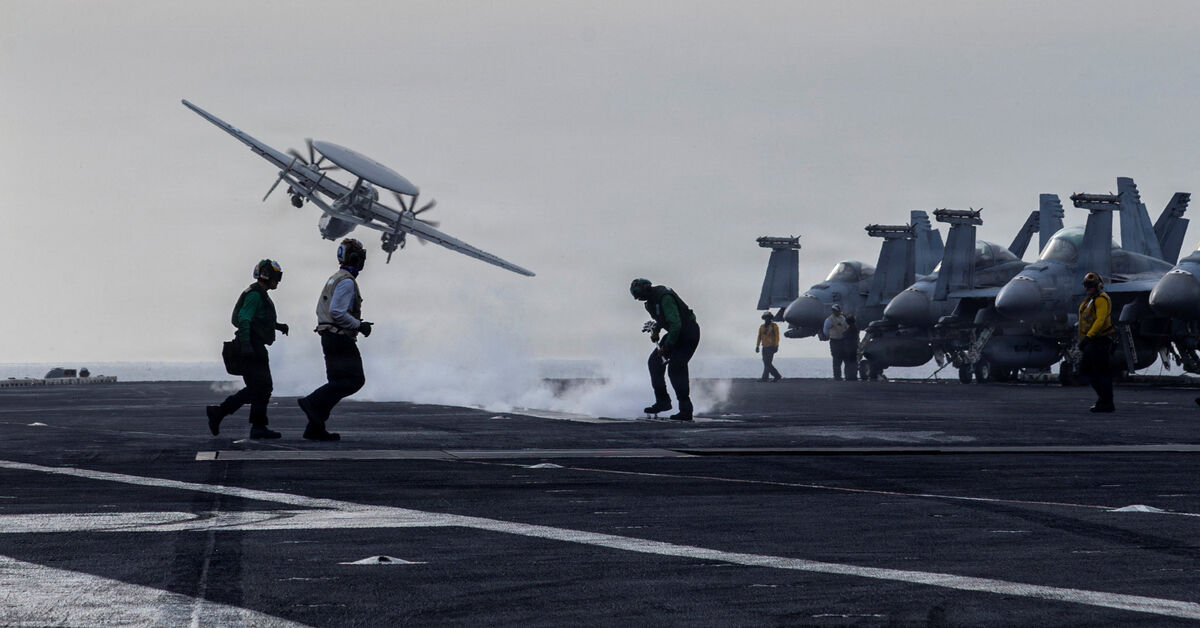
In a dramatic development, the Iranian Revolutionary Guard announced on Sunday the destruction of several 'hostile flying objects' during a US operation to search for a pilot stranded in Iranian territory. This announcement came after the Iranian police confirmed the downing of a US C-130 aircraft in the southern Isfahan region.
According to the Iranian Tasnim news agency, the operation involved coordination among several Iranian military units, including the air force, ground forces, Basij units, and police. The Revolutionary Guard indicated that this operation is part of defending Iranian airspace against any potential threats.
Details of the Incident
The incident occurred at a sensitive time, as the United States had dispatched a C-130 aircraft to search for one of its pilots who had gone missing in the area. Reports indicate that the American aircraft came under fire, leading to its downing. The Iranian Revolutionary Guard confirmed that Iranian forces destroyed the flying objects they deemed hostile, highlighting the escalating tensions between Iran and the United States.
This incident comes amid increasing tensions in US-Iran relations, particularly following the US withdrawal from the Iranian nuclear deal in 2018. These tensions have heightened concerns about regional security, making military incidents like this more likely.
Background & Context
Historically, US-Iran relations have seen a rise in tensions since the Islamic Revolution in 1979. Since then, the United States has imposed strict economic sanctions on Iran, significantly impacting the Iranian economy. In recent years, military activities in the region have increased, including Iranian military maneuvers and US interventions, leading to an escalation of tensions.
In this context, US search and rescue operations in the region are perceived as a show of force, intensifying the Iranian response. The region has witnessed several similar incidents, with both countries exchanging accusations of violating sovereignty.
Impact & Consequences
This incident serves as an indicator of escalating military tensions between Iran and the United States, potentially leading to a chain reaction of responses from both sides. These developments could affect regional stability, as the United States may take further military actions in the area, increasing the likelihood of larger conflicts.
Moreover, this incident may impact potential nuclear negotiations between Iran and Western countries, as the United States might use this incident as a pretext to strengthen its position in any upcoming talks. At the same time, Iran could leverage this incident to bolster its domestic stance and affirm its capability to defend its sovereignty.
Regional Significance
Arab countries are directly affected by the tensions between Iran and the United States, as these countries are part of the broader conflict in the region. Any military escalation could have repercussions on regional security, threatening the stability of neighboring countries such as Iraq and Syria.
Furthermore, the rising tensions between Iran and the United States could impact oil prices and financial markets in the region, potentially leading to negative economic effects on Arab countries that rely on oil exports.
In conclusion, this incident underscores the importance of monitoring developments in US-Iran relations, as any escalation could significantly affect security and stability in the region.