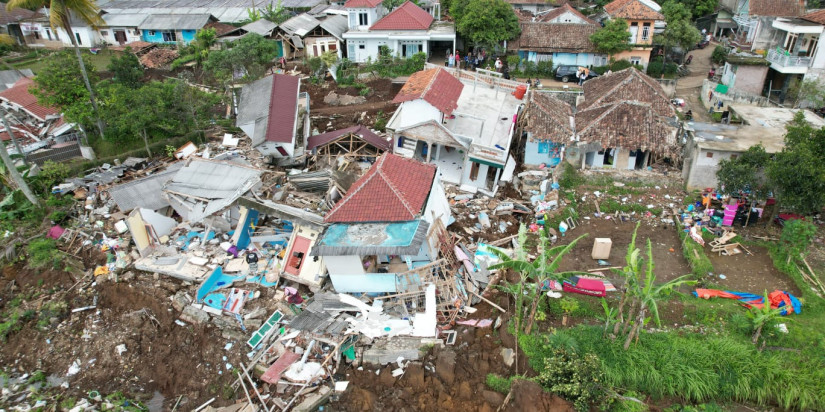
A strong earthquake struck the city of Manado, Indonesia, on Thursday morning, registering a magnitude of 7.6 on the Richter scale. The earthquake, which occurred at 06:48 local time, resulted in the deaths of two individuals and injuries to another, causing panic among local residents.
According to Nuriadin Gumeling, spokesperson for the North Sulawesi Search and Rescue Agency, one of the victims died after being struck by falling debris, while the other sustained a leg fracture after jumping from a store to escape the quake. Authorities are currently searching for information regarding the possibility of other victims.
Details of the Event
The earthquake occurred in waters off the coast of Bitung, near Manado, at a depth of 62 kilometers beneath the sea surface. This earthquake triggered tsunami warnings in the North Sulawesi and North Maluku regions, with the Indonesian Meteorology Agency issuing immediate alerts to local authorities.
Mohammad Zulkifli, coordinator of the data and information section at the Meteorology Agency, indicated that seven areas in North Sulawesi and North Maluku may be on alert for potential tsunami activity. Residents of Manado felt the earthquake strongly, prompting many to flee to the streets in search of safety.
Background & Context
Indonesia is considered one of the most earthquake-prone countries in the world due to its location on the Pacific Ring of Fire, where several tectonic plates meet. Historically, Indonesia has experienced numerous devastating earthquakes, including the 2004 earthquake that triggered a catastrophic tsunami in the Indian Ocean.
The Indonesian government is working to enhance early warning systems and public awareness regarding the risks of earthquakes and tsunamis; however, significant challenges remain in protecting the population from these natural disasters.
Impact & Consequences
Earthquakes can have significant economic and social impacts on local communities. In the case of the recent earthquake, infrastructure in Manado is expected to be affected, potentially leading to delays in essential services such as electricity and water. Additionally, human and material losses may impact the local economy, which relies on tourism and fishing.
Immediate response from the government and humanitarian agencies is required to ensure the safety of residents and provide assistance to those affected. It is also crucial for local communities to collaborate with authorities to offer support and aid in search and rescue operations.
Regional Significance
While the earthquake that struck Indonesia may seem distant from the Arab region, natural disasters remind us of the importance of preparedness and readiness to face such events. Arab countries can benefit from Indonesia's experiences in strengthening early warning systems and developing emergency plans to address disasters.
In conclusion, there remains hope that Indonesia will overcome this ordeal and that affected communities will recover swiftly. International solidarity and humanitarian assistance may be critical during this crucial phase.