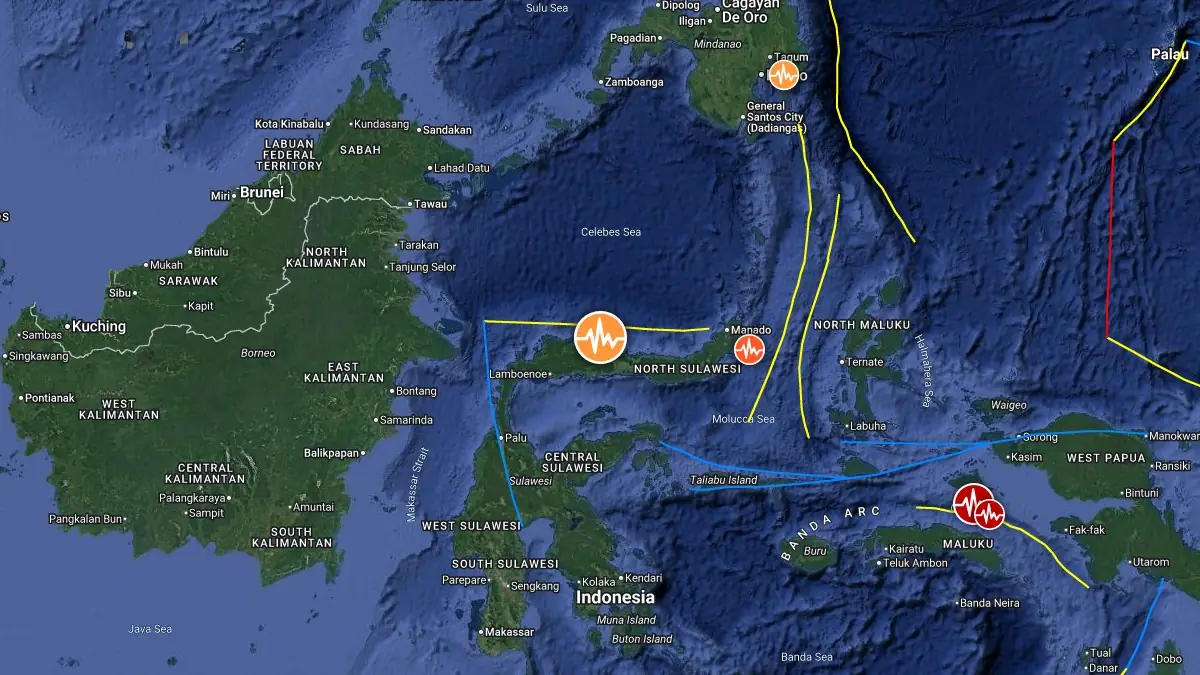
A strong earthquake measuring 7.6 on the Richter scale hit the North Sulawesi region of Indonesia, resulting in one death and several injuries. The earthquake occurred at 05:48 AM local time, and residents in surrounding areas, including North Maluku, felt the tremors. This event has raised significant concerns within the Indonesian government, prompting the Speaker of the Indonesian House of Representatives, Puan Maharani, to call for all ministries and government agencies to take swift action to ensure the safety of citizens.
Puan emphasized the necessity for all government institutions to be on alert for any aftershocks, noting that search and rescue teams must continue operations in the affected areas. She also added that the earthquake triggered a small tsunami in some regions, heightening fears for the safety of the population.
Details of the Event
The earthquake struck off the coast of Bitung, with strong tremors lasting between 10 to 20 seconds in the city and nearby areas. Small tsunami waves measuring up to 0.3 meters were detected in the West Halmahera area, prompting warnings of potentially larger waves. Although these waves were minor, authorities cautioned the public to remain vigilant, as there is still a possibility of further tsunami activity.
In the aftermath of the earthquake, Puan Maharani expressed her condolences to the victims and their families, underscoring the importance of providing urgent support to those in need, especially vulnerable groups. She urged local government to act quickly to establish shelters and distribute aid.
Background & Context
Indonesia is considered one of the most earthquake-prone countries in the world, located on what is known as the "Ring of Fire" in the Pacific Ocean, an area with high seismic activity. Historically, Indonesia has experienced many devastating earthquakes, including the 2004 tsunami earthquake that resulted in over 230,000 fatalities. These events highlight the critical importance of preparedness and readiness to face natural disasters in the country.
The Indonesian government is working to improve early warning systems and develop rapid disaster response strategies, but there is still much work to be done to ensure the safety of citizens in the face of these challenges.
Impact & Consequences
The recent earthquake could have significant effects on the local community, including physical and psychological damage. The loss of homes and lives may increase pressure on social and health services. Additionally, the economic losses resulting from the damage could impact the local economy, necessitating a swift government response to provide necessary support.
These events serve as a reminder of the importance of raising public awareness about how to act in emergencies, developing evacuation plans, and preparing for disasters. Communities must be ready to face such challenges, and the government should enhance its efforts in this regard.
Regional Significance
While the earthquake in Indonesia may seem distant from the Arab region, major natural events remind us of the interconnectedness of the world. Natural disasters do not recognize borders and can affect food and economic security across nations globally. Arab countries may learn from Indonesia's experiences in handling natural disasters and strengthening early warning systems.
In conclusion, the earthquake that struck North Sulawesi serves as a call to preparedness and readiness to face natural disasters. Governments and communities must work together to ensure the safety of citizens and provide necessary support during times of crisis.