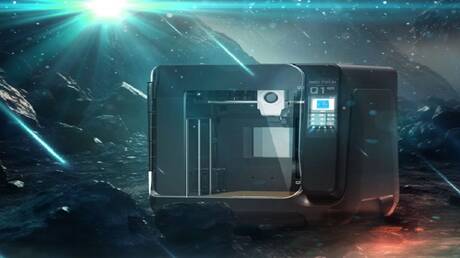
Engineers at Tomsk Technical University have announced the development of Russia's first 3D space printer, specifically designed to operate in weightlessness aboard the International Space Station. This printer represents a crucial step in space technology, aiming to facilitate manufacturing and production processes in space.
This printer is part of Russia's efforts to enhance its capabilities in the space sector, coming at a time when global competition in this field is intensifying. The new printer will allow scientists and engineers to produce spare parts and components directly in space, reducing the need to send materials from Earth.
Event Details
The printer is designed to operate efficiently in low-gravity environments, where factors such as weightlessness can affect traditional manufacturing processes. The printer relies on advanced technologies that enable it to produce complex materials using raw materials available in space.
This printer is a step towards achieving autonomy in space, as it can be used in long-term missions such as Mars exploration or building bases on the Moon. This technology is expected to contribute to reducing costs and increasing efficiency in space operations.
Background & Context
Historically, Russia has been a pioneer in the field of space, launching the world's first satellite in 1957 and sending the first human into space in 1961. However, technological advancements in recent years by other countries such as the United States and China have prompted Russia to seek to renew its capabilities in this field.
The development of the space printer is part of the Russian space program, which aims to enhance international cooperation in space, as well as develop new technologies that contribute to more effective space exploration.
Impact & Consequences
The development of this printer could have a significant impact on the future of space exploration. If Russia successfully utilizes this technology effectively, it could lead to radical changes in how space missions are executed. The ability to manufacture spare parts in space could significantly reduce logistical costs.
Moreover, this technology could open new avenues for international cooperation in space, allowing other countries to benefit from these innovations in their space projects.
Regional Significance
As many Arab countries strive to enhance their space programs, these developments in Russia could serve as an inspiration. Countries like the United Arab Emirates and Saudi Arabia have already begun significant investments in the space sector.
The development of technologies such as the space printer could encourage Arab nations to strengthen their capabilities in this field, contributing to their goals of space exploration and technology development.
In conclusion, the development of Russia's first 3D space printer represents a significant achievement in space technology. This step may reshape how space missions are conducted and open new horizons for international cooperation in this field.