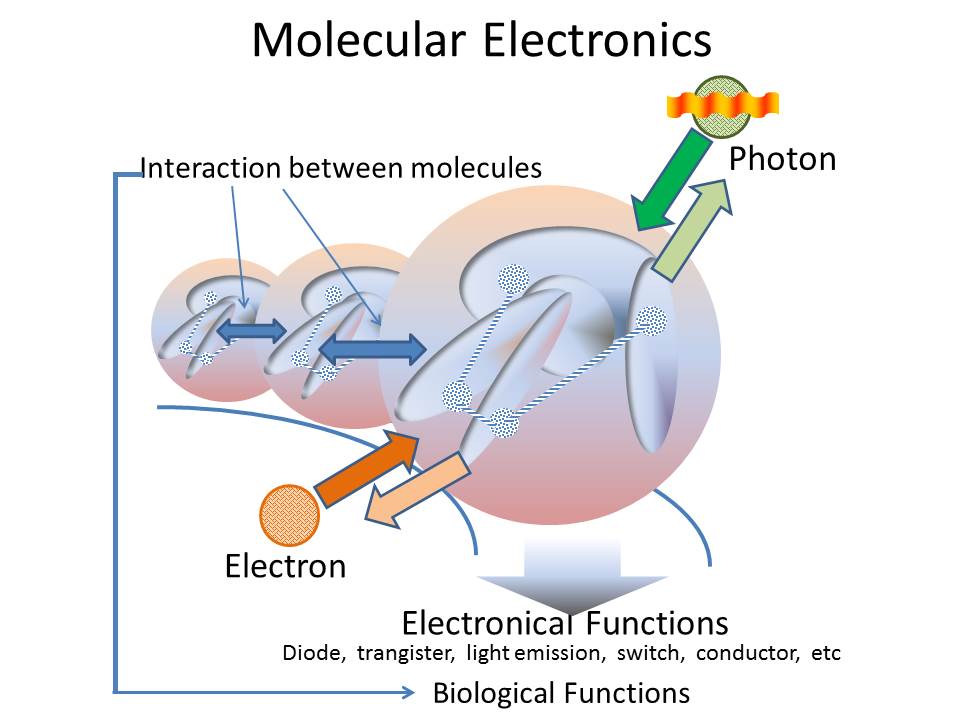
In a remarkable scientific achievement, an international research team has developed a complex molecular structure composed of five interconnected units, functioning integrally as if it were a single electronic system. This development may open doors to the innovation of smaller and more efficient materials, contributing to the enhancement of advanced electronics, energy, and sensing technologies.
Led by researchers from the Biochemistry and Molecular Materials Research Center at the University of Santiago de Compostela in Spain, the results of this research were published in the journal Angewandte Chemie. This achievement is considered a significant step towards realizing the concept of molecular electronics, where research aims to integrate molecules into larger structures to improve electronic performance.
Details of the Research
The essence of this study revolves around a class of molecules known as phthalocyanines, which are flat carbon-rich molecules characterized by their excellent optical and electronic properties. These molecules are used in a variety of applications, including solar cells, chemical sensors, and microelectronic materials.
Over the years, scientists have sought to connect more than one molecule from this class to form larger networks, allowing electrons to move through a wider and more interconnected structure. However, the challenge lay in the fact that these molecules, as their size and entanglement increased, became less soluble in liquids, making their synthesis using traditional chemical methods more difficult.
Background & Context
This obstacle typically prevented reaching structures that exceed three interconnected units, thus achieving a fully integrated pentamer represents a qualitative leap in this field. To overcome this issue, the researchers adopted a hybrid strategy that combines two phases: the first occurs in a chemical solution, where the basic molecular units are carefully prepared, and the second takes place on a metallic surface and under ultra-high vacuum conditions, where reactions are completed to merge the units into a larger and more complex final structure.
In this way, the team was able to combine the precision of traditional chemistry with the advantages of surface synthesis, a technique that allows for the construction of structures that are difficult to obtain inside conventional laboratory flasks.
Impact & Consequences
The result was a cross-shaped structure composed of five units of phthalocyanine, integrated into a connected system. This integration reduced the energy gap, a key property that controls the ease of electric charge transfer, making the new material more attractive for molecular electronics and advanced functional materials.
Notably, the design of the molecule allows for the incorporation of different metal ions at specific positions within it, granting researchers the ability to 'tailor' the properties of the molecule. Magnetic properties can be added in certain areas or its electronic and optical characteristics can be modified according to the desired application.
Regional Significance
The achievement is not limited to manufacturing alone; it also involved imaging the new structure and distinguishing it with subatomic precision using scanning probe microscopy. This work not only presents a 'large molecule' but also offers a new manufacturing recipe that may allow for the future construction of two-dimensional polymers from phthalocyanines.
If this pathway succeeds, we could be looking at a new family of materials designed with atomic precision, which could enter molecular circuits, high-sensitivity sensors, energy conversion technologies, and perhaps even some applications in quantum computing.