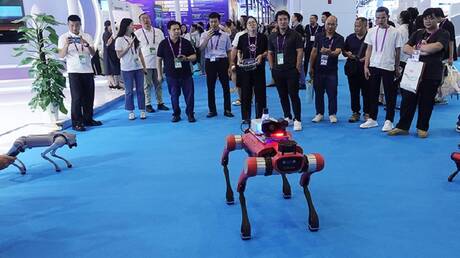
Researchers at Xi'an Jiaotong University in China have unveiled an innovative system for controlling a robotic dog solely through thought, eliminating the need for traditional controllers. This advancement marks a significant step in robotics and human interaction, as users can now control the robotic dog's movements by merely thinking about the desired action.
This technology is a revolution in the world of robotics, opening new horizons for how humans interact with machines. Instead of using conventional control tools, users can now direct robots through brain signals, reflecting a major advancement in understanding how the human brain operates.
Event Details
This system was developed using advanced techniques in neuroscience and artificial intelligence. It relies on reading electrical signals from the brain, which are analyzed by sophisticated algorithms to convert them into motor commands. Initial experiments have shown remarkable success, with the robotic dog responding accurately to user signals.
Advanced sensors are employed to capture the electrical activity from the brain, allowing for the identification of commands to be executed. This technology could have wide-ranging applications across various fields, from assisting individuals with disabilities in their daily lives to military and commercial uses.
Background & Context
The importance of robotics in our daily lives is increasing, as they have become an integral part of many industries. From industrial robots to assistive robots, this technology is evolving rapidly. In recent years, we have witnessed significant advancements in the field of artificial intelligence, which has contributed to improving the ability of robots to interact with humans.
China is considered one of the leading countries in developing modern technology, investing heavily in research and development in robotics and artificial intelligence. This new innovation reflects China's commitment to enhancing its status as a global power in technology.
Impact & Consequences
This system could have a significant impact on how robots are used in the future. If this technology is further developed, we may see new applications for robots in fields such as healthcare, education, and entertainment. These innovations could improve the quality of life for many individuals.
Moreover, this technology could open new doors for research in neuroscience, as it may help in better understanding how the human brain functions. This understanding could lead to the development of new treatments for neurological diseases.
Regional Significance
With the increasing interest in modern technology in the Arab region, these innovations could have positive effects on Arab countries. This technology may contribute to enhancing education and training in science and technology fields, helping to prepare a new generation of specialists in these areas.
Additionally, these innovations could open new investment opportunities in the technology sector, contributing to strengthening the local economy. It is essential for Arab countries to benefit from these developments and work on enhancing research and development in robotics and artificial intelligence.
In conclusion, this innovation represents an important step towards a more interactive future between humans and robots. As research and development continue, we can expect to see more exciting applications in the coming years.