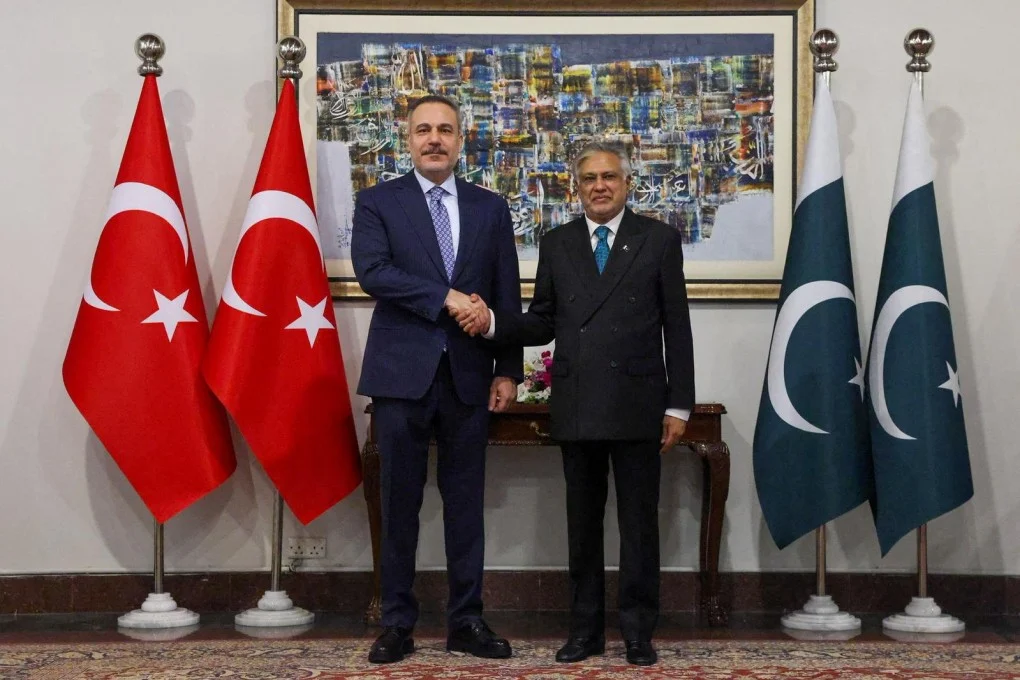
Senior diplomats from regional powers convened in Pakistan on Sunday to discuss ways to end the ongoing fighting in the Middle East, where Israeli and American attacks on Iran continue. The participation of foreign ministers from Saudi Arabia, Turkey, and Egypt was announced for these talks held in the capital, Islamabad.
In this context, Pakistani Prime Minister Shahbaz Sharif confirmed that he held extensive talks with Iranian President Masoud Pezeshkian, addressing urgent regional issues and ways to achieve peace and stability in the area. However, no clear signs of tangible progress emerged from the discussions, especially with the ongoing military escalation by Israel and the United States.
Details of the Event
These meetings come at a highly sensitive time, as tensions in the region have notably escalated. Reports have indicated the continuation of Israeli airstrikes on Iranian sites, while Tehran has responded by launching missiles and drones across the border, exacerbating the conflict and complicating mediation efforts.
Pakistan, which plays a pivotal role in regional politics, is striving to enhance dialogue among the conflicting parties. The current meeting is part of broader efforts to stabilize the region, which faces multiple challenges including armed conflicts and humanitarian crises.
Background & Context
Historically, relations between Iran and Arab states have seen increasing tensions, especially following the Iranian Revolution in 1979. These tensions have contributed to the exacerbation of regional conflicts, including the wars in Syria and Yemen. Additionally, military interventions by major powers, such as the United States, have further complicated the situation.
In recent years, some Arab countries, such as Saudi Arabia, have attempted to improve their relations with Iran, but recent events have brought matters back to square one. The meeting in Pakistan is viewed as a new attempt to rebuild trust among the conflicting parties.
Impact & Consequences
If the talks succeed in making progress, it could have significant implications for regional security. Stabilizing relations between Iran and Arab states could help reduce the intensity of armed conflicts and promote economic and political cooperation. However, the question remains as to how capable the parties are of overcoming historical disagreements.
On the other hand, if hostilities continue, the situation may worsen, leading to further military escalation and increasing civilian suffering in the region. Ongoing tensions could also negatively impact the regional economy and exacerbate humanitarian crises.
Regional Significance
These meetings are critically important for Arab states, as they seek to achieve lasting stability in the region. Any progress in the talks could pave the way for improved relations between Arab countries and Iran, potentially contributing to enhanced regional security.
At the same time, Arab nations must exercise caution in dealing with Iran, as the history of conflicts and disagreements remains present. Achieving peace requires continuous efforts and effective cooperation among all concerned parties.
The diplomatic meeting in Pakistan represents a new opportunity to seek peaceful solutions to the Iranian conflict, but success depends on the willingness of the involved parties and their ability to overcome historical differences.