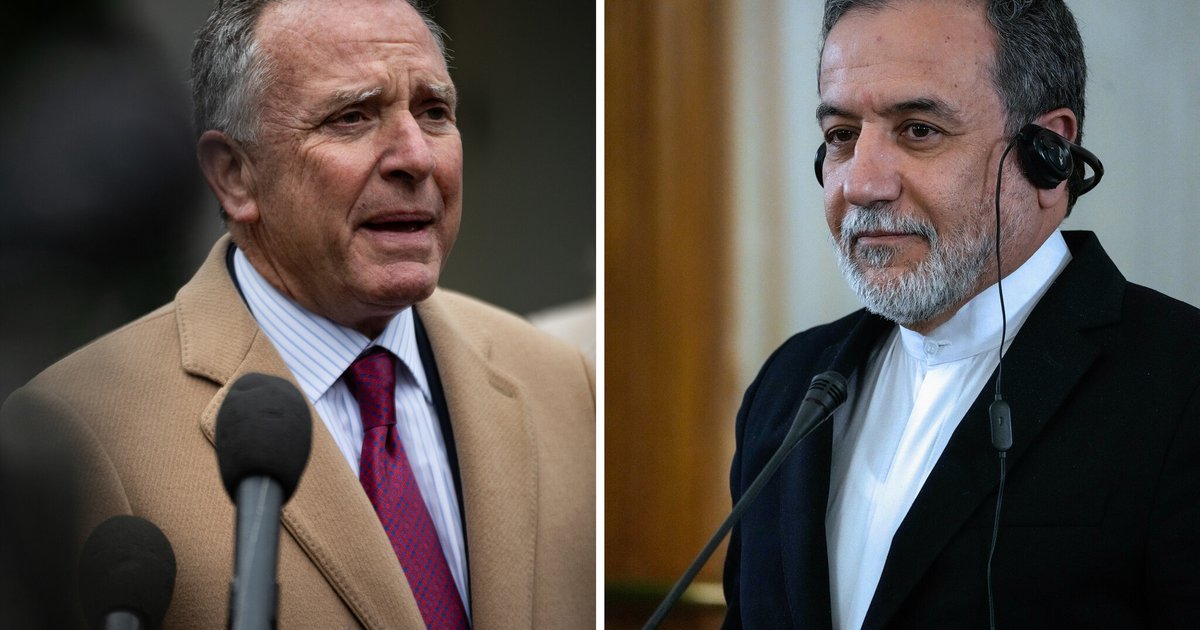
The U.S. Secretary of State, in a special statement to Al Jazeera, reported that direct messages and talks are occurring between parties in Iran and the United States through mediators. He emphasized that President Donald Trump favors a diplomatic approach to achieve tangible results, noting that such an opportunity was available in the past.
In a related context, U.S. Senator Marco Rubio pointed out that the Iranian regime has spent the country's wealth supporting groups like Hezbollah and Hamas, in addition to militias in Iraq, which has led to unjustly threatening its neighbors. Rubio confirmed that the United States welcomes a scenario where Iran is led by individuals with a different vision for the future, indicating that if this opportunity arises, the U.S. will seize it.
Details of the Event
These statements come at a sensitive time for U.S.-Iran relations, as tensions in the region have escalated due to Iranian military activities. Rubio asserted that the Iranian regime cannot obtain nuclear weapons and must cease sponsoring terrorism and threatening its neighbors. He also noted that the short-range missiles launched by Iran target countries such as Saudi Arabia, the UAE, Qatar, Kuwait, and Bahrain, further intensifying regional tensions.
These remarks serve as a call for de-escalation, as the United States seeks ways to communicate with Iran through indirect channels. These talks could be a step towards alleviating the rising tensions between the two parties, especially amid the multiple crises facing the region.
Background & Context
Historically, U.S.-Iranian relations have experienced significant fluctuations since the Islamic Revolution in 1979. Since then, there have been multiple attempts at negotiation, but most have failed. In recent years, tensions have escalated sharply, particularly after the U.S. withdrawal from the Iranian nuclear deal in 2018, which led to the imposition of severe economic sanctions on Iran.
Iran seeks to enhance its regional influence by supporting armed groups in Iraq, Syria, and Lebanon, increasing concerns among neighboring countries and the United States. At the same time, the current U.S. administration is attempting to find ways to communicate with Tehran, despite the significant challenges it faces.
Impact & Consequences
If the current talks succeed in making progress, they could lead to a de-escalation of tensions in the region, contributing to the stabilization of security and economic conditions. However, any advancement in this direction depends on Iran's commitment to its international obligations and ceasing its destabilizing military activities.
On the other hand, these talks may affect relations between the United States and its allies in the region, particularly the Gulf states that are concerned about any rapprochement between Washington and Tehran. Therefore, maintaining balance in these relationships will be crucial in determining the region's future.
Regional Significance
These developments are very important for Arab countries, as any change in U.S.-Iranian relations could directly impact security and stability in the region. Gulf states, in particular, are closely monitoring these talks, as they face ongoing threats from Iran.
In conclusion, there remains hope that these talks will lead to positive outcomes, contributing to peace and stability in the region and alleviating the tensions faced by Middle Eastern countries.