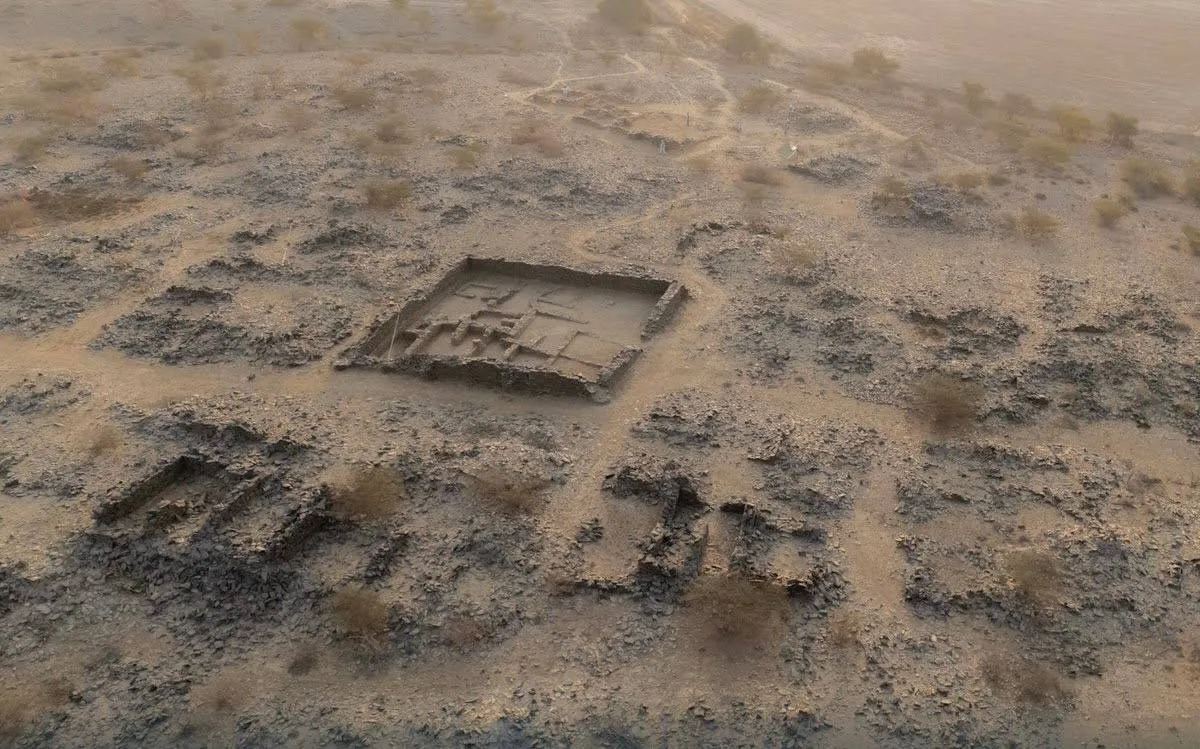
The Saudi Heritage Authority has announced exciting results from the second season of archaeological excavations at the Al-Asda site in the Al-Mukhwah governorate of Al-Baha. The excavation work has uncovered architectural features and artifacts dating back to ancient historical periods, highlighting the site's importance as a major stop on the pilgrimage route from Yemen to Mecca.
These discoveries are part of the Authority's efforts to study archaeological sites across various regions of Saudi Arabia and document their architectural features and cultural components. The Al-Asda site is considered one of the most prominent mining sites in southwestern Saudi Arabia, distinguished by its geographical and historical significance as a key intersection in trade and transit throughout the ages.
Details of the Discoveries
Among the most notable findings is an ancient mosque measuring approximately (11x12m), which features a mihrab and three main entrances, in addition to square bases for columns that once supported the mosque's roof. These features indicate a clear architectural plan that reflects the mosque's importance and its central role in the planning of early Islamic cities.
The excavation also revealed four rooms adjacent to the mosque on the northeastern side, with varying sizes, some measuring (4x5m) and others (3x4m). These rooms contain architectural elements including water basins, storage facilities, and internal cooking hearths, suggesting they were used for residential purposes or service activities related to the mosque.
Background & Context
The Al-Asda site is regarded as an important center for mining, reflecting architectural development and economic activity during that period. The archaeological discoveries at this site shed light on the livelihoods practiced in the area, where a variety of artifacts were found, including fragments of diverse pottery, grinding stones, and mortars used in food preparation.
These discoveries come at a time when the heritage sector in Saudi Arabia is experiencing an active phase in terms of preservation and interest, as the Authority seeks to engage the private sector and community initiatives in heritage management and preservation efforts, enhancing the understanding of human settlement history and the economic and religious activities that these sites witnessed over the ages.
Impact & Consequences
The new excavation results at the Al-Asda site represent an important step towards enhancing scientific understanding of the history of the Arabian Peninsula. Through these efforts, the Authority aims to expand the scope of field archaeological studies and document heritage sites, contributing to the establishment of a scientific knowledge base regarding the region's history.
Moreover, these discoveries reflect the richness of Saudi cultural heritage and emphasize the importance of preserving this legacy for future generations. Raising awareness of cultural heritage can contribute to strengthening national identity and enhancing cultural tourism in the country.
Regional Significance
The archaeological discoveries at the Al-Asda site serve as historical evidence of the richness of Islamic civilization in the region, contributing to a shared understanding of Arab and Islamic history. Additionally, these findings may open new avenues for research and study in the fields of history and archaeology, fostering cooperation among Arab countries in the realm of cultural heritage.
In conclusion, the excavation work at the Al-Asda site marks a significant step towards enhancing scientific understanding of the region's history and underscores the importance of preserving cultural heritage as part of national identity.